Monday, January 30, 2006

The 8th Commandment

The Large Catechism
by Dr. Martin Luther
Translated by F. Bente and W. H. T. Dau
Published in:
Triglot Concordia: The Symbolical Books
of the Ev. Lutheran Church.
(St. Louis: Concordia Publishing House, 1921), pp. 565-773
Part 8


The Eighth Commandment:Thou shalt not bear false witness against thy neighbor.

Over and above our own body, spouse, and temporal possessions, we have yet another treasure, namely, honor and good report [the illustrious testimony of an upright and unsullied name and reputation], with which we cannot dispense. For it is intolerable to live among men in open shame and general contempt. Therefore God wishes the reputation, good name, and upright character of our neighbor to be taken away or diminished as little as his money and possessions, that every one may stand in his integrity before wife, children, servants, and neighbors. And in the first place, we take the plainest meaning of this commandment according to the words (Thou shalt not bear false witness), as pertaining to the public courts of justice, where a poor innocent man is accused and oppressed by false witnesses in order to be punished in his body, property, or honor.

Now, this appears as if it were of little concern to us at present; but with the Jews it was quite a common and ordinary matter. For the people were organized under an excellent and regular government; and where there is still such a government, instances of this sin will not be wanting. The cause of it is that where judges, burgomasters, princes, or others in authority sit in judgment, things never fail to go according to the course of the world; namely, men do not like to offend anybody, flatter, and speak to gain favor, money, prospects, or friendship; and in consequence a poor man and his cause must be oppressed, denounced as wrong, and suffer punishment. And it is a common calamity in the world that in courts of justice there seldom preside godly men.

For to be a judge requires above all things a godly man, and not only a godly, but also a wise, modest, yea, a brave and bold man; likewise, to be a witness requires a fearless and especially a godly man. For a person who is to judge all matters rightly and carry them through with his decision will often offend good friends, relatives, neighbors, and the rich and powerful, who can greatly serve or injure him. Therefore he must be quite blind, have his eyes and ears closed, neither see nor hear, but go straight forward in everything that comes before him, and decide accordingly.

Therefore this commandment is given first of all that every one shall help his neighbor to secure his rights, and not allow them to be hindered or twisted, but shall promote and strictly maintain them, no matter whether he be judge or witness, and let it pertain to whatsoever it will. And especially is a goal set up here for our jurists that they be careful to deal truly and uprightly with every case, allowing right to remain right, and, on the other hand, not perverting anything [by their tricks and technical points turning black into white and making wrong out to be right], nor glossing it over or keeping silent concerning it, irrespective of a person's money, possession, honor, or power. This is one part and the plainest sense of this commandment concerning all that takes place in court.

Next, it extends very much further, if we are to apply it to spiritual jurisdiction or administration; here it is a common occurrence that every one bears false witness against his neighbor. For wherever there are godly preachers and Christians, they must bear the sentence before the world that they are called heretics, apostates, yea, seditious and desperately wicked miscreants. Besides the Word of God must suffer in the most shameful and malicious manner, being persecuted blasphemed, contradicted, perverted and falsely cited and
interpreted. But let this pass; for it is the way of the blind world that she condemns and persecutes the truth and the children of God, and yet esteems it no sin.

In the third place, what concerns us all, this commandment forbids all sins of the tongue whereby we may injure or approach too closely to our neighbor. For to bear false witness is nothing else than a work of the tongue. Now, whatever is done with the tongue against a fellow-man God would have prohibited, whether it be false preachers with their doctrine and blasphemy, false judges and witnesses with their verdict, or outside of court by lying and evil-speaking. Here belongs particularly the detestable, shameful vice of speaking behind a person's back and slandering, to which the devil spurs us on and of which there would be much to be said. For it is a common evil plague that every one prefers hearing evil to hearing good of his neighbor; and although we ourselves are so bad that we cannot suffer that any one should say anything bad about us, but every one would much rather that all the world should speak of him in terms of gold, yet we cannot bear that the best is spoken about others.

Therefore, to avoid this vice we should note that no one is allowed publicly to judge and reprove his neighbor, although he may see him sin, unless he have a command to judge and to reprove. For there is a great difference between these two things, judging sin and knowing sin. You may indeed know it, but you are not to judge it. I can indeed see and hear that my neighbor sins, but I have no command to report it to others. Now, if I rush in, judging and passing sentence, I fall into a sin which is greater than his. But if you know it, do nothing else than turn your ears into a grave and cover it, until you are appointed to be judge and to punish by virtue of your office.

Those, then, are called slanderers who are not content with knowing a thing, but proceed to assume jurisdiction, and when they know a slight offense of another, carry it into every corner, and are delighted and tickled that they can stir up another's displeasure [baseness], as swine roll themselves in the dirt and root in it with the snout. This is nothing else than meddling with the judgment and office of God, and pronouncing sentence and punishment with the most severe verdict. For no judge can punish to a higher degree nor go farther than to say: "He is a thief, a murderer, a traitor," etc. Therefore, whoever presumes to say the same of his neighbor goes just as far as the emperor and all governments. For although you do not wield the sword, you employ your poisonous tongue to the shame and hurt of your neighbor.

God therefore would have it prohibited that any one speak evil of another even though he be guilty, and the latter know it right well; much less if he do not know it, and have it only from hearsay. But you say: Shall I not say it if it be the truth? Answer: Why do you not make accusation to regular judges? Ah, I cannot prove it publicly, and hence I might be silenced and turned away in a harsh manner [incur the penalty of a false accusation]. "Ah, indeed, do you smell the roast?" If you do not trust yourself to stand before the proper authorities and to make answer, then hold your tongue. But if you know it, know it for yourself and not for another. For if you tell it to others, although it be true, you will appear as a liar, because you cannot prove it, and you are, besides acting like a knave. For we ought never to deprive any one of his honor or good name unless it be first taken away from him publicly.

False witness, then, is everything which cannot be properly proved. Therefore, what is not manifest upon sufficient evidence no one shall make public or declare for truth; and in short, whatever is secret should be allowed to remain secret, or, at any rate, should be secretly reproved, as we shall hear. Therefore, if you encounter an idle tongue which betrays and slanders some one, contradict such a one promptly to his face, that he may blush thus many a one will hold his tongue who else would bring some poor man into bad repute from which he would not easily extricate himself. For honor and a good name are easily taken away, but not easily restored.

Thus you see that it is summarily forbidden to speak any evil of our neighbor, however the civil government, preachers, father and mother excepted, on the understanding that this commandment does not allow evil to go unpunished. Now, as according to the Fifth Commandment no one is to be injured in body, and yet Master Hannes [the executioner] is excepted, who by virtue of his office does his neighbor no good, but only evil and harm, and nevertheless does not sin against God's commandment, because God has on His own account instituted that office; for He has reserved punishment for His own good pleasure, as He threatens in the First Commandment, -- just so also, although no one has a right in his own person to judge and condemn anybody, yet if they to whose office it belongs fail to do it, they sin as well as he who would do so of his own accord, without such office. For here necessity requires one to speak of the evil, to prefer charges, to investigate and testify; and it is not different from the case of a physician who is sometimes compelled to examine and handle the patient whom he is to cure in secret parts. Just so governments, father and mother, brothers and sisters, and other good friends, are under obligation to each other to reprove evil wherever it is needful and profitable.

But the true way in this matter would be to observe the order according to the Gospel, Matt. 18, 15, where Christ says: If thy brother shall trespass against thee, go and tell him his fault between thee and him alone. Here you have a precious and excellent teaching for governing well the tongue, which is to be carefully observed against this detestable misuse. Let this, then, be your rule, that you do not too readily spread evil concerning your neighbor and slander him to others, but admonish him privately that he may amend [his life]. Likewise, also, if some one report to you what this or that one has done, teach him, too, to go and admonish him personally if he have seen it himself; but if not, that he hold his tongue.

The same you can learn also from the daily government of the household. For when the master of the house sees that the servant does not do what he ought, he admonishes him personally. But if he were so foolish as to let the servant sit at home, and went on the streets to complain of him to his neighbors, he would no doubt be told: "You fool, what does that concern us? Why do you not tell it to him ?" Behold, that would be acting quite brotherly, so that the evil would be stayed, and your neighbor would retain his honor. As Christ also says in the same place: If he hear thee, thou host gained thy brother. Then you have done a great and excellent work; for do you think it is a little matter to gain a brother? Let all monks and holy orders step forth, with all their works melted together into one mass, and see if they can boast that they have gained a brother.

Further, Christ teaches: But if he will not hear thee, then take with thee one or two more, that in the mouth of two or three witnesses every word may be established. So he whom it concerns is always to be treated with personally, and not to be spoken of without his knowledge. But if that do not avail, then bring it publicly before the community, whether before the civil or the ecclesiastical tribunal. For then you do not stand alone, but you have those witnesses with you by whom you can convict the guilty one, relying on whom the judge can pronounce sentence and punish. This is the right and regular course for checking and reforming a wicked person. But if we gossip about another in all corners and stir the filth, no one will be reformed, and afterwards when we are to stand up and bear witness, we deny having said so. Therefore it would serve such tongues right if their itch for slander were severely punished, as a warning to others. If you were acting for your neighbor's reformation or from love of the truth, you would not sneak about secretly nor shun the day and the light.

All this has been said regarding secret sins. But where the sin is quite public so that the judge and everybody know it you can without any sin avoid him and let him go, because he has brought himself into disgrace, and you may also publicly testify concerning him. For when a matter is public in the light of day, there can be no slandering or false judging or testifying; as, when we now reprove the Pope with his doctrine, which is publicly set forth in books and proclaimed in all the world. For where the sin is public, the reproof also must be public, that every one may learn to guard against it.

Thus we have now the sum and general understanding of this commandment, to wit, that no one do any injury with the tongue to his neighbor, whether friend or foe, nor speak evil of him, no matter whether it be true or false, unless it be done by commandment or for his reformation, but that every one employ his tongue and make it serve for the best of every one else, to cover up his neighbor's sins and infirmities, excuse them, palliate and garnish them with his own reputation. respecting our neighbor, Matt. 7, 12: Whatsoever ye would
that men should do to you, do ye even so to them.

Even nature teaches the same thing in our own bodies, as St. Paul says, 1 Cor. 12, 22: Much more, those members of the body which seem to be more feeble are necessary; and those members of the body which we think to be less honorable, upon these we bestow more abundant honor; and our uncomely parts have more abundant comeliness. No one covers his face, eyes, nose, and mouth, for they, being in themselves the most honorable members which we have, do not require it. But the most infirm members, of which we are ashamed, we cover with all diligence; hands, eyes, and the whole body must help to cover and conceal them. Thus also among ourselves should we adorn whatever blemishes and infirmities we find in our neighbor, and serve and help him to promote his honor to the best of our ability, and, on the other hand, prevent whatever may be discreditable to him. And it is especially an excellent and noble virtue for one always to explain
advantageously and put the best construction upon all he may hear of his neighbor (if it be not notoriously evil), or at any rate to condone it over and against the poisonous tongues that are busy wherever they can pry out and discover something to blame in a neighbor, and that explain and pervert it in the worst way; as is done now especially with the precious Word of God and its preachers.

There are comprehended therefore in this commandment quite a multitude of good works which please God most highly, and bring abundant good and blessing, if only the blind world and the false saints would recognize them. For there is nothing on or in entire man which can do both greater and more extensive good or harm in spiritual and in temporal matters than the tongue, though it is the least and feeblest member.

Tuesday, January 24, 2006

Saint or Sinner or both?

One thing that caused me to leave American Evangelicalism in search of a true Bible-based church was my utter despair at realizing that I was not becoming the kind of Christian that Ted Haggard and Bill Bright said I should be. I was being taught that after several years of Christianity, that sin in my life should be decreasing. In fact, I was taught I was no longer a sinner; I was saved! Something magical should have happened to me, if I was truly saved, and I should look more like a saint at my age.

Thankfully, God had still planted the seed of faith in me and I did not give up. Increasingly strange doctrinal changes at my former church basically forced me out of the door and we were without a church home! Interestingly, we had put our daughter in a private school the year before and did know of one place to turn: the confessional Lutheran church that ran the school. My daughter had been bringing home strange ideas (Bible is God's Word, women are not called to be pastors, Jesus is really present at communion, baptism saves even infants, etc) from her teacher, Mr. Olmanson, for a year and I decided to turn to his church for help. I had been reading the WELS Q&A site during that year to learn more about those strange ideas that were being taught to my daughter. Obviously, God's Holy Spirit spoke to me through God's Word and reassured me that my daughter was being taught scriptural truths.

Over the course of the next couple of years, three resources helped me understand what scripture truly teaches regarding justification and sanctification, beyond the Bible instruction classes taught one-on-one by my pastors, were offerings from Craig Parton and Rev. Todd Wilken .

One on one (or group) Bible instruction classes can be found at any good confessional Lutheran church; it is their hallmark. The classes are really a condensed version of catechism. In our church, even catechized parents take the classes to refresh their memories and be the lead teachers of their own children. As it should be! Luther himself said that it is the head of the family's responsibilities to instruct the children in the faith.

As the head of the family should teach them in a simple way to his household.

Craig Parton's article on the teaching of Bill Bright in his latter years, From Arrowhead to Augsburg: Bill Bright in the Light of the Lutheran Confessions, classically illustrates the common journey from saving yourself to being saved by God.

Excerpt:

Recently, Mr. Bright informed those who read his "Bright Side" newsletter that he and others in the Crusade leadership would embark on a forty day vigil of fasting and prayer. Friends and supporters were urged to send prayer requests.

After forty days of denial, the long expected report came. Others within the circle of Campus Crusade leadership, such as Vice-President Steve Douglass, according to the "Bright Side," got "into the Jet Stream of what Bill was praying for...." And what did the "Jet Stream" of the Lord reveal to Dr Bright?

Well, I'm personally still a bit unclear what the Jet Stream did say, at least initially. Of greater importance is what the God of the Burning Bush, who terrorized Moses, Isaiah, and Luther with His holiness, whose Word leveled Saul of Tarsus to the ground, whose law demands perfect obedience to all His commandments, did not say to Bill Bright. The Jet Stream did not speak to Bill Bright about his sin. Didn't need to. As Bright put it in the "Bright Side, "Since I learned how to breathe spiritually many years ago, I frankly do not have that much to confess."2

Let me see if I've understood correctly. After enough years of "spiritual breathing" your sins decrease. One enters an experience where sins of heart, word and deed (of both commission and omission) are numerically reduced.

Bill Bright's approach to the Christian life appears to be, strangely enough, classically medieval. Only certain terms are altered; the content remains thoroughly Roman. The "ladders of ascent" (prayer, fasting, penance, etc.) developed by the monastic orders in great detail during the Middle Ages (and which were well known and practiced aggressively by the young Luther) now reappear in our day under different phrases like "spiritual breathing."

Luther, however, provided an entirely different answer to questions of sin:

Thou, my Lord Jesus, art my Righteousness; I am Thy sin. Thou has taken from me what is mine and hast given me what is Thine. Thou has become what Thou wert not and madest me to be what I was not. Beware of your ceaseless striving after a righteousness so great that you no longer appear as a sinner in your own eyes, and do not want to be a sinner. For Christ dwells only in sinners. See C. F. W. Walther, The Proper Distinction Between Law & Gospel, trans. W. H. T. Dau, p. 110 (St Louis, 1929).

Bill Bright and other victorious life teachers of the past century say that over the course of your life you should succeed in slaying more and more sins through "spiritual breathing" and other such ladders. Luther, on the other hand, came to actually welcome his sins, in one sense, allowing them to drive him daily to Christ, the "only ladder to God." (See Luther, Against the Heavenly Prophets, St. Louis ed., XX, esp. p. 199 ff.). The Christian life, wrote Luther, is a life of continual repentance. Luther's search ended with finding a Christ ready to save even the sinning Christian. Luther discovered that Christ had no interest in, and offers nothing to, righteous people. It is not surprising then that the old Lutheran service of the Divine Word requires the confession of sin in the first sentence of public worship In the service. Well, second sentence really. "Amen" is the first sentence.
The Issues, Etc. interview by Pastor Todd Wilken of Ted Haggard, President of the National Association of Evangelicals and pastor of the 12,000 member New Life Church in Colorado Springs, CO was a most insightful listening experience! In the interview, Ted Haggard had much to say about how true Christians should be sinning less and less as they mature. He also openly ridiculed families who, as part of family prayer or table grace, ask for forgiveness for unknown sins. The Original broadcast was on 9/12/05.It was repeated on 9/13/05 with added commentary and listener call-ins. It was rebroadcast with commentary - part I and part II

Finally, from the WELS website comes this helpful question and answer post:

Question: My question is about sanctification. 2 Corinthians 3:18 says that we "are being transformed into his likeness with ever-increasing glory" and the confessions state that the work of the Holy Spirit is to "begin and daily to increase holiness on earth" through the Christian church and the forgiveness of sins. (from the third article of the Creed). The Bible also says though that if you break only one of God's laws you are guilty of breaking them all. How can we be increasing in holiness if, while we still have our earthly bodies, we still sin and each sin is like breaking all of God's commandments? Doesn't each sin we commit set us right back to square one? Is there really anything other than "square one" on this side of heaven?

Answer
: Just as the Apostle Paul stated so passionately and eloquently in Romans 7, this side of heaven I will always have my sinful nature rebelling against any inclination to serve my Savior. That sinful nature prevents me from offering perfect love to God and neighbor. And, as you (and the inspired author James) mentioned, since any breaking of the law of love in effect shatters the whole package of the law, that just proves the utter futility of any idea of working my way into God's favor. If the purpose of my sanctified life were to make God love me more or to earn - even in the minutest detail - my salvation, it would be a hopeless failure. Then indeed with every sin I would be back to square one - day after frustrating day! How thankful we can be that we don't have to earn our way past "square one," but our justification is absolutely perfect and complete in the substitutionary life, death and resurrection of Jesus. "God made him who had no sin to be sin for us, so that in him we might become the righteousness of God" (2 Corinthians 5:21). When it comes to our standing before God, we are way past "square one." We are to the finish line in absolute perfection because the perfect righteous life of Jesus has become our record. We have nothing to prove to God!

Nor is that the purpose of my life of sanctification. It isn't to prove anything to God or to achieve some degree of perfection this side of heaven. The purpose of sanctification is simply to let our light shine to the glory of my Father and to the service and salvation of my neighbor. It is the freely offered love by which we seek to delight in our Father just as in Christ he delights in us. In that, I can grow - even though I will certainly be dragging along my sinful nature kicking and screaming in opposition every step of the way. If I cannot grow in such sanctified living, then the following encouragement Paul gave to the Thessalonian Christians is meaningless. "Finally, brothers, we instructed you how to live in order to please God, as in fact you are living. Now we ask you and urge you in the Lord Jesus to do this more and more" (1 Thessalonians 4:1).

So, to answer your question, we can indeed grow past "square one" in sanctified living - even though our fruits of faith will forever be imperfect because of our sinful nature. But just as with all our sins, the imperfections are forgiven in Christ. God therefore chooses to delight in the thank offerings of his children. Moved and empowered by the gospel in Word and Sacraments, we can grow in such sanctified living day by day.


So, now I know that I am both a saint and a sinner. I find great comfort in knowing I am still a sinner. It helps me both laugh at myself and take my sins very, very seriously. I have never felt freer in Christ, knowing that I am a sinner, will be on my deathbed and that Jesus Christ paid the price for my sins. Operating from this point of view is my only hope at being a saint. Only by clinging to the cross of Christ as a sinner can I hope to do anything resembling a saint.

Friday, January 20, 2006

I'm not a heretic! Thank God!

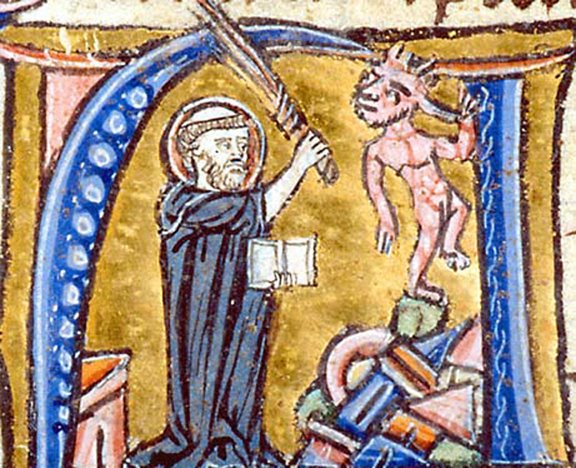
Augustine refuting a heretic


Creed:
A formal statement of religious belief; a confession of faith.
From Latin - means I believe


The Three Ecumenical or Universal Creeds


The Apostles' Creed

I believe in God the Father Almighty, Maker of heaven and earth.

And in Jesus Christ, His only Son, our Lord; who was conceived by the Holy Ghost, born of the Virgin Mary; suffered under Pontius Pilate, was crucified, dead, and buried; He descended into hell; the third day He rose again from the dead; He ascended into heaven, and sitteth on the right hand of God the Father Almighty; from thence He shall come to judge the quick and the dead.

I believe in the Holy Ghost; the holy catholic* Church, the communion of saints; the forgiveness of sins; the resurrection of the body; and the life everlasting. Amen.

* catholic means "universal" and is not a reference to the Roman Catholic Church.


The Nicene Creed

I believe in one God, the Father Almighty, Maker of heaven and earth, and of all things visible and invisible.

And in one Lord Jesus Christ, the only-begotten Son of God, begotten of the Father before all worlds, God of God, Light of Light, very God of very God, begotten, not made, being of one substance with the Father; by whom all things were made; who for us men, and for our salvation, came down from heaven, and was incarnate by the Holy Ghost of the Virgin Mary, and was made man, and was crucified also for us under Pontius Pilate; He suffered and was buried; and the third day He rose again according to the Scriptures; and ascended into heaven, and sitteth on the right hand of the Father; and He shall come again with glory to judge the quick and the dead; whose kingdom shall have no end.

And I believe in the Holy Ghost, the Lord and Giver of life, who proceedeth from the Father and the Son; who with the Father and the Son together is worshiped and glorified; who spake by the Prophets. And I believe in one holy catholic and apostolic Church.I acknowledge one Baptism for the remission of sins; and I look for the resurrection of the dead, and the life of the world to come. Amen.


The Athanasian Creed

Written against the Arians.

Whosoever will be saved, before all things it is necessary that he hold the catholic faith. Which faith except every one do keep whole and undefiled, without doubt he shall perish everlastingly.

And the catholic faith is this, that we worship one God in Trinity, and Trinity in Unity; Neither confounding the Persons, nor dividing the Substance. For there is one Person of the Father, another of the Son, and another of the Holy Ghost. But the Godhead of the Father, of the Son, and of the Holy Ghost is all one: the glory equal, the majesty coeternal. Such as the Father is, such is the Son, and such is the Holy Ghost. The Father uncreate, the Son uncreate, and the Holy Ghost uncreate. The Father incomprehensible, the Son incomprehensible, and the Holy Ghost incomprehensible. The Father eternal, the Son eternal, and the Holy Ghost eternal. And yet they are not three Eternals, but one Eternal. As there are not three Uncreated nor three Incomprehensibles, but one Uncreated and one Incomprehensible. So likewise the Father is almighty, the Son almighty, and the Holy Ghost almighty. And yet they are not three Almighties, but one Almighty. So the Father is God, the Son is God, and the Holy Ghost is God. And yet they are not three Gods, but one God. So likewise the Father is Lord, the Son Lord, and the Holy Ghost Lord. And yet not three Lords, but one Lord. For like as we are compelled by the Christian verity to acknowledge every Person by Himself to be God and Lord, So are we forbidden by the catholic religion to say, There be three Gods, or three Lords.

The Father is made of none: neither created nor begotten. The Son is of the Father alone; not made, nor created, but begotten. The Holy Ghost is of the Father and of the Son: neither made, nor created, nor begotten, but proceeding. So there is one Father, not three Fathers; one Son, not three Sons; one Holy Ghost, not three Holy Ghosts. And in this Trinity none is before or after other; none is greater or less than another; But the whole three Persons are coeternal together, and coequal: so that in all things, as is aforesaid, the Unity in Trinity and the Trinity in Unity is to be worshiped. He, therefore, that will be saved must thus think of the Trinity.

Furthermore, it is necessary to everlasting salvation that he also believe faithfully the incarnation of our Lord Jesus Christ. For the right faith is, that we believe and confess that our Lord Jesus Christ, the Son of God, is God and Man; God of the Substance of the Father, begotten before the worlds; and Man of the substance of His mother, born in the world; Perfect God and perfect Man, of a reasonable soul and human flesh subsisting. Equal to the Father as touching His Godhead, and inferior to the Father as touching His manhood; Who, although He be God and Man, yet He is not two, but one Christ: One, not by conversion of the Godhead into flesh, but by taking the manhood into God; One altogether; not by confusion of Substance, but by unity of Person. For as the reasonable soul and flesh is one man, so God and Man is one Christ; Who suffered for our salvation; descended into hell, rose again the third day from the dead; He ascended into heaven; He sitteth on the right hand of the Father, God Almighty; from whence He shall come to judge the quick and the dead. At whose coming all men shall rise again with their bodies, and shall give an account of their own works. And they that have done good shall go into life everlasting; and they that have done evil, into everlasting fire.

This is the catholic faith; which except a man believe faithfully and firmly, he cannot be saved.

Why do we say creeds? To remind ourselves of what we believe. Christians commonly recite creeds to remind themselves that they do believe in the Trinity and that over the centuries false teachers have tried to lead Christians astray from the Trinity. Creeds are our reminders of what scripture teaches. The three main creeds are the Apostles Creed, the Nicene Creed and the Athanasian Creed. The creeds seem as important today as hundreds of years ago when false teachings abounded. Even today, there are Christian churches denying the trinity.

This quiz has been going around the blogosphere and is educational:


You scored as Chalcedon compliant. You are Chalcedon compliant. Congratulations, you're not a heretic. You believe that Jesus is truly God and truly man and like us in every respect, apart from sin. Officially approved in 451.

Chalcedon compliant


100%

Nestorianism


33%

Monophysitism


33%

Monarchianism


33%

Docetism


0%

Arianism


0%

Apollanarian


0%

Donatism


0%

Adoptionist


0%

Gnosticism


0%

Pelagianism


0%

Albigensianism


0%

Modalism


0%

Socinianism


0%

Are you a heretic?
created with QuizFarm.


And from the Terrible Swede...

Here's some information about the 'Heretic Quiz'

The Council of Chalcedon 451 A.D
.:

“We, then, following the holy Fathers, all with one consent, teach men to confess one and the same Son, our Lord Jesus Christ, the same perfect in Godhead and also perfect in manhood; truly God and truly man, of a reasonable [rational] soul and body; consubstantial [coessential] with the Father according to the Godhead, and consubstantial with us according to the Manhood; in all things like unto us, without sin; begotten before all ages of the Father according to the Godhead, and in these latter days, for us and for our salvation, born of the Virgin Mary, the Mother of God, according to the Manhood; one and the same Christ, Son, Lord, Only-begotten, to be acknowledged in two natures, inconfusedly, unchangeably, indivisibly, inseparably; the distinction of natures being by no means taken away by the union, but rather the property of each nature being preserved, and concurring in one Person and one Subsistence, not parted or divided into two persons, but one and the same Son, and only-begotten, God the Word, the Lord Jesus Christ; as the prophets from the beginning [have declared] concerning him, and the Lord Jesus Christ himself has taught us, and the Creed of the holy Fathers has handed down to us.”


Apollarianism: Doctrine of Apollinaris* of Laodicea and his followers: He opposed Arianism but still denied XP had a human soul.

Pelagianism: Doctrine of Pelagius. A lot of stuff here. We as Lutherans reject all forms of this.

Donatism Schism: Remember it's the Word of God combined with the elements and not the man reciting the words. I struggle with this one sometimes.

Docetism: The heresy that Christ only apparently suffered and not really suffered. Cousin to Arianism.

Arianism: This one's a big one! In my words: "It's a denial of God interacting in the physical world that He created."

Adoptionism: The XP was adopted into being the Son of God. A denial of our ecumenical creeds.

Gnosticism: Another big one - it comes in many forms. For instance if you have someone ask you, "Do you know the secret name of God?" BS. Yeah, they're a gnostic. (BTW, the answer is: 42).

Monophysitism: this one affirms only the divine nature of XP.

Monarchianism: I'm simplyifing this one too much: it's a denial of the Trinity.

Socinianism: Another denial of the Trinity.

Nestorianism: Denies that there is no communion between the two natures of XP. The Reformed have this problem.

Albigensianism
: An odd one indeed.

Modalism: This is simlar to Monarchianism.

Thursday, January 19, 2006

Madre's Missive: Just give Jesus a chance...

Madre is at the LCMS Symposium in Fort Wayne, IN this week. She reports from an excellent presentation on the doctrine of justification. She writes...


Now there's some bad bumper-sticker theology. Literally. It's a bumper sticker I saw that has been stuck in my mind since Saturday night.

I'm sitting here at the Fort Wayne Symposia listening to some really great presentations on Justification and it's mind-boggling how different the Lutheran doctrine of Justification is from what other denominations teach. Some people, like most American Protestants, that we are saved when we recite the oh-so-Biblical "sinner's prayer" and take Jesus up on His offer and invite Him into our hearts. Read on...

Sunday, January 15, 2006

Extra Nos: A Religion to Make Us Happy?

I've been getting to know a very good blogger (i.e. posts things that interest me!), Mr. L.P. Cruz keeps the blog, Extra Nos: it is outside us. Be sure to read Extra Nos: A Religion to Make Us Happy? While there, check out his investigations into Lutheran doctrine.

Saturday, January 14, 2006

Lutheran Carnival XV is up


Vicar Charles Lehmann hosts Lutheran Carnival XV with help from Leo the Great and no help from me. I am sorry to say that this is the very first carnival I've missed, if memory serves.

Monday, January 09, 2006

We were sinful from a zygote...


I was listening to Pastor Todd Wilken's Issues Etc. interviewing Dr. Lamb of Lutherans for Life. Dr. Lamb said something that struck me. David, inspired by the Holy Spirit, says in Psalm 51:5:

Surely I was sinful at birth,
sinful from the time my mother conceived me.
~Psalm 51:5


Dr. Lamb said that Jesus didn't begin as a baby in the manger; he began as a zygote. He began as a one-celled human being in Mary because that is where our sinfulness begins. Jesus' redemptive process had to begin at that point.

I never thought about it like that before.

Thursday, December 29, 2005

The ugly sides of justification and sanctification

My first blog, the one that evolved into Katie's Beer, was always meant as a journal or record of the days that my family exists on this earth. At the very least, I will print up the pages and put them in a scrapbook which waits for the day when my children will be interested in their history. This blog, Be Strong in the Grace, was also meant as a journal of the spiritual life of my family. It was born of a small amount of anger at the false teachings we fell prey to in earlier days, but a greater sense of joy and urgency in making a permanent record of being retaught Christ's doctrines and laying them on top of man's doctrines we had chosen to follow in the past.

The one good thing of coming from a pietistic life to a life of grace is the removal of the large sack on my back; the sack which contained the good works which proved that I would be found in Christ on judgment Day. To say that a weight was lifted off my back on that day, the day I was convicted by the Holy Spirit of the futility of my own efforts to sanctify myself, is a gross understatement. To realize that I had been forgiven long ago and had been given salvation long ago was a bittersweet joy. How many days of my life had I wasted following man's teachings on how to be a better Christian! Days of self-imposed suffering that I could never have back.

Once the heavy load was removed by Christ, I sometimes was overwhelmed with freedom. I listened to secular music, amazed by the depth and beauty of many songs. I could watch movies and television shows, weed through what was good and bad, and be prepared to discuss a popular show's merits with friends and co-workers. I didn't fall into a trap of listening to or watching today's seedier fare; my well-honed aversion to offensive material remained in place. I enjoy my freedom to participate in what is good in today's culture, while being able to identify faith-harming offerings. My kids are another matter...

My two children were raised by a pietistic mother up until they were of confirmation age, 5th and 7th grades. Up to that point, I had carefully controlled what they watched, listened to and did. They obeyed me, most of the time, because they wanted to be found good Christians. I had observed that kids easily pick up on pietistic motivation, but that often backfires in the teenage years. Now that we have abandoned pietism for a life of faith and grace, our daily life hasn't changed that much, but our theological perspective has changed. My kids are teenagers now. They have both attended confessional Lutheran schools and gone through rigorous catechismal training. They have gone from self-centered praise sessions with little gospel preached to balance the law-based sermons, to more reverent and liturgical divine services with law and gospel rightly proclaimed. Both of them are able to explain to their friends concepts I never knew at their age - justification, sanctification, law and gospel, liturgy, etc. They are loving and wonderful children and I have every confidence that they will happily grow into Christian adulthood.

Yet from these two well-educated and well-loved souls sometimes comes gossip, slander, anger, coarse talk, and other sins. They sometimes defend television shows, movies and music that are completely incompatible with Christian doctrine. When I witness these acts, my old pietistic voice shouts at me that I've failed as a mother and as a Christian. Then I'm faced with the choice of beating down their spirits in an indignant and angry voice while waving God's Word in my hand or confidently running to Christ for the grace to calmly and lovingly point them to the cross.

This week, I was blessed, reassured and challenged by Reverend Paul T. McCain's post, Walk in Christ, As Christ Loved Us. He writes:

We have been buried with Christ by baptism into death, and raised to new life in Him. We are temples of the Holy Spirit, purchased and won from sin, death and hell by the precious blood of Christ. How then are we to deal with popular culture that surrounds us with vile and degrading speech, sexual impurity and all manner of sinful behaviors, which are rewarded, praised and idolized by so many?

Sadly, there are some who believe that they are free to consume the sinful pollution pumping out of the sewers of popular culture. Some Christians are so confused about what lives of sanctification are all about that they mistakenly think that concern about such things is somehow "pietism" or that striving to lead holy and pure lives marks one as a Pietist. This is wrong. This is error. This is sin.

The Gospel is never an excuse. Justification is about justifying sinners, not sin. The Gospel is about forgiveness of sin, not license to sin. We are set free to live new lives in Christ, not remain in the muck and mire of sin. We are not to think that we can do whatever we want just because we can run to church on Sunday to be forgiven.

We all need to keep a close guard over what comes our out of our mouths, and what we permit to fill our eyes, and our ears. We are to be serious about lives of Christian sanctification. No excuses. No avoiding the subject. We say, "No" to anything that is contrary to God's will in our lives, and say "Yes" to the upward calling of God that is ours in Christ Jesus. Lord, have mercy on me for those times I've forgotten, and neglected, my calling in Christ! Read on...


Still, I am sometimes bothered by my teens', and sometimes my own, immature understanding of grace and forgiveness. Too often they talk and act with the false confidence that they are already forgiven for whatever they might do. Is this what confessional Lutheranism has brought us, I wonder? Then I am reminded that all have sinned and have fallen short of the glory of God, pietists and Lutherans alike. We each have our areas of weakness. The Pietists grow to depend on salvation by works and Lutherans are tempted to flaunt their grace. Still, the Holy Spirit comforts me with God's Word proclaiming grace, forgiveness, peace and power.

The word of the cross is folly to those who are perishing, but to us who are being saved it is the power of God. For it is written, "I will destroy the wisdom of the wise, and the discernment of the discerning, I will thwart." Where is the one who is wise? Where is the scribe? Where is the debater of this age? Has not God made foolish the wisdom of the world? For since, in the wisdom of God, the world did not know God through wisdom, it pleased God through the folly that we preach to save those who believe. . . We preach Christ crucified. . . Christ, the power of God and the wisdom of God. For the foolishness of God is wiser than men, and the weakness of God is stronger than men. 1 Cor. 1:18-25


Friday, December 23, 2005

Katie Luther


Be sure to listen to the 12/20/05 Issues, Etc. archived program on Martin Luther's wife, Katherina von Bora Luther with Dr. Martin Noland of Concordia Historical Institute and Issues Etc. host Rev. Todd Wilken.


Originally posted on 6/23/05
Bethany Lutheran Theological Seminary's website has links to the Lutheran Synod Quarterly . I was looking through it this morning for a little inspiration and this article caught my eye: The First Lady of the Reformation by Gaylin Schmeling. It is very short, so I've posted it here.

Katherine von Bora is the best known woman of the Reformation because she was Luther's wife. While Katherine has been eclipsed in history by the great fame of her husband, she was far from a wallflower. She was a rock of support at her husband's side throughout their married life.
Katherine was born in January of 1499, and at the age of ten she was placed in the nunnery at Nimschen near Grimma when her father remarried.

In the 1520s the writings of Luther began to infiltrate the nunnery. The message of salvation through faith alone in Christ brought comfort and peace to the sisters' hearts. A number of them turned to Luther for advice and he counseled escape, which was shortly accomplished. On April 7, 1523, Katherine and the other sisters reached Wittenberg. Luther felt responsible for finding suitable mates for the former nuns and managed for the most part, but this was not the case in Katherine's situation. This may be due to the fact that she had her eye on Luther. In any event Luther and Katie were married in June of 1525. Their relationship probably was not the most romantic at the start, yet years later Luther would declare, "I would not exchange Katie for France or Venice, because God has given her to me, and other women have worse faults."

With this marriage the Black Cloister of Wittenberg became the first Lutheran parsonage. With marriage came also an entirely different lifestyle for Luther. Katherine brought order out of chaos at the Black Cloister. Not only did she provide a clean house and a made bed, which were an unknown luxury for the unmarried Luther, but she also brought about financial responsibility. She kept Luther from giving away everything they had and she put the household on a budget. Katherine helped support the household by managing a farm and a brewery. It was not long before Martin and Katherine had still more responsibility. Within eight years they became the parents of six children. Three sons and three daughters were born to this union. They also raised a number of orphaned relatives.

Katherine was a faithful wife to Luther. In times of sickness she was his compassionate nurse. In Lutherís dark periods burdened down by the struggles of life, Katie was able to comfort him with that same long hidden Gospel treasure that God through Luther had restored to the world. Katie was indeed Luther's faithful rib. Katherine saw the death of her beloved husband in 1546 and outlived him by six years. In the summer of 1552 the plague broke out in Wittenberg. By fall Katie decided they had to leave. On the way the horses became frightened and bolted. Katie jumped from the wagon and was seriously injured. For months she lay suffering and finally died in the Lord on December 20, 1552.

One of the greatest legacies the church has received from the marriage of Martin and Katherine Luther is the Lutheran parsonage. The Luther home became the example for future Lutheran parsonages and Lutheran homes in general. The Luther house was given to hospitality. It was filled with children, students, and relatives. There was always a place for those in need. It was a place of culture and music and of joy and happiness.

This heritage continued even in the Lutheran Church in America. The early Lutheran parsonages were shelters for the needy, inns for travelers, and centers of culture. Frontier parsonages such as the home of Elisabeth and Ulrik Koren were a great blessing to the Lutheran Church. May the Lutheran home and parsonage always be a place of hospitality. This is the legacy of Katie Luther, the first lady of the Reformation.

Friday, December 16, 2005

Let All Mortal Flesh Keep Silence


A reprint from one year ago...

On my earlier Fernando Ortega on Baptism post, Chris Jones added...
"Let All Mortal Flesh Keep Silence" is certainly not a Baptist hymn, whatever Mr Ortega's denominational affiliation may be. I'm not finding the source where I read of his Baptist background, so don't quote me on that one. (You know how that goes; you read an article once...) However, he collaborates with many Baptist artists and organizations; it is a fair association, I think. A person's denominational association does not always determine their theology, I have learned. This man's gift of songwriting, song selection and music style has richly blessed my life and faith. On a Fernando Ortega CD, you will hear soft and lovely piano playing "accented by cello, fiddle, and Irish flute, creating a beautiful blend of Spanish, Celtic, and American folk music. With his velvet voice, Ortega celebrates God's majesty and faithfulness and paints vivid images of the Southwestern landscapes of his own childhood. " (from a Today's Christian Woman, November/December 1997 review) Read more reviews of his music at Christianity Today. You can sample or buy the CD, Storm, from his website, FernandoOrtega.com.

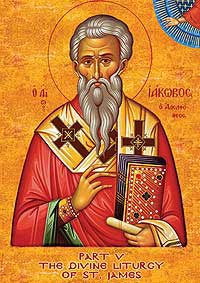
Chris also wrote of the hymn, "It comes from the Liturgy of St James of Jerusalem, and dates from the 4th century (if not earlier). It is sung in the liturgy while the priest and acolytes enter the altar with the bread and wine to be consecrated. Some Protestants alter the words of the hymn because it teaches the Real Presence. I wonder if Ortega's version includes these words:
Lord of Lords in human vesture, In the body and the blood
He will give to all the faithful, His own self for heavenly food"

I decided to research Chris' question. I just listened to the song. He sings every verse that was printed on Twylah's post. Indeed, Fernando Ortega does sing the verse referring to Holy Communion! By singing that verse, he may or may not indicate that he believes in the Real Presence of Christ at Holy Communion. He may have just wanted to be true to the original lyrics, although I don't know what Christian could sing words of worship which he didn't mean. What a beautiful verse that is, His own self for heavenly food, especially when you first read Chris Jones' description: It is sung in the liturgy while the priest and acolytes enter the altar with the bread and wine to be consecrated. If anyone has ever been in an Orthodox service, you can imagine the sense of the holiness and worship of our God present there. You can hear ancient voices worshiping the one True God a thousand years before you were born. With that in mind, read the verses to this song again, singing it softly to yourself. When Fernando sings this hymn, he softly and slowly plays the piano and is accompanied by a quiet mandolin. At the last verse, he sings nearly accapella, with only a few piano chords, of the seraphim and cherubim hiding their faces in the presence of God as they sing "Alleluia Lord Most High". I have the feeling that this is a clearer picture of worship, in quietness and utter humbleness.


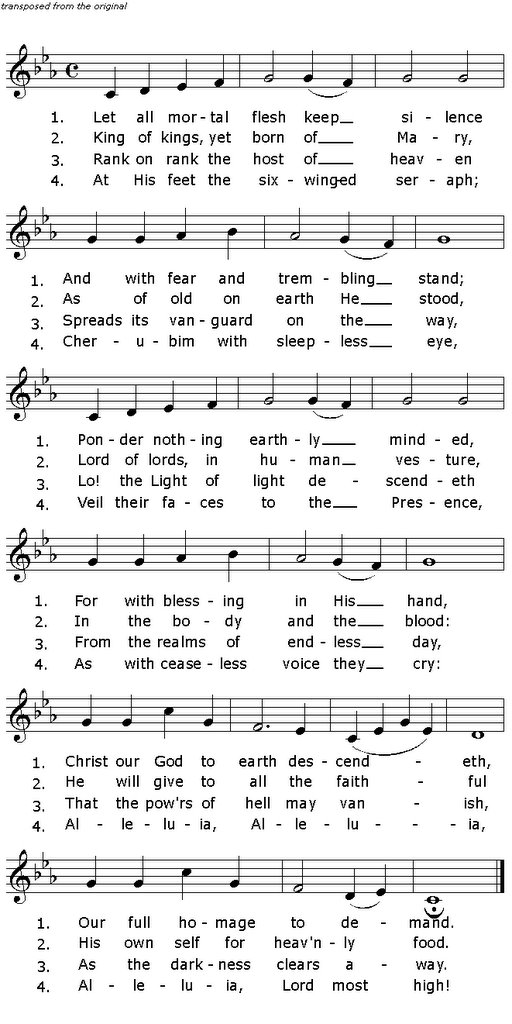
Let All Mortal Flesh Keep Silence
from the Liturgy of St. James
Let all mortal flesh keep silence,
And with fear and trembling stand;
Ponder nothing earthly minded,
For with blessing in His hand,
Christ our God to earth descending
Comes our homage to demand.
King of kings, yet born of Mary,
As of old on earth He stood,

Lord of lords in human vesture,
In the body and the blood,
He will give to all the faithful
His own Self for heavenly food.

Rank on rank the host of heaven
Spreads its vanguard on the way;
As the Light of light, descending
From the realms of endless day,
Comes, the powers of hell to vanquish,
As the darkness clears away.
At his feet the winged seraph,
Cherubim with sleepless eye,
Veil their faces to the Presence,
As with ceaseless voice they cry:
"Alleluia, alleluia, alleluia, Lord Most High!"

You can listen to this hauntingly beautiful liturgy here.
Ortega's version is here.
This clip reveals some of Ortega's guitar work.
Originally posted 12-22-04

Thursday, December 08, 2005

Pietism today

Philipp Jakob Spener, father of Pietism

A fascinating broadcast on Issues, Etc., Pietism and American Evangelicalism, featuring Dr. Martin Noland and Pastor Todd Wilken, is so full of good commentary that I must recommend it! I've listened to it three times so far and plan to listen again. Maybe I can earn a degree listening to Issues, Etc broadcasts...

Hour 1 WMA Hour 1 MP3
Hour 2 WMA Hour 2 MP3

Tuesday, December 06, 2005

Amor et Labor: Reformation Quiz results

A while back I took the Reformation Quiz posted by Amor et Labor. He's compiled quizzes results from all over the blogosphere and summarized them on his blog: Reformation Quiz results

Sunday, December 04, 2005

Dare to be a sinner!

Mr. and Mrs. Sinner


The lovely couple above are sinners and, actually, Mr. and Mrs. Walter Sinner. I don't recommend doing a Google search for sinners or sin (yikes!), but this interesting photo showed up in my search. I wonder if the Sinner family thought of themselves as sinners, also. Many Christians today buy into the modern false teaching that one can become less and less sinful as you "progress" in faith. I used to believe that. After twenty years of trying to perfect my faith and become more Christian-ly, I was utterly depressed. I was a failure, I thought. What hope could I give to my kids if their own mother couldn't become more saintly. Thankfully, the Holy Spirit led me to a pastor and church who told me something new: I was a sinner still and always would be. That scriptural truth changed the course of my life and faith. I had already known that Christians still sinned, but I had allowed myself to be taught that sins were mistakes that happened when you weren't following in the footsteps of Christ closely enough. What I didn't know is that sin is a condition which permeates the earth, our culture, our bodies and our minds. And once I was able to see myself, and the whole of earth, as in a permanent sin condition, it then became clear where my help was to come from. I have found that only through clinging to the cross in desparation for salvation from my sins, in thankfulness for the act of grace that saved me and in hope for the world to come, can I even begin to imitate Christ. Any good work, done for the purpose of being a good work, becomes tainted or filthy in God's eyes. I live my life as Mrs. Sinner and, despite all my efforts otherwise, I often live up to the title! Thankfully, I am also Mrs. Saint, but I will never live up to that title until I move on to heaven.

In a related post, Tim the Enchanter of Beggars All writes:

"As I stumbled into the Reformation, this single doctrine struck me as the only thing that 'made sense'. After years of pretending to be 'victorious', it was such a blessed relief to simply be honest about myself and my continued need for grace.

Dietrich Bonhoeffer writes about 1 John 1 and "walking in the light" in the last chapter of his Life Together:

"He who is alone with his sin is utterly alone. It may be that Christians, notwithstanding corporate worship, common prayer, and all their fellowship in service, may still be left to their lonliness. The final break-through to fellowship does not occur, because, though they have fellowship with one another as believers and as devout people, they do not have fellowship as the undevout, as sinners. The pious fellowship permits no one to be a sinner. So everybody must conceal his sin from himself and from the fellowship. We dare not be sinners. The fact is that we are sinners!

But it is the grace of the Gospel, which is so hard for the pious to understand, that it confronts us with the truth and says:
You are a sinner, a great, desperate sinner; now come, as the sinner that you are, to God who loves you. He wants you as you are; He does not want anything from you, a sacrifice, a work; He wants you alone. "My son, give me thine heart" (Prov. 23:26) You can hide nothing from God. The mask you wear before men will do you no good before Him. He wants to see you as you are, He wants to be gracious to you...He wants to love you."

Wednesday, November 30, 2005

Winter is at hand...don't believe it!


Luke 21:25-36
25"There will be signs in the sun, moon and stars. On the earth, nations will be in anguish and perplexity at the roaring and tossing of the sea. 26Men will faint from terror, apprehensive of what is coming on the world, for the heavenly bodies will be shaken. 27At that time they will see the Son of Man coming in a cloud with power and great glory. 28When these things begin to take place, stand up and lift up your heads, because your redemption is drawing near."

29He told them this parable: "Look at the fig tree and all the trees. 30When they sprout leaves, you can see for yourselves and know that summer is near. 31Even so, when you see these things happening, you know that the kingdom of God is near.

32"I tell you the truth, this generation[a] will certainly not pass away until all these things have happened. 33Heaven and earth will pass away, but my words will never pass away.

34"Be careful, or your hearts will be weighed down with dissipation, drunkenness and the anxieties of life, and that day will close on you unexpectedly like a trap. 35For it will come upon all those who live on the face of the whole earth. 36Be always on the watch, and pray that you may be able to escape all that is about to happen, and that you may be able to stand before the Son of Man."
In Minnesota, we embrace winter and rejoice in its beauty. It is true that winter can be beautiful. However, would you want to spend eternity in winter? The truth is that winter is harsh and unforgiving. It brings a temporary death or absence of many things. Some of us enjoy cross-country skiing or snowmobiling, while others struggle to pay for their heating bills or warm clothing. That is winter's reality. God intends for us to live in the warmth of summer with Him in eternity. Vicar Lehmann posted a sermon that reminds us that Jesus is coming and He's bringing summer with Him! Please read his message in a quiet moment when you can reflect on what he is trying to teach us...

Beloved, today Jesus comes to you and announces the coming of the Summer. Do not listen to the world. As wind buffets your house and white flakes assail your face, you might believe winter is at hand. Do not believe it. Jesus comes with the end of another season, and His reign is endless day. Jesus is a Summer Lord, and if you listen to His Words carefully, you know it's springtime. “Behold the fig tree. Whenever it is already sprouting leaves, you know that Summer is nigh.” For, beloved, it must be spring when we are so close to the advent of the King. Jesus is the King who brings with Him Eternal Summer. Read on...

A sermon for Advent 2 based on Luke 21:25-36 by Vicar Charles Lehmann

Saturday, November 26, 2005

Accepting Christ's first coming...


Last Judgment
by GIOTTO di Bondone (b. 1267, Vespignano, d. 1337, Firenze)
from the Web Gallery of Art

You Must Accept Christ's First Coming

I admit that I have a problem with the word Accept when used anywhere near a discussion of faith. I recently saw it in my son's confessional Lutheran catechism materials and temporarily freaked out... quietly to myself...lest to reinforce my son's suspicion that his mother is, indeed, completely crazy. Knowing our pastor well, I decided to give him the benefit of the doubt that the word was used appropriately. That sort of reaction is a remnant of my oversensitivity to false teachings and a reminder of my being blown about in the wind by every false teaching while foolishly drifting from church to church in the Sea of Modern Evangelicalism.

I heard that word used again just last week in Pastor Brook's sermon. Pastor Brooks said something very profound. He said that in order to understand that Jesus Christ will return again we must first accept the first coming of Jesus Christ. What did Jesus Christ accomplish in His first coming to us? He fulfilled prophecy, lived a perfect life, taught many things and then became sin for us. Through His becoming sin and being put to death, we were made free - free from the evitable result of our sin nature which is death. This was done out of love for us; our loving Creator wants us to rejoice Him in eternity, yet His holy nature cannot allow sin into that perfect realm of heaven.

Therefore, the reason we rejoice at Christmas is in remembrance of our Savior's birth which signaled the coming love act of Easter and joyful anticipation of our life to come with God in eternity. Accepting (really, a prompting by the Holy Spirit) what Jesus Christ's first coming truly means is crucial to a Christian's faith. What can I possibly have to be joyful about if it isn't about the fact that my Redeemer already came to redeem me? I spent so many years trying to become less sinful so that I would be found without blame on Judgment Day. I believe that such thinking is the child of pietism, the idea that one can be found blameless by their own works. I have since been taught that the only way I can be found blameless is to be found in Christ, not trying to act Christ-like. In a beautiful reversal of cause and effect, the only way to become more Christ-like is to become more and more aware of how sinful we are and to always reflect on how our only hope is in the birth, life, death and resurrection of Christ Jesus.


Nativity
by VOS, Marten de(b. 1532, Antwerpen, d. 1603, Antwerpen)
From the Web Gallery of Art

Thursday, November 24, 2005

Ask the Pastor: Give Thanks to the Lord

From Pastor Snyder...

We don’t need to remind God to bless us. We don’t even need to thank Him. Yet, it is good to thank Him and to ask Him to continue to supply our needs of body, mind, and soul. Psalm 136, the basis of Milton’s hymn I quoted, mentions giving thanks because “he gives food all flesh.” But it also praises Him because “he is good, because his steadfast love endures forever.” The Psalmist reminds us that this is the God of gods, the Lord of lords, the Doer of miracles. He’s the One “who by understanding made the heavens.” Read on...Ask the Pastor: Give Thanks to the Lord

Wednesday, November 16, 2005

More on monergism and synergism

I hadn't expected that my exploration of the terms monergism and synergism would lead to a review of the Eastern Orthodox and Baptist doctrines. However, it seems that those coming from either background look at synergism through that corresponding lens. My background and lens is in the doctrine of Baptist and its daughter, American Evangelicalism, churches. The continuing theme of these responses is that synergism, no matter how practiced, is a form of works righteousness. In my experience, along with the scripture cited below, synergism is a path to spiritual death. One cannot cooperate with God in salvation, which is why a Savior was necessary. The more years spent thinking that one can do anything to become justified or sanctified, the further from the gospel one moves. This is my experience.

Orthodox

Question: Can the Eastern Orthodox position on Theosis be confused with the Lutheran terms for sanctification? From what I understand about Theosis is that man should not count the race won (I guess this is a position of humility) and strives for perfection. I also understand that the Orthodox view St. Ambrose as legit, that is, faith without the works saves. Could terms be misused for actual lines of agreement?

Answer: In Eastern Orthodox teaching theosis or divinization is a process by which human beings achieve the union with God that was lost in the fall into sin, a process whereby human beings become participants in the divine nature (2 Peter 1:4). The Orthodox do not think of theosis in terms of pantheism, however. Rather it is the process by which human beings are restored to the likeness of God. “As we cooperate with God's grace, he renews the distorted image in us so that we attain the likeness and consequently become godlike.” (Daniel B. Clendenin, Eastern Orthodox Christianity: A Western Perspective. p.134, Grand Rapids: Baker Books, 1994)

The Eastern Orthodox reject the Lutheran teaching of justification by faith alone and in reality confuse the scriptural doctrines of justification and sanctification. The disagreement between Easter Orthodoxy and Lutheranism is more than an argument about terms. The Eastern Orthodox have no understanding of total depravity, that human beings are born dead in trespasses and sins, unable to cooperate with God in conversion. In fact the Eastern Orthodox are strong proponents of synergism. They believe that a sinful human being can and must cooperate with God in every stage of the "process" of salvation.

Lutherans teach that human beings cannot cooperate in conversion or justification. Our salvation is attributable only to what God has done for us. Justification is always full and complete. Our salvation is sure and certain through faith in Jesus. Sanctification is a process in which the Holy Spirit makes us more God-like and leads us to produce good works in our lives. Good works have nothing to do with saving us (Ephesians 2:8-9). They show that we have been saved by God's grace alone. They show that we are new creatures of God created to do good works (Ephesians 2:10). Good works are our response of thanks to the God that has done everything for us. Sanctification in this life will always be incomplete because we will retain a sinful nature until the day we die. In sanctification our new man (the faith or new life which the Holy Spirit has created in us) does cooperate with the Holy Spirit. Yet even in sanctification we recognize that "it is God who works in you both to will and to act according to his good purpose" (Philippians 2:13).


Baptist


Question: I've enjoyed reading your answers to the questions submitted here. I don't know much of Lutheran faith or practices and have found your website very helpful. But, I have to disagree with your answers regarding certain Baptist teachings. I do agree that Baptists, in general, can be varied in their teachings to some degree. But _not_ to the extent of including works as a means of salvation. I am Southern Baptist (the largest group among Baptists by far) and I have never heard anything but that salvation is a free gift offered solely by God's grace...freely offered and given at His desire. The alter call which Baptist churches perform is intended for answers to God's offer....

Answer: ... Please allow me to explain why Lutherans see some Baptists as espousing a subtle form of work righteousness. Those Baptist groups that adhere most closely to the T.U.L.I.P. theology of Calvinism believe that their salvation is entirely in God's hands apart from anything that they can do. Other Baptists are closer to Arminianism and believe that the sinner has a role to play in his own conversion (Decision Theology). They teach that an unconverted sinner must decide for Christ or invite Jesus to come into his life in order to be saved.

Confessional Lutherans see such synergism or human cooperation in conversion as a subtle form of work righteousness. Lutherans believe that sinners by nature are dead in their transgressions and sins (Ephesians 2:1, 5). Because they are spiritually dead they have no power to cooperate in their own conversion and therefore cannot decide for Christ or ask Jesus to come into their lives or do their part. We believe that sinners are purely passive in conversion. God converts the sinner. He alone acts in conversion. The sinner is passive. He is converted by God and becomes a believer. Unbelievers cannot choose Christ. Rather Christ chooses us (John 15:16). If a person is asked to do his own part in conversion, then salvation ceases to be a free gift from God, but something which the sinner at least partially merits or deserves (Romans 4:4ff, Romans 11:5-6).

You state that the Holy Spirit convicts some of their sins and the sinner chooses to answer or not. That sounds to me like Decision Theology, a theology which Confessional Lutherans reject because they see it as work righteous and contrary to Scripture.


Ephesians 2

Made Alive in Christ v. 1-10

1As for you, you were dead in your transgressions and sins, 2in which you used to live when you followed the ways of this world and of the ruler of the kingdom of the air, the spirit who is now at work in those who are disobedient. 3All of us also lived among them at one time, gratifying the cravings of our sinful nature[a] and following its desires and thoughts. Like the rest, we were by nature objects of wrath. 4But because of his great love for us, God, who is rich in mercy, 5made us alive with Christ even when we were dead in transgressions—it is by grace you have been saved. 6And God raised us up with Christ and seated us with him in the heavenly realms in Christ Jesus, 7in order that in the coming ages he might show the incomparable riches of his grace, expressed in his kindness to us in Christ Jesus. 8For it is by grace you have been saved, through faith—and this not from yourselves, it is the gift of God— 9not by works, so that no one can boast. 10For we are God's workmanship, created in Christ Jesus to do good works, which God prepared in advance for us to do.


Saturday, November 12, 2005

Guess who said this...


On his way home...he visited his daughter and son-in-law...on Sunday morning, July 1st, he attended the services at the church when his granddaughter was confirmed. On retiring to his bedroom that evening he asked for a Bible and apparently seemed well and strong. About midnight he became ill and soon realized that death was approaching. Retaining consciousness to the last, he said to those about him: "

Greet my congregations! Greet the brethren!" Turning again in prayer to the Savior, he said, "O Lord Jesus, I am a great sinner, but thou art a merciful Savior. Help me, Lord Jesus! Lord Jesus Christ, my Savior blest, my hope and salvation!"

Then he recited these words from the hymn:

I have Thy Word,
Christ Jesus, Lord,
Thou never wilt forsake me;
This will I plead in time of need:
O help with speed,
when troubles overtake me!"

A few moments later he died peacefully at the age of 69 years. He was buried on Friday, July 6, 1894. His body was laid to rest beside that of his wife in the Spring Prairie cemetary, Keyser, Wisconsin.

Friday, November 11, 2005

Readers' Retreat: Narnia and Dr. Gene E. Veith

Peek Into Narnia

Come to the Readers' Retreat: Delving into The Lion, the Witch and the Wardrobe with Dr. Gene Edward Veith , C.S. Lewis Scholar, hosted by King of Grace Evangelical Lutheran Church, Golden Valley, Minnesota

Saturday, December 10, 2005 from 8:00am to 7:00pm


Cost

~ includes breakfast, lunch and dinner, and the movie ticket.

Students: $32.00 (or $18.00 for lunch only)

Adults: $48.00 (or $35.00 for lunch only)

This event is being hosted by King of Grace Evangelical Lutheran Church
6000 Duluth Street
Golden Valley, Mn 55422
763-546-3131


To register or for more information, call Pastor Matthew Brooks at 763-546-3131 or email to mbrooks@kog.org

Register by November 25th -make checks payable to King of Grace

Schedule:

8:00am - Breakfast

9:00am - Presentation with selected readings and discussion
led by Dr. Veith, C.S. Lewis scholar

Noon - Lunch

1:00pm - Movie: The Lion, the Witch and the Wardrobe

3:30pm - Inklings - a discussion led by Dr. Veith

6:00pm - Dinner


Dr. Gene Edward Veith, Ph. D., is a well-known Lutheran writer and speaker, the Culture Editor of WORLD Magazine and the Executive Director of the Cranach Institute , for the study of Christianity and Culture, at Concordia Theological Seminary. He is the author of 15 books on Christianity and literature, the arts, and culture. Veith is highly respected for his scholarship on Lewis and the Narnia Chronicles. He has taught English literature for 25 years in both Christian and secular colleges. You may view his weekly posts on World Magazine and his daily posts at Cranach blog. He is most recently the author of The Soul of the Lion, the Witch and the Wardrobe.


Also, be sure to read Dr. Veith's review of the movie at World Magazine. Below is an exerpt:

A Review of the Lion, the Witch and the Wardrobe

by Gene Edward Veith

The hype machine is getting cranked up for the upcoming movie, The Chronicles of Narnia: The Lion, the Witch, and the Wardrobe, set to open Dec. 9. The dramatization of C.S. Lewis' classic tale, with its clear symbolism of the gospel, is being marketed to and through churches, in the same way as The Passion of the Christ. WORLD caught one of the "Sneak Peeks" the promoters are staging for pastors and other Christian leaders across the country. (Go to Narniaresources.com for a schedule and ticket requests.) Though the producers of The Passion showed a rough cut of the whole movie, Disney and Walden Media are showing only clips of the Narnia movie. The event also included a walk-through of the plot, presentations from the production companies, suggestions from the evangelistic group Mission America for how churches could use this film, and a presentation from co-producer Douglas Gresham, Lewis' stepson. Judging from the preview, The Lion, the Witch, and the Wardrobe looks very promising, both as a movie and as a Christian testimony.

Continue reading this story by WORLD magazine.

Wednesday, November 09, 2005

Random Thoughts on Dying Well

Daniel relates a good approach to take when considering our own mortality. He writes:

If you google the words dying well, you will find all sorts of things, from euthanasia supporters to spiritual advice to tips on spending your last days well. It goes on and on. What you don't see is people reminding us to live in our baptism, to live in daily repentance, to live the sacramental life, to live our lives in our vocations. All of these things help us to prepare to die well. Ultimately, however, as much as all the repentance, the Eucharist, and everything else I mentioned helps us, to die well is to cling to our baptism.

Monergism and Synergism

These two terms were completely unknown to me until a couple of years ago. I finally found an explanation from the WELS.net site that helps me to understand:

Question: In the Lutheran Churches we are correctly taught salvation thru faith alone. Other Protestant Churches all claim the same teaching of salvation thru faith. However, some denominations, especially Baptists teach that you are saved by asking Jesus into your heart to forgive you. Seems to me they are saying that praying and asking for forgiveness saves you. Where is saving faith in their decision theology. I'm confused.
Sounds like to me they do not include faith in conversion.


Answer: Perhaps the best starting place to answer your question is to remind ourselves that, among professing Christians, there are two different approaches to the doctrine of conversion and salvation: monergism and synergism. And there are variations within those two groups, monergists and synergists.

Monergists (really only strict Calvinists and Lutherans among major church groupings) teach that God alone is the one who saves and that humans have no active role in coming to faith (conversion). Unfortunately, Calvinists also teach that God alone and unilaterally decrees and determines who will be lost, and that makes them different from orthodox Lutherans. But they and we share the conviction that God creates faith and causes the unbeliever to become a believer without any merit, worthiness, or cooperation on our part. That's monergism.

Synergism, on the other hand, teaches that humans have some role to play in conversion and being saved, and that people in some way "work together" with God to bring this about in individual lives. But aside from this basic premise, synergists differ in how they believe the human being contributes to conversion and to what degree the person cooperates with God in being saved. Roman Catholics are synergists (some prefer the term semi-Pelagianists) and so are many Evangelicals (including professing Calvinists, which makes it really confusing). And some who bear the name Lutheran are also synergists (but are Lutherans in name only).

Some synergists teach that some sinners cooperate with God by resisting God and his grace less than other do, and other synergists say that some sinners respond more favorably to God's grace than others do and therefore are saved. And in the example that you gave, namely that of decision theology, synergists treat faith as something the sinner comes up with in response to and in cooperation with God's grace. Faith is ultimately being treated as a cause or condition of salvation, a part of the cooperative effort that the human being is to some degree responsible for. It's sort of like saying, "God does his part by providing Jesus as the Savior and informing us of that Savior, and we must do our part by believing in the Savior and deciding that we will trust him--then we will be saved."