I really enjoyed this thread by Monergon on Theomony blog. Mon writes:
Okay, let's say I'm a new Lutheran (I am) and let's say I still have a lot of Reformed pals (I have) and occasionally we have conversations that vary from low-key to rather intense over areas of theological disagreement (we most definitely do).
In light of this "scenario" what would be *your* answers to the following related questions:
1. When taking into consideration the bondage of the will, how is man able to believe the Gospel and put his faith in Christ?
2. Can a man reject the call of the Gospel and if so, how?
3. At what point does the Holy Spirit indwell a person?
Read on for an interesting thread of comments: Theomony
Wednesday, June 29, 2005


Tuesday, June 28, 2005
Who wrote this? Answered
I have found these two statements very interesting and helpful to my faith. To be honest, one statement I believe is in error. The term "inner witness" means the same thing as your feelings. I am not the first to compare these two statements. I know of at least two authors who use these statements to illustrate opposite approaches to the role of our feelings in faith matters. Who wrote each?
A. "Friends, this evening I have felt the internal witness of the Spirit. On his deathbed my father told me this must happen (""The inward witness, son, the inward witness, that is the proof, the strongest proof of Christianity."") And by God's grace it has happened inside me this very evening." John Wesley
B. "We must not judge by what we feel or by what we see before us. The Word must be followed, and we must firmly hold that these truths are to be believed, not experienced; for to believe is not to experience. Not indeed that what we believe is never to be experienced, but that faith is to precede experience. And the Word must be believed even when we feel and experience what differs entirely from the Word. Martin Luther
A. "Friends, this evening I have felt the internal witness of the Spirit. On his deathbed my father told me this must happen (""The inward witness, son, the inward witness, that is the proof, the strongest proof of Christianity."") And by God's grace it has happened inside me this very evening." John Wesley
B. "We must not judge by what we feel or by what we see before us. The Word must be followed, and we must firmly hold that these truths are to be believed, not experienced; for to believe is not to experience. Not indeed that what we believe is never to be experienced, but that faith is to precede experience. And the Word must be believed even when we feel and experience what differs entirely from the Word. Martin Luther
Saturday, June 25, 2005
The Burr in the Burgh: Is Death a Natural Part of Life?
Pastor Scott Stiegemeyer posts an excellent essay on God and death. The idea that death is not part of God's plan and that death isn't something to rejoice about is a foreign one to me. My years in non-denominational churches were filled with messages that death is part of God's plan and that we should rejoice and be happy that a departed one is with the Lord. To be taught, in the confessional Lutheran church, that God hates death and that it was never part of his original plan was a surprise to me. Of course, we can rejoice that a loved one has gone to be with the Lord, but we can also rightly hate death.
Pastor Steigemeyer writes:
When God created Adam and Eve in the Garden, it was not His purpose for them to die. Death is a result of our sinfulness (sin came into the world through one man, and death through sin, and so death spread to all men because all sinned - Romans 5). And that's why we hate it. Because it is un-natural. And I'd suggest that God hates death even more than we do. Read on...The Burr in the Burgh: Is Death a Natural Part of Life?
Pastor Steigemeyer writes:
When God created Adam and Eve in the Garden, it was not His purpose for them to die. Death is a result of our sinfulness (sin came into the world through one man, and death through sin, and so death spread to all men because all sinned - Romans 5). And that's why we hate it. Because it is un-natural. And I'd suggest that God hates death even more than we do. Read on...The Burr in the Burgh: Is Death a Natural Part of Life?
Thursday, June 23, 2005
Katherine von Bora Luther
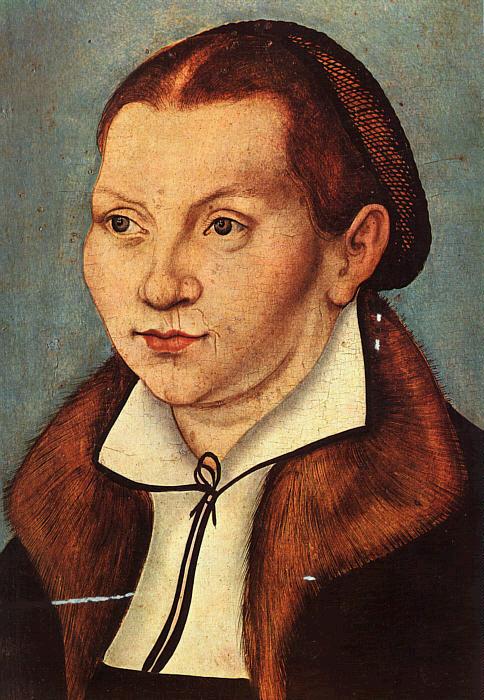
Bethany Lutheran Theological Seminary's website has links to the Lutheran Synod Quarterly . I was looking through it this morning for a little inspiration and something to take my mind off my troubles. This article caught my eye: The First Lady of the Reformation by Gaylin Schmeling. It is very short, so I've posted it here.
Katherine von Bora is the best known woman of the Reformation because she was Luther's wife. While Katherine has been eclipsed in history by the great fame of her husband, she was far from a wallflower. She was a rock of support at her husband's side throughout their married life.
Katherine was born in January of 1499, and at the age of ten she was placed in the nunnery at Nimschen near Grimma when her father remarried.
In the 1520s the writings of Luther began to infiltrate the nunnery. The message of salvation through faith alone in Christ brought comfort and peace to the sisters' hearts. A number of them turned to Luther for advice and he counseled escape, which was shortly accomplished. On April 7, 1523, Katherine and the other sisters reached Wittenberg. Luther felt responsible for finding suitable mates for the former nuns and managed for the most part, but this was not the case in Katherine's situation. This may be due to the fact that she had her eye on Luther. In any event Luther and Katie were married in June of 1525. Their relationship probably was not the most romantic at the start, yet years later Luther would declare, "I would not exchange Katie for France or Venice, because God has given her to me, and other women have worse faults."
With this marriage the Black Cloister of Wittenberg became the first Lutheran parsonage. With marriage came also an entirely different lifestyle for Luther. Katherine brought order out of chaos at the Black Cloister. Not only did she provide a clean house and a made bed, which were an unknown luxury for the unmarried Luther, but she also brought about financial responsibility. She kept Luther from giving away everything they had and she put the household on a budget. Katherine helped support the household by managing a farm and a brewery. It was not long before Martin and Katherine had still more responsibility. Within eight years they became the parents of six children. Three sons and three daughters were born to this union. They also raised a number of orphaned relatives.
Katherine was a faithful wife to Luther. In times of sickness she was his compassionate nurse. In Lutherís dark periods burdened down by the struggles of life, Katie was able to comfort him with that same long hidden Gospel treasure that God through Luther had restored to the world. Katie was indeed Luther's faithful rib. Katherine saw the death of her beloved husband in 1546 and outlived him by six years. In the summer of 1552 the plague broke out in Wittenberg. By fall Katie decided they had to leave. On the way the horses became frightened and bolted. Katie jumped from the wagon and was seriously injured. For months she lay suffering and finally died in the Lord on December 20, 1552.
One of the greatest legacies the church has received from the marriage of Martin and Katherine Luther is the Lutheran parsonage. The Luther home became the example for future Lutheran parsonages and Lutheran homes in general. The Luther house was given to hospitality. It was filled with children, students, and relatives. There was always a place for those in need. It was a place of culture and music and of joy and happiness.
This heritage continued even in the Lutheran Church in America. The early Lutheran parsonages were shelters for the needy, inns for travelers, and centers of culture. Frontier parsonages such as the home of Elisabeth and Ulrik Koren were a great blessing to the Lutheran Church. May the Lutheran home and parsonage always be a place of hospitality. This is the legacy of Katie Luther, the first lady of the Reformation.
Tuesday, June 21, 2005
Book tag response
Bunnie Diehl has tagged me! Good thing I already had this post written because my friend, Suzi of Swansmith had already tagged me. So, I untag myself twice with one post. I’ve combined the tags. I've bolded the answers to Bunnie's tag.
Number of books I own:
Let me think… Each room has a minimum of 25 to 50 books, plus another 200 hundred in various places around the house. I’m guessing about 1000. This would demonstrate that I am a book nut. Like my friend Suzi, I have a hard time parting with anything with a written word on it. So that makes me part book nut and part would-be pack rat! I say “would-be” because, thankfully, a married a very non pack-rat person. I would also guess, very safely, that I have given away an equal number of books to the thrift store in my lifetime. I also frequent the church library and love to check out really old doctrine and church history books.
Anxiously awaiting in the mail:
Concordia: The Lutheran Confessions-A Reader's Edition of the Book of
Currently reading (I tend to read several books at a time!)
Sanctification by Harold L. Senkbeil
The Lord Will Answer: A Daily Prayer Catechism
Where in the world is God? By Harold L. Senkbeil
Paul: Ambassador of Peace by Jon D. Buchholz
The Reformation Era: A short history of the Reformation by N.S. Tjernagel
Remembering Tim Horton by Craig MacInnis
Grace for Grace – the first 90 years of the Norwegian Synod (1853-1943 and 1918 – 1943) by S.C.Ylvisaker, Chr. Anderson and G.O.Lillegard.
Last book I read:
Deconstructing Evangelicalism by D.G. Hart – this book confirmed my suspicion that I had been a very shallow evangelical and is an important book to me, especially because it WASN'T written from a lutheran perspective.
Books that have meant a lot to me:
God’s Holy Word – the Bible
Evangelical Lutheran Hymnary
Luther’s Small Catechism
A good dictionary – I have several and we can’t play scrabble without one
The Defense Never Rests by Craig Parton – made me realize my experience in American Christianity was not unique and gave me one of those wonderful, “Hey, I’m not alone on the planet” feelings – this book didn’t change the way I see the world, but it confirmed my change as not unique. This book is important because it gave me confidence that I wasn’t going crazy.
What’s Going on Among the Lutherans? By Patsy A. Leppien and J. Kincaid Smith this book is also important in helping me understand the history of the Christian church in layman's terms.
The People’s Bible Series by Northwestern Publishing House – invaluable bible commentaries
Mamornitz: A History of a Ukrainian Pioneer Community in Saskatechewan, 1900 to 2000 by Jennie Zayachowski - this book is important in helping me understand why my ancestors moved halfway around the world and what they faced. I owe them my freedom.
Directory of Essential Oils by Wanda Sellar – invaluable aid for understanding essential oils.
Smart Medicine for a Healthier Child – treated many a simple childhood illness
Prescription for Nutritional Healing by Balch and Balch
The Educated Child by William J. Bennett – empowered me to be my children’s first teacher
Peekaboo! by Matthew Price and Jean Claverie – my daughter’s first book
Sleep Sound in Jesus (book and CD) – I memorized these songs and sang them every night to my son for at least three years.
The Science Game: an introduction to research in the behavioral science by Neil Agnew and Sandra Pyle – helped me understand statistics and studies, especially how findings can be manufactured and manipulated to suit agendas
The Lord of the Rings by J.R.R. Tolkien
The Chronicles of Narnia by C.S. Lewis
A Wrinkle in Time (and following books) by Madeleine L’Engle
Minnesota: A History of the State by Theodore C. Blegen – helped me realize how cool
Prized books:
The Acorn – my grandfather’s Coe College (
My complete collection of Mary Engelbreit Home Companion magazines
My great-grandmother Viets’ family bible
Embarrassing Book:
The Disciplines of a Beautiful Woman by Anne Ortlund - never did become the perfect woman she was.
Now, who to tag? These are my picks:
This is hard because I can think of so many people whose libraries I would love a glimpse into:
Monday, June 20, 2005
2005 ELS Convention
Please remember in prayer the pastors and delegates to the 2005 Convention of the Evangelical Lutheran Synod meeting in Mankato, Minnesota today through Thursday. These men need our continued prayer as they consider, learn, discuss and vote on matters of our synod. Their aim is to always use scripture as the sole guide for their conduct. God bless them as they meet.
Convention Guide
Live audio webcast: Cut and paste this link into Real Player: http://blc.edu:8000/listen.pls
Convention Guide
Live audio webcast: Cut and paste this link into Real Player: http://blc.edu:8000/listen.pls
Sunday, June 19, 2005
How to win souls for Christ!
What is evangelism? The dictionary gives the definition of an evangel:
[Middle English evaungel, from Late Latin vangelium, from Greek euangelion, good news, from euangelos, bringing good news : eu-, eu- + angelos, messenger.]
In reference to recent posts by Territorial Bloggings, Here We Stand and Bunnie Diehl, I would like to explain my thoughts on evangelism. Before sharing my learned thoughts on witnessing Christ to others, let me explain that I spent over twenty years attending only "Bible" churches and furiously taking notes, buying and reading books and numerous publications on how to witness to others, watching many videos, listening to many famous speakers, taking weekend workshops and spending my days counting my worth by how many souls I had led to the Lord. To my knowledge, I led no one. About two years ago, I became an Evangelical Lutheran. I threw out all my books on how to be a better Christian and how to be a good witness for Christ (seriously - go look for them at Goodwill). I began to reeducate myself and discovered a well-hidden secret:
I am a sinner. You are, too. Together we are hopeless and will keep sinning for the rest of our lives. We are bound for hell because we can't enter heaven unless we are perfect. However, God still loves me and you and desires us to spend eternity with Him in heaven. In an incredible and unfathomable act of love and grace, He gave us His son, Jesus Christ, as an atoning sacrifice for our sins. We have been saved! Rejoice! We can now enter heaven! Believe and be baptized! Share this good news with others!
I didn't learn any of the above from any of the further above-mentioned witness training aids. I learned this secret from the Bible and from a pastor who preaches from it. Because of his accurate proclamation of the good news of our redemption, I was able to pass that good news on to my children, husband, my grandfather, my parents, my parents-in-law, my sister-in-law, my neices and nephews, my brothers and my sister.
What is the difference between my well-trained, but hopelessly futile efforts before and my complete lack of effort with moderate success now? I removed myself from the act of evangelism. I am no witness for Christ other than to simply to give an accurate account for the hope that I have in my heart despite my total worthlessness apart from Christ. I wouldn't dream of driving around with a bumper sticker that says defiantly, "I'm not perfect. Just forgiven." I can't even claim to love Jesus as much as I ought to, as Chris Williams recently and eloquently wrote. My faithless heart forgets Christ on a daily basis. I can't even listen to one sermon without daydreaming for a short while. Only in accepting my perpetual state of sin can I cling to Christ and, with gratitude, shout out the good news to others. That is evangelism.
What we have earned and deserve is death. "The wages paid by sin is death." (Romans 6:23)
For Christ also suffered once for sins, the just for the unjust, that He might bring us to God... (1 Peter 3:18)
But sanctify the Lord God in your hearts, and always be ready to give a defense to everyone who asks you a reason for the hope that is in you, with meekness and fear... (1 Peter 3:15)
This post was inspired by the many reader comments to a post by Michael Spencer, It's Not Easy Talking About Jesus, on Boars Head Tavern.
To learn more about who Jesus is, check out Learn About Jesus.
[Middle English evaungel, from Late Latin
vangelium, from Greek euangelion, good news, from euangelos, bringing good news : eu-, eu- + angelos, messenger.]In reference to recent posts by Territorial Bloggings, Here We Stand and Bunnie Diehl, I would like to explain my thoughts on evangelism. Before sharing my learned thoughts on witnessing Christ to others, let me explain that I spent over twenty years attending only "Bible" churches and furiously taking notes, buying and reading books and numerous publications on how to witness to others, watching many videos, listening to many famous speakers, taking weekend workshops and spending my days counting my worth by how many souls I had led to the Lord. To my knowledge, I led no one. About two years ago, I became an Evangelical Lutheran. I threw out all my books on how to be a better Christian and how to be a good witness for Christ (seriously - go look for them at Goodwill). I began to reeducate myself and discovered a well-hidden secret:
I am a sinner. You are, too. Together we are hopeless and will keep sinning for the rest of our lives. We are bound for hell because we can't enter heaven unless we are perfect. However, God still loves me and you and desires us to spend eternity with Him in heaven. In an incredible and unfathomable act of love and grace, He gave us His son, Jesus Christ, as an atoning sacrifice for our sins. We have been saved! Rejoice! We can now enter heaven! Believe and be baptized! Share this good news with others!
I didn't learn any of the above from any of the further above-mentioned witness training aids. I learned this secret from the Bible and from a pastor who preaches from it. Because of his accurate proclamation of the good news of our redemption, I was able to pass that good news on to my children, husband, my grandfather, my parents, my parents-in-law, my sister-in-law, my neices and nephews, my brothers and my sister.
What is the difference between my well-trained, but hopelessly futile efforts before and my complete lack of effort with moderate success now? I removed myself from the act of evangelism. I am no witness for Christ other than to simply to give an accurate account for the hope that I have in my heart despite my total worthlessness apart from Christ. I wouldn't dream of driving around with a bumper sticker that says defiantly, "I'm not perfect. Just forgiven." I can't even claim to love Jesus as much as I ought to, as Chris Williams recently and eloquently wrote. My faithless heart forgets Christ on a daily basis. I can't even listen to one sermon without daydreaming for a short while. Only in accepting my perpetual state of sin can I cling to Christ and, with gratitude, shout out the good news to others. That is evangelism.
What we have earned and deserve is death. "The wages paid by sin is death." (Romans 6:23)
For Christ also suffered once for sins, the just for the unjust, that He might bring us to God... (1 Peter 3:18)
But sanctify the Lord God in your hearts, and always be ready to give a defense to everyone who asks you a reason for the hope that is in you, with meekness and fear... (1 Peter 3:15)
This post was inspired by the many reader comments to a post by Michael Spencer, It's Not Easy Talking About Jesus, on Boars Head Tavern.
To learn more about who Jesus is, check out Learn About Jesus.
Wednesday, June 15, 2005
incarnatus est: Intolerant Christianity ? You Betcha !
Paul Alms, on incarnatus est writes:
On the level of belief systems and truth claims, Christianity should not apologize for being intolerant or exclusive. Christianity is intolerant. Intolerant not in the sense of jailing or killing enemies but in terms of its creed. Yes, Christianity is and always has been intolerant of the claim that other gods exist or that other religions who worship other gods are somehow “true”. Biblical Christianity has always insisted that the God of the Bible is the creator God. He is the one who made heaven and earth and so is by definition the only true God. All other things that exist are dependent on him as Creator; all others are creatures.
read on: incarnatus est: Intolerant Christianity ? You Betcha !
hat tip to Glen at Territorial Bloggings!
On the level of belief systems and truth claims, Christianity should not apologize for being intolerant or exclusive. Christianity is intolerant. Intolerant not in the sense of jailing or killing enemies but in terms of its creed. Yes, Christianity is and always has been intolerant of the claim that other gods exist or that other religions who worship other gods are somehow “true”. Biblical Christianity has always insisted that the God of the Bible is the creator God. He is the one who made heaven and earth and so is by definition the only true God. All other things that exist are dependent on him as Creator; all others are creatures.
read on: incarnatus est: Intolerant Christianity ? You Betcha !
hat tip to Glen at Territorial Bloggings!
Tuesday, June 14, 2005
random thoughts and writings: new confessional Lutheran blogger
Yet again, I have stumbled across another well-educated teenaged Lutheran blogger. Andrew S. writes Random Thoughts and Writings. This post sure impressed me: random thoughts and writings: my college experience at CUNE I am so thankful for Lutheran schools, especially when my kids come home with some gem or when I read a post like Andrew's.
Be sure to check out his blog and welcome him!
Be sure to check out his blog and welcome him!
Wednesday, June 08, 2005
Introducing Wretched of the Earth
I just discovered a new confessional Lutheran blog from a new confessional Lutheran, RyanWretched of the Earth
He describes his blog: "Seen here are the growing pains of emerging from the vacuity of 'evangelicalism' and rediscovering the grace of God in confessional Lutheranism. But it isn't nearly as profound as that sounds. My alternate description for this page is 'adventures in sanctification'. "
He has plans to travel to Thailand soon:
I'm going to Bangkok in approximately three months with Lutheran World Mission, and I need to raise $10,000. That isn't the news. The news is the fact that this hit me like a ton of bricks today, and I got the dry heaves and passed out at the library. Not quite, but I did start to get a little worried. LCMS (Lutheran Church-Missouri Synod) sent me this book called FriendRaising that is supposed to tell me how to raise support. I guess the premise is that you had better get some friends before you ask anyone for money. It's probably a better plan than my current one of waiting for a benefactor to show up, like in Great Expectations.
He describes his blog: "Seen here are the growing pains of emerging from the vacuity of 'evangelicalism' and rediscovering the grace of God in confessional Lutheranism. But it isn't nearly as profound as that sounds. My alternate description for this page is 'adventures in sanctification'. "
He has plans to travel to Thailand soon:
I'm going to Bangkok in approximately three months with Lutheran World Mission, and I need to raise $10,000. That isn't the news. The news is the fact that this hit me like a ton of bricks today, and I got the dry heaves and passed out at the library. Not quite, but I did start to get a little worried. LCMS (Lutheran Church-Missouri Synod) sent me this book called FriendRaising that is supposed to tell me how to raise support. I guess the premise is that you had better get some friends before you ask anyone for money. It's probably a better plan than my current one of waiting for a benefactor to show up, like in Great Expectations.
Tablethoughts...

Tabletalks
I love the new Tabletalks and am glad for the opportunity to have live, realtime conversations with other Lutherans. Live chatting is quite different from posting thoughts to a blog. The nature of blogging, although often done quickly, gives the writer a chance to consider his or her words before posting and deleting any regretted or reconsidered thoughts. Not so with live chats. Once you say something, your words are floating forever in cyberspace.
I did not sleep well last night. It might have been due to thunderstorms, but I suspect it is due to regret over careless things I said at the table. Let me go on record as saying this about myself. I read ALOT, I study ALOT, I ask ALOT of questions of people. I'm not sure what good actually comes of that; I often think that I'm the jack of all trades, expert of nothing. I have NO business making any statements about synods, including my own. I have a great desire for church fellowship amongst Lutherans who can confess Christ's teachings together, but we sinners live in an imperfect world and it is probably safe to say that there will never be a day that Christ's invisible church mirrors any visible church, synod or denomination.
And so I offer my apology to anyone who I have offended. My own opinions and comments are based solely on my own experiences and conversations. I live in my own little world and I can only give others the weather report from my world. Many of you know so much more than I do and I love listening to you. Thanks for being patient with my arrogance, stupidity and careless words.
I have no ministry; I would never dare to say such a thing. I only write and speak my own thoughts for mostly selfish reasons. Writing helps me make sense of my brief time here on earth. I know that my words have helped people before, but I am positive I have also hurt people with my words. My only hope is that I am able to point others to the cross of Jesus Christ. It is the place I found hope for living and hope for eternity with God.
I look forward to more talks around the table, but I hope to remember to pray first.
Tuesday, June 07, 2005
What Do Lutherans Believe?
After twenty years of searching through the generic "evangelical" world for a true and authentic worship experience and stopping at many churches along the way, I have found authentic worship in the practices of the confessional Lutheranism. Many generic "evangelicals" display a knee-jerk negative reaction to the word "Lutheran". The statement, "I used to be Lutheran 'til I got saved.", is a very common one in the generic "evangelical" movement. I can't argue that a person making such a statement might not have had saving faith during the time he called himself a Lutheran, but I would argue whether he was truly a Lutheran. What does it mean to be Lutheran?
On numerous and un-erasable occasions, when asked what church I attended (a common proof of salvation amongst generic "evangelicals"), I would reply, "Oh, I'm a Christian, but God has called us to attend a Lutheran church right now." Yep. That came out of my mouth many times. To merely say that we attended a Lutheran church was too embarrassing - I had to add a disclaimer in order to identify myself as an authentic "evangelical". It pleased me that the ELCA Lutheran church I attended - the same one I grew up in and returned to when I had grown weary of the antics of the non-denominational world - was rapidly tossing out Lutheran biblical teachings in favor of the watered-down theology of the non-denominational churches I had just come from. At first this pleased me, but then I started to ask myself "What does it mean to be Lutheran?".
These practices caused me to question:
The influence of non-denominational churches on our ELCA church continued, but I didn't know where else to turn. My husband was tired of me asking to switch churches every few years. Other Lutheran synods were never discussed at my church, although conservative non-denominational churches were often mentioned at great examples of churches. The thoughts of popular pastor/writers, like Osteen and Schuler were preached from the pulpit. It was rare to hear a sermon based solely on scripture in my ELCA church. In my continuing quest to answer my questions, I found the WELS website. I spend six months studying every question in Q & A section. It was there that I learned what Lutherans believe and I learned that my church really couldn't call itself Lutheran anymore. I contacted our local ELS church and started meeting with the pastors. Six months later we joined the church.
A new and favorite blogger in the confessional Lutheran blogosphere, Pastor Walter Snyder of Ask the Pastor, answers the question, "What do Lutherans believe?". I would like to add one thing to his answer: the Lutherans he speaks of have very little to do with many ELCA churches you might know. The ELCA synod was born of synods that reject the infallability of scripture, among other key doctrines (doctrine = what Jesus taught). The Lutherans he speaks of most often belong to one of three confessional Lutheran synods: LCMS, WELS and ELS.
Excerpts from What Do Lutherans Believe:
Look closely at the Lutherans and you’ll see resemblances to several other churches. We believe above all else that Jesus Christ is our only Savior from sin, and that we are saved by grace alone, through faith in Christ Jesus. Human works, no matter how good, are seen as the result of salvation, not its cause.
The Lutheran Church is a Biblical church. We hold that the Bible is the only source of Christian teaching. It decides what and how we believe, teach, and confess. In this, you'll see a strong resemblance to other “Bible-believing” churches.
Lutheranism is a preaching church. We proclaim the Word faithfully. We apply the full force of God’s Law to condemn sin and crush the sinner’s confidence. Even more, we pour out full measure of the healing balm of the Gospel: Sin is forgiven, God and man are reconciled in Christ, and the Lord grants fulfilling life on earth and eternal life in His presence to all who believe.
We believe in baptismal regeneration, trusting that Christ’s words with water give forgiveness of sins, new life, and salvation. We baptize infants, since we know from the words of Scripture that they are born in sin and need of Christ’s forgiveness and the new life He gives in Baptism.
Regarding the Lord’s Supper, we believe that we do not receive only bread and wine to remember Christ’s sacrifice, but that miraculously we receive the very body and blood of Christ. Through eating and drinking this Supper, God forgives sins, strengthens faith, and joins us ever more closely with our Savior. The Sacrament brings us into closer communion with the Father, who is one with Christ. The Supper also creates closer communion with brothers and sisters in the Faith—the Body of Christ, His Church. Since we believe in the unifying effect of the Supper and take seriously the commands and warnings in 1 Corinthians 10 and 11, we spend time carefully teaching those who desire to join us at Christ’s altar, that they might discern the body of Christ, know the Christian Faith, and join us in one confession.
Read on: Ask the Pastor: What Do Lutherans Believe?
Another good resource, What the Bible and Lutherans Teach, by Harold A. Essmann, as found on the WELS.net site. He writes:
Nearly 500 years ago, the Christian church was corrupted by many false teachings. A man named Martin Luther led people back to the teachings of the Bible. His work, and that of his friends, is called the Reformation. Through Luther God restored the church to purity of doctrine and a new life of faith in Christ. The doctrines of the Lutheran Church are not new. They are the teachings of the Bible. Thus the Lutheran Church is not a new church. It is not a sect or cult. It is a church whose teaching is based on the words written by the prophets of the Old Testament and the apostles of the New Testament. The Bible tells us about Jesus Christ. The teachings of the Lutheran Church are those of the original, ancient church of the apostles and early Christians.
On numerous and un-erasable occasions, when asked what church I attended (a common proof of salvation amongst generic "evangelicals"), I would reply, "Oh, I'm a Christian, but God has called us to attend a Lutheran church right now." Yep. That came out of my mouth many times. To merely say that we attended a Lutheran church was too embarrassing - I had to add a disclaimer in order to identify myself as an authentic "evangelical". It pleased me that the ELCA Lutheran church I attended - the same one I grew up in and returned to when I had grown weary of the antics of the non-denominational world - was rapidly tossing out Lutheran biblical teachings in favor of the watered-down theology of the non-denominational churches I had just come from. At first this pleased me, but then I started to ask myself "What does it mean to be Lutheran?".
These practices caused me to question:
- Either baptism saves or it doesn't. Which is it? If the Lutheran church traditionally baptized infants because they believe scripture says that it saves, then why are wenow praising parents who let their children "decide" when to be baptized? This became most apparent to me when I was praised publicly at the front of the church by one of the pastors for doing just that. I was finally allowing the baptism of my children, at their ages 7 and 9, after years of objections from my husband, parents, in-laws and an older ALC pastor. I had disregarded and dismissed their exhortations that the children should be baptized, but only the older pastor came close to putting it into understandable words. He told me that parents should bring children to the baptismal font. I agreed to have them baptized just in case I was wrong. The Holy Spirit had started to convict me of my unbelief in God's desire to save my children, but I wasn't fully convicted of my sin of unbelief until scripture was presented to me by a dear confessional Lutheran pastor. (I have since explained my sin and repentance to my family and children. I am also making sure that my kids are well-educated in what scripture teaches about baptism, as well as family roles in marriage, church and society.) I recently asked my husband why he allowed me to prevent our children from receiving God's grace through baptism and he replied that he just trusted me as the more spiritual in our marriage. I don't allow him to do that anymore; I have backed off and wait for him to take the lead without me hovering over his shoulder.
- Either the bible warns about improper distribution of holy communuion or doesn't. Which is it? If the Lutheran church traditional believed that there was a scriptural warning not to take Holy Communion without saving faith, why did our church hand it out to anyone who walked up to the railing?
- Either it is forbidden for women to be pastors or it isn't. Which is it? If scripture teaches that women should not have spiritual authority over men, why had we started to ordain women?
- Either same-sex sexual relationships are right or wrong. Which is it? If the Bible says that certain relationships are not God's plan for men and women, then why are we "studying" it?
The influence of non-denominational churches on our ELCA church continued, but I didn't know where else to turn. My husband was tired of me asking to switch churches every few years. Other Lutheran synods were never discussed at my church, although conservative non-denominational churches were often mentioned at great examples of churches. The thoughts of popular pastor/writers, like Osteen and Schuler were preached from the pulpit. It was rare to hear a sermon based solely on scripture in my ELCA church. In my continuing quest to answer my questions, I found the WELS website. I spend six months studying every question in Q & A section. It was there that I learned what Lutherans believe and I learned that my church really couldn't call itself Lutheran anymore. I contacted our local ELS church and started meeting with the pastors. Six months later we joined the church.
A new and favorite blogger in the confessional Lutheran blogosphere, Pastor Walter Snyder of Ask the Pastor, answers the question, "What do Lutherans believe?". I would like to add one thing to his answer: the Lutherans he speaks of have very little to do with many ELCA churches you might know. The ELCA synod was born of synods that reject the infallability of scripture, among other key doctrines (doctrine = what Jesus taught). The Lutherans he speaks of most often belong to one of three confessional Lutheran synods: LCMS, WELS and ELS.
Excerpts from What Do Lutherans Believe:
Look closely at the Lutherans and you’ll see resemblances to several other churches. We believe above all else that Jesus Christ is our only Savior from sin, and that we are saved by grace alone, through faith in Christ Jesus. Human works, no matter how good, are seen as the result of salvation, not its cause.
The Lutheran Church is a Biblical church. We hold that the Bible is the only source of Christian teaching. It decides what and how we believe, teach, and confess. In this, you'll see a strong resemblance to other “Bible-believing” churches.
Lutheranism is a preaching church. We proclaim the Word faithfully. We apply the full force of God’s Law to condemn sin and crush the sinner’s confidence. Even more, we pour out full measure of the healing balm of the Gospel: Sin is forgiven, God and man are reconciled in Christ, and the Lord grants fulfilling life on earth and eternal life in His presence to all who believe.
We believe in baptismal regeneration, trusting that Christ’s words with water give forgiveness of sins, new life, and salvation. We baptize infants, since we know from the words of Scripture that they are born in sin and need of Christ’s forgiveness and the new life He gives in Baptism.
Regarding the Lord’s Supper, we believe that we do not receive only bread and wine to remember Christ’s sacrifice, but that miraculously we receive the very body and blood of Christ. Through eating and drinking this Supper, God forgives sins, strengthens faith, and joins us ever more closely with our Savior. The Sacrament brings us into closer communion with the Father, who is one with Christ. The Supper also creates closer communion with brothers and sisters in the Faith—the Body of Christ, His Church. Since we believe in the unifying effect of the Supper and take seriously the commands and warnings in 1 Corinthians 10 and 11, we spend time carefully teaching those who desire to join us at Christ’s altar, that they might discern the body of Christ, know the Christian Faith, and join us in one confession.
Read on: Ask the Pastor: What Do Lutherans Believe?
Another good resource, What the Bible and Lutherans Teach, by Harold A. Essmann, as found on the WELS.net site. He writes:
Nearly 500 years ago, the Christian church was corrupted by many false teachings. A man named Martin Luther led people back to the teachings of the Bible. His work, and that of his friends, is called the Reformation. Through Luther God restored the church to purity of doctrine and a new life of faith in Christ. The doctrines of the Lutheran Church are not new. They are the teachings of the Bible. Thus the Lutheran Church is not a new church. It is not a sect or cult. It is a church whose teaching is based on the words written by the prophets of the Old Testament and the apostles of the New Testament. The Bible tells us about Jesus Christ. The teachings of the Lutheran Church are those of the original, ancient church of the apostles and early Christians.
Monday, June 06, 2005
Signs of the Reformation's Success?
From Christianity Today: Signs of the Reformation's Success? Reformation scholar Timothy George is interviewed on Pope John Paul II's historical significance and the " 'momentous' era of Catholic-evangelical dialogue." I haven't always understood my pastor's comparision of the many strong similarities between American Evangelicals and Roman Catholics, although articles like this one illustrate his point. Here is a brief excerpt:
Other than Billy Graham, have there been other major evangelical figures who tried to bridge the historic divide with Catholicism?
Chuck Colson has to be put into that category. At another level I would say Francis Schaeffer, though he was a strait-laced Presbyterian. He recognized the importance of an alliance with Catholics on the issue of sanctity of life.
To some extent Carl Henry also fits. He was a member of the editorial board of First Things, for example, which is not strictly a Catholic magazine but has a lot of Catholic influence.
So are we living in historic times then? All these names are contemporary.
When you think back, whom would you think of? In some ways I would say D. L. Moody. Moody is the forerunner. Moody was the first person, in his 1893 Chicago campaign—called campaigns back then because the Civil War had campaigns. He was a chaplain in the Civil War. Billy Graham, coming out of World War II, had crusades.
But in the 1893 campaign in Chicago, Moody was the first evangelical preacher that I know of who invited Roman Catholic prelates, priests, and bishops to share his platform. And they did. This was well before Billy Graham would actually begin to do it in the '50s.
Moody also took up money and helped build a Roman Catholic church in his hometown of Northfield, Massachusetts. So he was very friendly to Catholics. But in some ways Moody was not able to make the kind of sweeping changes that Billy Graham was able to make, because he was limited by the polarized context of his era. Catholicism was so entrenched in his day. We're talking about Vatican I Catholicism. We're talking about Pius IX and those who succeeded him. The doctrine of papal infallibility had just been announced. There was not a good ecumenical spirit flowing back and forth, which in some ways makes Moody all the more interesting in that he stood out against that divide.
We're in the flow and flux of it all. It's really hard to evaluate where we are or how historians will look at our times. But there is a sea change that has happened, particularly among evangelicals and Catholics. I think the Evangelicals and Catholics Together movement is evidence of that. Clearly something momentous is afoot. Evangelicals are not Roman Catholics. But we are Catholics in that we affirm the historic orthodox faith. And we want to call the Roman Catholic Church, as we call ourselves, to a further reformation on the basis of the Word of God. That's what we ought to be about.
Mark Noll and Carolyn Nystrom have just written a book called Is The Reformation Over? In my endorsement I said, "The Reformation is over only in the sense that to some extent it has succeeded." Which is to say that Roman Catholicism has taken on many, but not all, of the main emphases that come out of Luther. There's a clear movement in that direction, and I think evangelicals can celebrate that and see our commonalities.
Evangelical Lutheran: Hess on Psalm 25 (for an 8th grade graduation)
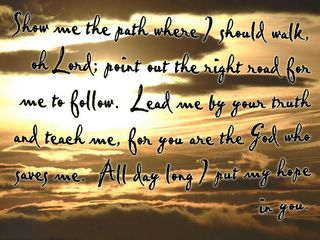
I found a wonderful sermon by Hess, a contributor to Evangelical Lutheran, written for an 8th grade graduation. I'm posting this in preparation for my own son's graduation next spring. It is based on Psalm 25 and is titled “Let me not be put to shame”. It has a good message for the many students who will go on to public high school. Those going on to Lutheran high school will also be blessed by this sermon.
Psalm 25
Of David.
1[a] To you, O LORD, I lift up my soul;
2 in you I trust, O my God.
Do not let me be put to shame,
nor let my enemies triumph over me.
3 No one whose hope is in you
will ever be put to shame,
but they will be put to shame
who are treacherous without excuse.
4 Show me your ways, O LORD,
teach me your paths;
5 guide me in your truth and teach me,
for you are God my Savior,
and my hope is in you all day long.
6 Remember, O LORD, your great mercy and love,
for they are from of old.
7 Remember not the sins of my youth
and my rebellious ways;
according to your love remember me,
for you are good, O LORD.
8 Good and upright is the LORD;
therefore he instructs sinners in his ways.
9 He guides the humble in what is right
and teaches them his way.
10 All the ways of the LORD are loving and faithful
for those who keep the demands of his covenant.
11 For the sake of your name, O LORD,
forgive my iniquity, though it is great.
12 Who, then, is the man that fears the LORD ?
He will instruct him in the way chosen for him.
13 He will spend his days in prosperity,
and his descendants will inherit the land.
14 The LORD confides in those who fear him;
he makes his covenant known to them.
15 My eyes are ever on the LORD,
for only he will release my feet from the snare.
16 Turn to me and be gracious to me,
for I am lonely and afflicted.
17 The troubles of my heart have multiplied;
free me from my anguish.
18 Look upon my affliction and my distress
and take away all my sins.
19 See how my enemies have increased
and how fiercely they hate me!
20 Guard my life and rescue me;
let me not be put to shame,
for I take refuge in you.
21 May integrity and uprightness protect me,
because my hope is in you.
22 Redeem Israel, O God,
from all their troubles!
Footnotes:
- Psalm 25:1 This psalm is an acrostic poem, the verses of which begin with the successive letters of the Hebrew alphabet.
In the list of big days in your life, 8th grade graduation may not make the top ten list. I thought about my 8th grade graduation, and I could barely remember it, much less what the speaker said at it. But you know, it’s not the big days that shape our destiny. It’s on non-special Sundays, through humble sermons, that God has chosen to give people faith in Christ and eternal life. It’s in very simple thing that God gives us his richest treasures. Simple water combined with God’s Name, which washes away our sins and makes us holy if we believe His promise, simple bread and wine where Jesus gives us His Body and Blood which takes away our sin.
You’ve been hearing about these things for many years. Now the years where you’ll have to sit in religion classes at school, and in school chapel, are over. You won’t be hearing so much about God in school, but God will still be there, just as He is here now, knowing everything about you—the talents and gifts he gave you, the good works He’s done in you, and your sins. Since God is here, I wonder what God thinks about your 8th grade graduation, which probably many of you don’t think much about. God thinks you are important enough to keep track of every hair on your head, so I think that He is probably very interested in the fact that you are graduating tonight. And I know that God, who caused you to be born and keeps you alive and is familiar with all of your ways, wants to speak to you on this day as much as on any other, although most days we don’t listen very closely to God.
What does God want to say to you on this big day among many big days in your life? See, what God says to us is far more important than what anyone else says about us, whether they compliment us or talk bad about us. God’s Words are not just friendly advice for how you should live. Instead, God’s words decide what our destinies are going to be. God’s Words created heaven and earth. They sustain the world, so that the sun still rises and sets, so that we still have food to eat and air to breathe. God’s words condemn us and forgive us, kill us and heal us.
The funny thing is that God has spoken to you many, many times in your life, though you may not have recognized it as God’s voice, nor believed what the voice of God said. He spoke His Name over you when you were baptized, and He named you with His Name. He spoke to you this year when you learned the ten commandments, and told you that you were sinners, and that those who sin earn death and hell. And God has spoken to you again and again throughout these years and declared to you that your sins were forgiven because Christ suffered for them on the cross. Every time pastor or one of your teachers told you that your sins were forgiven, that was God speaking. Did you realize it at the time? Did you listen? Did you believe God?
In the Psalm you picked today, King David uttered a very important prayer about his life. This is what he said, “To you, O Lord, I lift up my soul; in you I trust, O my God. Do not let me be put to shame, nor let my enemies triumph over me.” God today wants you to know that it is His will that you never be ashamed in your life. He had St. Paul write many years after King David, “Whoever trusts in Him”—Jesus—“will never be put to shame.”
You are talented kids. Some of you are smart as a whip. Some of you are great athletes. Some of you are musicians, some are artists, some of you are all of the above, and some of you have talents that have not been revealed yet. Have you given much thought to what you want your lives to be? Four more years and then you’ll be grown, and no one will be able to tell you what to do with yourselves. What are you going to do, to be?
Read more: Evangelical Lutheran: Meditatio--Psalm 25
Photo from Chris Ross Gallery.

Sunday, June 05, 2005
Harold Senkbeil does indeed rock, Bob.
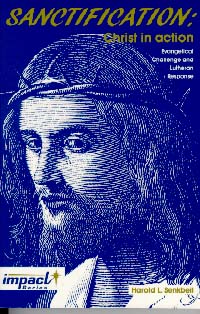
I've been reading Senkbeil's book, Sanctification, this weekend. It's incredible. I had been reading D.G. Hart's Deconstructing Evangelicalism and found it helpful in understanding what the current American Evangelical movement really is. But now reading Senkbeil's book, which I know comes from a confessional Lutheran perspective and was written about 15 years before Hart's book, I finally understand exactly what the movement is. I can finally answer my own question, "What is an Evangelical?" The answer is very simple. I will post on it soon.
Wednesday, June 01, 2005
My library is growing...
I splurged and ordered several books today:
two leather-bound indexed Concordia Study Bibles for my two Lutheran school students at a very low price
Two books by Harold Senkbeil - Where in the World is God and Sanctification
A book on the life of Paul and his journeys
The Lord Will Answer
Concordia: The Lutheran Confessions - A Reader's Edition of the Book of Concord
two leather-bound indexed Concordia Study Bibles for my two Lutheran school students at a very low price
Two books by Harold Senkbeil - Where in the World is God and Sanctification
A book on the life of Paul and his journeys
The Lord Will Answer
Concordia: The Lutheran Confessions - A Reader's Edition of the Book of Concord
Monday, May 30, 2005
Ask the Pastor: What Is the New Heaven and Why Do We Need One?
Now here's a question I've never thought of before...and it's a good one! Scripture teaches that there will one day be a new heaven and a new earth. We've all said that phrase to ourselves and others many times, but I know I've never stopped to ask, "A new heaven, too?". Pastor Walter Snyder answers: Ask the Pastor: What Is the New Heaven and Why Do We Need One?
Thursday, May 26, 2005
The First British Lutheran Blog Ever - ancient archives discovered
So I was doing a search for a book I read recently called Bible Difficulties. It was an old book that I found in our church's library, but it has disappeared. I did an online search for it and found a link to Chris Williams' blog from a year and a half ago. Apparently, at one point, he wrote all the time! I especially enjoyed his posts from February of 2004 and plan to dig through his archives some more. Of course, this isn't news to some of you, but I feel like I just discovered a little buried treasure. I hope this is encouraging to Chris, as he decides where and if to attend seminary.
The First British Lutheran Blog Ever
The First British Lutheran Blog Ever
Tuesday, May 24, 2005
Things your Old Adam doesn't like...
I've mentioned before that we are recent converts to confessional Lutheran Christian practice. One huge reason for our switch was that our old church, an ELCA mega-church, was rapidly abandoning anything Lutheran (except Lutefisk) and embracing Reformed teachings. One of the things tossed out was a formal confirmation program for the youth. The timing of our switch was no coincidence; our kids were in 7th and 5th grade in the spring of our big jump. I had been a confirmation leader and had witnessed first hand the things my daughter wasn't learning...things that I had learned in that same church thirty years earlier. Why had they dropped the program? Because parents had complained it was boring for their children. It was boring to learn from a pastor's lectures. It was a burden to memorize creeds and scripture. I wonder if our Norwegian ALC ancestors who went along with the thought that maybe scripture wasn't God's words, but men's words, foresaw the day when their great-great-great grandchildren would not be taught the strong truths of Christianity and never study Luther's Small Catechism. Thank God some brave Norwegians stayed strong.
My daughter was granted the speed version of confirmation, with one year of special sessions with the pastor along with her confirmation class. She was made strong in the grace that is Christ Jesus and learned to give an accurate account for the hope that she has in her heart. She gladly absorbed the lessons, memorized scripture and expressed herself well on Examination Day. I thought that I would be the only parent so moved as we stood at the rail blessing our children on Confirmation Day, but I had company. The sniffles and tears were, to me, a sign of the great joy of parents who saw to it that their children were fully-educated in their Christian faith and were now expressing a desire to be an adult member of the church. It was a truly joyous day.
Last fall, my son began confirmation as a 7th grader and will benefit from two years of the now three year program before he professes his faith to his church. He often comes home with little gems that have me thinking for days. One day, he said to me, "Mom, did you know that the reason we don't want to read scripture or go to church is because of our sin nature. It's our Old Adam telling us not to do those things." Wow. A simple, true and powerful statement. It's our Old Adam telling us that our family needs to sleep this Sunday morning. It's our Old Adam telling us that we don't have to send our kids to boring confirmation classes to memorize scripture. It's our Old Adam telling us that creeds are not important.
Bunnie Diehl highlighted a sermon that deals with our Old Adam and creeds. It is from Pastor Tim Pauls of Boise, Idaho. His sermon, The Benediction of Grace, Love and Communion, is based on 2 Corinthians 13:11-14.
"...there's a special reason why our Old Adam doesn't like saying the Athanasian Creed-or the Apostles' or Nicene Creeds, for that matter. It's the same reason why the creeds were written in the first place: they spell out who God is. They say what God says about Himself in the Bible. They do so in a clear, no-nonsense form that doesn't allow Old Adam a chance to revise who God is. They declare that salvation is solely His work, which should be especially Good News for us who can't manage to say two columns about God without daydreaming. [...snip...]
We live in a different time, where creeds are dismissed as unimportant: "Deeds, not creeds," "missions, not doctrine" is a rallying cry among some Christians, as if these are opposed to each other. This is not a good thing. There is immense pressure upon Christians today not to be specific about who God is. Rather than identify God explicitly, we are encouraged to view Him as a kindly old grandfather who sits in a chair and smiles indulgently while we walk around His living room and break His things. We are given the impression that God gives us a wink and says, "It doesn't matter if you know who I am or keep My laws. Just know that I love you."
If you're married, try that on your spouse sometime: "I really don't care to know your name or who you are or what you do. Just know that I love you and be there at my beck and call." It's not exactly a pledge of deep and abiding love. But that's how Old Adam wants us to regard God. You see, if we get specific about who God is, we upset old sinful natures and people start to fight. But more to the point: if we get specific about who God is, we'll see how astounding His grace and salvation truly are.
Monday, May 23, 2005
Know your Christianity: What is a creed?
From Latin I believe
The Three Ecumenical or Universal Creeds
The Apostles' Creed
I believe in God the Father Almighty, Maker of heaven and earth.
And in Jesus Christ, His only Son, our Lord; who was conceived by the Holy Ghost, born of the Virgin Mary; suffered under Pontius Pilate, was crucified, dead, and buried; He descended into hell; the third day He rose again from the dead; He ascended into heaven, and sitteth on the right hand of God the Father Almighty; from thence He shall come to judge the quick and the dead.
I believe in the Holy Ghost; the holy catholic* Church, the communion of saints; the forgiveness of sins; the resurrection of the body; and the life everlasting. Amen.
* catholic means "universal" and is not a reference to the Roman Catholic Church.
The Nicene Creed
I believe in one God, the Father Almighty, Maker of heaven and earth, and of all things visible and invisible.
And in one Lord Jesus Christ, the only-begotten Son of God, begotten of the Father before all worlds, God of God, Light of Light, very God of very God, begotten, not made, being of one substance with the Father; by whom all things were made; who for us men, and for our salvation, came down from heaven, and was incarnate by the Holy Ghost of the Virgin Mary, and was made man, and was crucified also for us under Pontius Pilate; He suffered and was buried; and the third day He rose again according to the Scriptures; and ascended into heaven, and sitteth on the right hand of the Father; and He shall come again with glory to judge the quick and the dead; whose kingdom shall have no end.
And I believe in the Holy Ghost, the Lord and Giver of life, who proceedeth from the Father and the Son; who with the Father and the Son together is worshiped and glorified; who spake by the Prophets. And I believe in one holy catholic and apostolic Church.I acknowledge one Baptism for the remission of sins; and I look for the resurrection of the dead, and the life of the world to come. Amen.
The Athanasian Creed
Written against the Arians.
Whosoever will be saved, before all things it is necessary that he hold the catholic faith. Which faith except every one do keep whole and undefiled, without doubt he shall perish everlastingly.
And the catholic faith is this, that we worship one God in Trinity, and Trinity in Unity; Neither confounding the Persons, nor dividing the Substance. For there is one Person of the Father, another of the Son, and another of the Holy Ghost. But the Godhead of the Father, of the Son, and of the Holy Ghost is all one: the glory equal, the majesty coeternal. Such as the Father is, such is the Son, and such is the Holy Ghost. The Father uncreate, the Son uncreate, and the Holy Ghost uncreate. The Father incomprehensible, the Son incomprehensible, and the Holy Ghost incomprehensible. The Father eternal, the Son eternal, and the Holy Ghost eternal. And yet they are not three Eternals, but one Eternal. As there are not three Uncreated nor three Incomprehensibles, but one Uncreated and one Incomprehensible. So likewise the Father is almighty, the Son almighty, and the Holy Ghost almighty. And yet they are not three Almighties, but one Almighty. So the Father is God, the Son is God, and the Holy Ghost is God. And yet they are not three Gods, but one God. So likewise the Father is Lord, the Son Lord, and the Holy Ghost Lord. And yet not three Lords, but one Lord. For like as we are compelled by the Christian verity to acknowledge every Person by Himself to be God and Lord, So are we forbidden by the catholic religion to say, There be three Gods, or three Lords.
The Father is made of none: neither created nor begotten. The Son is of the Father alone; not made, nor created, but begotten. The Holy Ghost is of the Father and of the Son: neither made, nor created, nor begotten, but proceeding. So there is one Father, not three Fathers; one Son, not three Sons; one Holy Ghost, not three Holy Ghosts. And in this Trinity none is before or after other; none is greater or less than another; But the whole three Persons are coeternal together, and coequal: so that in all things, as is aforesaid, the Unity in Trinity and the Trinity in Unity is to be worshiped. He, therefore, that will be saved must thus think of the Trinity.
Furthermore, it is necessary to everlasting salvation that he also believe faithfully the incarnation of our Lord Jesus Christ. For the right faith is, that we believe and confess that our Lord Jesus Christ, the Son of God, is God and Man; God of the Substance of the Father, begotten before the worlds; and Man of the substance of His mother, born in the world; Perfect God and perfect Man, of a reasonable soul and human flesh subsisting. Equal to the Father as touching His Godhead, and inferior to the Father as touching His manhood; Who, although He be God and Man, yet He is not two, but one Christ: One, not by conversion of the Godhead into flesh, but by taking the manhood into God; One altogether; not by confusion of Substance, but by unity of Person. For as the reasonable soul and flesh is one man, so God and Man is one Christ; Who suffered for our salvation; descended into hell, rose again the third day from the dead; He ascended into heaven; He sitteth on the right hand of the Father, God Almighty; from whence He shall come to judge the quick and the dead. At whose coming all men shall rise again with their bodies, and shall give an account of their own works. And they that have done good shall go into life everlasting; and they that have done evil, into everlasting fire.
This is the catholic faith; which except a man believe faithfully and firmly, he cannot be saved.
Keeping a church calendar is one part of a comprehensive and on-going plan for keeping church members well-educated in their Christian beliefs. Yesterday is commonly known as Trinity Sunday. Christians commonly recite the Athanasian Creed to remind themselves that they do believe in the Trinity and that over the centuries false teachers have tried to lead Christians astray from the Trinity. Creeds are our reminders of what scripture teaches. The creeds that I am familiar with are the Apostles Creed, the Nicene Creed and the Athanasian Creed. The use of a church calendar and the creeds seem as important today as it was hundreds of years ago when false teachings abounded. Even today, there are Christian churches denying the trinity. Several bloggers have written of Trinity Sunday and the importance of creeds and I will highlight a few:
1. Glen of Terratorial Bloggings: Holy Trinity Sunday
The Athanasian Creed - Background
Christianity constantly struggles to keep the Faith free from false philosophies.
In the fourth-century culture of Alexandria, Egypt, a persuasive preacher with a logical mind used a philosophical concept foreign to the Scriptures in order to explain the connection between Jesus and his Father. Arius borrowed from the popular Greek concept that a “god,” by nature, had to be high, distant and almighty; and that humans, consequently, had to be low, spatial and inferior.
Arius taught that only the Father was really a proper God. Because Jesus was human, he was therefore only a creature (created by God) and therefore did not really possess any divine qualities.
The problem: when Arius denied the divinity of Christ, he destroyed God’s role in accomplishing our salvation. If Jesus were not really God, then he could not possibly have saved us from our sins.
Standing for orthodox Christianity was Athanasius. Against Arius, he declared the scriptural teaching of the two natures of Christ—that he was both “true God,” and “true man.” In this creed bearing his name (his actual authorship is doubtful), it is proclaimed with great redundance that Jesus is “equal with the Father.”
By affirming Jesus’ divinity, this creed confesses that God is the originator of our salvation—he did it for us. By affirming Jesus’ humanity, it confesses that Jesus died for every part of us—he was a Savior who was completely human. Because of its emphasis on the Doctrine of the Holy Trinity, the Church traditionally used it during Prime, the first of the “hours” or prayer services of the day in monastic communities, beginning each day focusing on the Triune God. It is now most often used among Lutherans on Trinity Sunday, and is helpful in teaching the Faith at other times, especially in areas involving the person and work of Christ or the Holy Trinity.
Courtesy Xrysostom
2. Pastor Paul McCain: The Festival Sunday of the Most, Holy and Blessed Trinity
3. Bunnie Diehl: Trinity SundayAny others?
Subscribe to:
Posts (Atom)