Monday, June 06, 2005

Evangelical Lutheran: Hess on Psalm 25 (for an 8th grade graduation)


I found a wonderful sermon by Hess, a contributor to Evangelical Lutheran, written for an 8th grade graduation. I'm posting this in preparation for my own son's graduation next spring. It is based on Psalm 25 and is titled “Let me not be put to shame”. It has a good message for the many students who will go on to public high school. Those going on to Lutheran high school will also be blessed by this sermon.

Psalm 25

Of David.
1[a] To you, O LORD, I lift up my soul;

2 in you I trust, O my God.
Do not let me be put to shame,
nor let my enemies triumph over me.

3 No one whose hope is in you
will ever be put to shame,
but they will be put to shame
who are treacherous without excuse.

4 Show me your ways, O LORD,
teach me your paths;

5 guide me in your truth and teach me,
for you are God my Savior,
and my hope is in you all day long.

6 Remember, O LORD, your great mercy and love,
for they are from of old.

7 Remember not the sins of my youth
and my rebellious ways;
according to your love remember me,
for you are good, O LORD.

8 Good and upright is the LORD;
therefore he instructs sinners in his ways.

9 He guides the humble in what is right
and teaches them his way.

10 All the ways of the LORD are loving and faithful
for those who keep the demands of his covenant.

11 For the sake of your name, O LORD,
forgive my iniquity, though it is great.

12 Who, then, is the man that fears the LORD ?
He will instruct him in the way chosen for him.

13 He will spend his days in prosperity,
and his descendants will inherit the land.

14 The LORD confides in those who fear him;
he makes his covenant known to them.

15 My eyes are ever on the LORD,
for only he will release my feet from the snare.

16 Turn to me and be gracious to me,
for I am lonely and afflicted.

17 The troubles of my heart have multiplied;
free me from my anguish.

18 Look upon my affliction and my distress
and take away all my sins.

19 See how my enemies have increased
and how fiercely they hate me!

20 Guard my life and rescue me;
let me not be put to shame,
for I take refuge in you.

21 May integrity and uprightness protect me,
because my hope is in you.

22 Redeem Israel, O God,
from all their troubles!

Footnotes:

  1. Psalm 25:1 This psalm is an acrostic poem, the verses of which begin with the successive letters of the Hebrew alphabet.


In the list of big days in your life, 8th grade graduation may not make the top ten list. I thought about my 8th grade graduation, and I could barely remember it, much less what the speaker said at it. But you know, it’s not the big days that shape our destiny. It’s on non-special Sundays, through humble sermons, that God has chosen to give people faith in Christ and eternal life. It’s in very simple thing that God gives us his richest treasures. Simple water combined with God’s Name, which washes away our sins and makes us holy if we believe His promise, simple bread and wine where Jesus gives us His Body and Blood which takes away our sin.
You’ve been hearing about these things for many years. Now the years where you’ll have to sit in religion classes at school, and in school chapel, are over. You won’t be hearing so much about God in school, but God will still be there, just as He is here now, knowing everything about you—the talents and gifts he gave you, the good works He’s done in you, and your sins. Since God is here, I wonder what God thinks about your 8th grade graduation, which probably many of you don’t think much about. God thinks you are important enough to keep track of every hair on your head, so I think that He is probably very interested in the fact that you are graduating tonight. And I know that God, who caused you to be born and keeps you alive and is familiar with all of your ways, wants to speak to you on this day as much as on any other, although most days we don’t listen very closely to God.
What does God want to say to you on this big day among many big days in your life? See, what God says to us is far more important than what anyone else says about us, whether they compliment us or talk bad about us. God’s Words are not just friendly advice for how you should live. Instead, God’s words decide what our destinies are going to be. God’s Words created heaven and earth. They sustain the world, so that the sun still rises and sets, so that we still have food to eat and air to breathe. God’s words condemn us and forgive us, kill us and heal us.
The funny thing is that God has spoken to you many, many times in your life, though you may not have recognized it as God’s voice, nor believed what the voice of God said. He spoke His Name over you when you were baptized, and He named you with His Name. He spoke to you this year when you learned the ten commandments, and told you that you were sinners, and that those who sin earn death and hell. And God has spoken to you again and again throughout these years and declared to you that your sins were forgiven because Christ suffered for them on the cross. Every time pastor or one of your teachers told you that your sins were forgiven, that was God speaking. Did you realize it at the time? Did you listen? Did you believe God?
In the Psalm you picked today, King David uttered a very important prayer about his life. This is what he said, “To you, O Lord, I lift up my soul; in you I trust, O my God. Do not let me be put to shame, nor let my enemies triumph over me.” God today wants you to know that it is His will that you never be ashamed in your life. He had St. Paul write many years after King David, “Whoever trusts in Him”—Jesus—“will never be put to shame.”
You are talented kids. Some of you are smart as a whip. Some of you are great athletes. Some of you are musicians, some are artists, some of you are all of the above, and some of you have talents that have not been revealed yet. Have you given much thought to what you want your lives to be? Four more years and then you’ll be grown, and no one will be able to tell you what to do with yourselves. What are you going to do, to be?


Read more: Evangelical Lutheran: Meditatio--Psalm 25

Photo from Chris Ross Gallery.

Sunday, June 05, 2005

Harold Senkbeil does indeed rock, Bob.


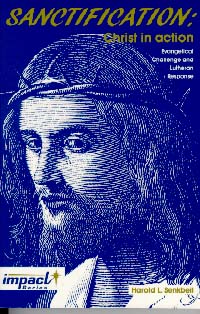
I've been reading Senkbeil's book, Sanctification, this weekend. It's incredible. I had been reading D.G. Hart's Deconstructing Evangelicalism and found it helpful in understanding what the current American Evangelical movement really is. But now reading Senkbeil's book, which I know comes from a confessional Lutheran perspective and was written about 15 years before Hart's book, I finally understand exactly what the movement is. I can finally answer my own question, "What is an Evangelical?" The answer is very simple. I will post on it soon.

Wednesday, June 01, 2005

My library is growing...

I splurged and ordered several books today:

two leather-bound indexed Concordia Study Bibles for my two Lutheran school students at a very low price

Two books by Harold Senkbeil - Where in the World is God and Sanctification

A book on the life of Paul and his journeys

The Lord Will Answer

Concordia: The Lutheran Confessions - A Reader's Edition of the Book of Concord

Monday, May 30, 2005

Ask the Pastor: What Is the New Heaven and Why Do We Need One?

Now here's a question I've never thought of before...and it's a good one! Scripture teaches that there will one day be a new heaven and a new earth. We've all said that phrase to ourselves and others many times, but I know I've never stopped to ask, "A new heaven, too?". Pastor Walter Snyder answers: Ask the Pastor: What Is the New Heaven and Why Do We Need One?

Thursday, May 26, 2005

The First British Lutheran Blog Ever - ancient archives discovered

So I was doing a search for a book I read recently called Bible Difficulties. It was an old book that I found in our church's library, but it has disappeared. I did an online search for it and found a link to Chris Williams' blog from a year and a half ago. Apparently, at one point, he wrote all the time! I especially enjoyed his posts from February of 2004 and plan to dig through his archives some more. Of course, this isn't news to some of you, but I feel like I just discovered a little buried treasure. I hope this is encouraging to Chris, as he decides where and if to attend seminary.

The First British Lutheran Blog Ever

Tuesday, May 24, 2005

Things your Old Adam doesn't like...

I've mentioned before that we are recent converts to confessional Lutheran Christian practice. One huge reason for our switch was that our old church, an ELCA mega-church, was rapidly abandoning anything Lutheran (except Lutefisk) and embracing Reformed teachings. One of the things tossed out was a formal confirmation program for the youth. The timing of our switch was no coincidence; our kids were in 7th and 5th grade in the spring of our big jump. I had been a confirmation leader and had witnessed first hand the things my daughter wasn't learning...things that I had learned in that same church thirty years earlier. Why had they dropped the program? Because parents had complained it was boring for their children. It was boring to learn from a pastor's lectures. It was a burden to memorize creeds and scripture. I wonder if our Norwegian ALC ancestors who went along with the thought that maybe scripture wasn't God's words, but men's words, foresaw the day when their great-great-great grandchildren would not be taught the strong truths of Christianity and never study Luther's Small Catechism. Thank God some brave Norwegians stayed strong.

My daughter was granted the speed version of confirmation, with one year of special sessions with the pastor along with her confirmation class. She was made strong in the grace that is Christ Jesus and learned to give an accurate account for the hope that she has in her heart. She gladly absorbed the lessons, memorized scripture and expressed herself well on Examination Day. I thought that I would be the only parent so moved as we stood at the rail blessing our children on Confirmation Day, but I had company. The sniffles and tears were, to me, a sign of the great joy of parents who saw to it that their children were fully-educated in their Christian faith and were now expressing a desire to be an adult member of the church. It was a truly joyous day.


Last fall, my son began confirmation as a 7th grader and will benefit from two years of the now three year program before he professes his faith to his church. He often comes home with little gems that have me thinking for days. One day, he said to me, "Mom, did you know that the reason we don't want to read scripture or go to church is because of our sin nature. It's our Old Adam telling us not to do those things." Wow. A simple, true and powerful statement. It's our Old Adam telling us that our family needs to sleep this Sunday morning. It's our Old Adam telling us that we don't have to send our kids to boring confirmation classes to memorize scripture. It's our Old Adam telling us that creeds are not important.

Bunnie Diehl highlighted a sermon that deals with our Old Adam and creeds. It is from Pastor Tim Pauls of Boise, Idaho. His sermon, The Benediction of Grace, Love and Communion, is based on 2 Corinthians 13:11-14.

"...there's a special reason why our Old Adam doesn't like saying the Athanasian Creed-or the Apostles' or Nicene Creeds, for that matter. It's the same reason why the creeds were written in the first place: they spell out who God is. They say what God says about Himself in the Bible. They do so in a clear, no-nonsense form that doesn't allow Old Adam a chance to revise who God is. They declare that salvation is solely His work, which should be especially Good News for us who can't manage to say two columns about God without daydreaming. [...snip...]

We live in a different time, where creeds are dismissed as unimportant: "Deeds, not creeds," "missions, not doctrine" is a rallying cry among some Christians, as if these are opposed to each other. This is not a good thing. There is immense pressure upon Christians today not to be specific about who God is. Rather than identify God explicitly, we are encouraged to view Him as a kindly old grandfather who sits in a chair and smiles indulgently while we walk around His living room and break His things. We are given the impression that God gives us a wink and says, "It doesn't matter if you know who I am or keep My laws. Just know that I love you."

If you're married, try that on your spouse sometime: "I really don't care to know your name or who you are or what you do. Just know that I love you and be there at my beck and call." It's not exactly a pledge of deep and abiding love. But that's how Old Adam wants us to regard God. You see, if we get specific about who God is, we upset old sinful natures and people start to fight. But more to the point: if we get specific about who God is, we'll see how astounding His grace and salvation truly are.

Monday, May 23, 2005

Know your Christianity: What is a creed?

Creed:

A formal statement of religious belief; a confession of faith.

From Latin I believe


The Three Ecumenical or Universal Creeds


The Apostles' Creed

I believe in God the Father Almighty, Maker of heaven and earth.

And in Jesus Christ, His only Son, our Lord; who was conceived by the Holy Ghost, born of the Virgin Mary; suffered under Pontius Pilate, was crucified, dead, and buried; He descended into hell; the third day He rose again from the dead; He ascended into heaven, and sitteth on the right hand of God the Father Almighty; from thence He shall come to judge the quick and the dead.

I believe in the Holy Ghost; the holy catholic* Church, the communion of saints; the forgiveness of sins; the resurrection of the body; and the life everlasting. Amen.

* catholic means "universal" and is not a reference to the Roman Catholic Church.

The Nicene Creed

I believe in one God, the Father Almighty, Maker of heaven and earth, and of all things visible and invisible.

And in one Lord Jesus Christ, the only-begotten Son of God, begotten of the Father before all worlds, God of God, Light of Light, very God of very God, begotten, not made, being of one substance with the Father; by whom all things were made; who for us men, and for our salvation, came down from heaven, and was incarnate by the Holy Ghost of the Virgin Mary, and was made man, and was crucified also for us under Pontius Pilate; He suffered and was buried; and the third day He rose again according to the Scriptures; and ascended into heaven, and sitteth on the right hand of the Father; and He shall come again with glory to judge the quick and the dead; whose kingdom shall have no end.

And I believe in the Holy Ghost, the Lord and Giver of life, who proceedeth from the Father and the Son; who with the Father and the Son together is worshiped and glorified; who spake by the Prophets. And I believe in one holy catholic and apostolic Church.I acknowledge one Baptism for the remission of sins; and I look for the resurrection of the dead, and the life of the world to come. Amen.


The Athanasian Creed

Written against the Arians.

Whosoever will be saved, before all things it is necessary that he hold the catholic faith. Which faith except every one do keep whole and undefiled, without doubt he shall perish everlastingly.

And the catholic faith is this, that we worship one God in Trinity, and Trinity in Unity; Neither confounding the Persons, nor dividing the Substance. For there is one Person of the Father, another of the Son, and another of the Holy Ghost. But the Godhead of the Father, of the Son, and of the Holy Ghost is all one: the glory equal, the majesty coeternal. Such as the Father is, such is the Son, and such is the Holy Ghost. The Father uncreate, the Son uncreate, and the Holy Ghost uncreate. The Father incomprehensible, the Son incomprehensible, and the Holy Ghost incomprehensible. The Father eternal, the Son eternal, and the Holy Ghost eternal. And yet they are not three Eternals, but one Eternal. As there are not three Uncreated nor three Incomprehensibles, but one Uncreated and one Incomprehensible. So likewise the Father is almighty, the Son almighty, and the Holy Ghost almighty. And yet they are not three Almighties, but one Almighty. So the Father is God, the Son is God, and the Holy Ghost is God. And yet they are not three Gods, but one God. So likewise the Father is Lord, the Son Lord, and the Holy Ghost Lord. And yet not three Lords, but one Lord. For like as we are compelled by the Christian verity to acknowledge every Person by Himself to be God and Lord, So are we forbidden by the catholic religion to say, There be three Gods, or three Lords.

The Father is made of none: neither created nor begotten. The Son is of the Father alone; not made, nor created, but begotten. The Holy Ghost is of the Father and of the Son: neither made, nor created, nor begotten, but proceeding. So there is one Father, not three Fathers; one Son, not three Sons; one Holy Ghost, not three Holy Ghosts. And in this Trinity none is before or after other; none is greater or less than another; But the whole three Persons are coeternal together, and coequal: so that in all things, as is aforesaid, the Unity in Trinity and the Trinity in Unity is to be worshiped. He, therefore, that will be saved must thus think of the Trinity.

Furthermore, it is necessary to everlasting salvation that he also believe faithfully the incarnation of our Lord Jesus Christ. For the right faith is, that we believe and confess that our Lord Jesus Christ, the Son of God, is God and Man; God of the Substance of the Father, begotten before the worlds; and Man of the substance of His mother, born in the world; Perfect God and perfect Man, of a reasonable soul and human flesh subsisting. Equal to the Father as touching His Godhead, and inferior to the Father as touching His manhood; Who, although He be God and Man, yet He is not two, but one Christ: One, not by conversion of the Godhead into flesh, but by taking the manhood into God; One altogether; not by confusion of Substance, but by unity of Person. For as the reasonable soul and flesh is one man, so God and Man is one Christ; Who suffered for our salvation; descended into hell, rose again the third day from the dead; He ascended into heaven; He sitteth on the right hand of the Father, God Almighty; from whence He shall come to judge the quick and the dead. At whose coming all men shall rise again with their bodies, and shall give an account of their own works. And they that have done good shall go into life everlasting; and they that have done evil, into everlasting fire.

This is the catholic faith; which except a man believe faithfully and firmly, he cannot be saved.


Keeping a church calendar is one part of a comprehensive and on-going plan for keeping church members well-educated in their Christian beliefs. Yesterday is commonly known as Trinity Sunday. Christians commonly recite the Athanasian Creed to remind themselves that they do believe in the Trinity and that over the centuries false teachers have tried to lead Christians astray from the Trinity. Creeds are our reminders of what scripture teaches. The creeds that I am familiar with are the Apostles Creed, the Nicene Creed and the Athanasian Creed. The use of a church calendar and the creeds seem as important today as it was hundreds of years ago when false teachings abounded. Even today, there are Christian churches denying the trinity. Several bloggers have written of Trinity Sunday and the importance of creeds and I will highlight a few:


1. Glen of Terratorial Bloggings: Holy Trinity Sunday

The Athanasian Creed - Background

Christianity constantly struggles to keep the Faith free from false philosophies.

In the fourth-century culture of Alexandria, Egypt, a persuasive preacher with a logical mind used a philosophical concept foreign to the Scriptures in order to explain the connection between Jesus and his Father. Arius borrowed from the popular Greek concept that a “god,” by nature, had to be high, distant and almighty; and that humans, consequently, had to be low, spatial and inferior.

Arius taught that only the Father was really a proper God. Because Jesus was human, he was therefore only a creature (created by God) and therefore did not really possess any divine qualities.

The problem: when Arius denied the divinity of Christ, he destroyed God’s role in accomplishing our salvation. If Jesus were not really God, then he could not possibly have saved us from our sins.

Standing for orthodox Christianity was Athanasius. Against Arius, he declared the scriptural teaching of the two natures of Christ—that he was both “true God,” and “true man.” In this creed bearing his name (his actual authorship is doubtful), it is proclaimed with great redundance that Jesus is “equal with the Father.”

By affirming Jesus’ divinity, this creed confesses that God is the originator of our salvation—he did it for us. By affirming Jesus’ humanity, it confesses that Jesus died for every part of us—he was a Savior who was completely human. Because of its emphasis on the Doctrine of the Holy Trinity, the Church traditionally used it during Prime, the first of the “hours” or prayer services of the day in monastic communities, beginning each day focusing on the Triune God. It is now most often used among Lutherans on Trinity Sunday, and is helpful in teaching the Faith at other times, especially in areas involving the person and work of Christ or the Holy Trinity.

Courtesy Xrysostom

2. Pastor Paul McCain: The Festival Sunday of the Most, Holy and Blessed Trinity

3. Bunnie Diehl: Trinity Sunday

Any others?

Thursday, May 19, 2005

Behold, I Am With You Always…

Definition of liturgy:

(a particular set of) the words, music and actions used in ceremonies in some religions, especially Christianity. Etymology: from from Middle French liturgie, from Classical Latin liturgia "public service, public worship," from Greek leitourgia, from leitourgos "one who performs a public ceremony or service, public servant"

Definition of communion:

From Old French communion, from Classical Latin communionem (nom. communio) "a sharing," used in Late Latin ecclesiastical language for "participation in the sacrament," from communis (see common). Used by Augustine, in belief that the word was derived from com- + unus "oneness, union."


Jesus' teaching on communion:

Matthew 26: 26-28
While they were eating, Jesus took bread, gave thanks and broke it, and gave it to his disciples, saying, "Take and eat; this is my body." Then he took the cup, gave thanks and offered it to them, saying, "Drink from it, all of you. This is my blood of the covenant, which is poured out for many for the forgiveness of sins.

Mark 14: 24
"This is my blood of the covenant, which is poured out for many," he said to them.

1 Corinthians 11: 24-25, 26-28
and when he had given thanks, he broke it and said, "This is my body, which is for you; do this in remembrance of me." In the same way, after supper he took the cup, saying, "This cup is the new covenant in my blood; do this, whenever you drink it, in remembrance of me." For whenever you eat this bread and drink this cup, you proclaim the Lord's death until he comes. Therefore, whoever eats the bread or drinks the cup of the Lord in an unworthy manner will be guilty of sinning against the body and blood of the Lord. A man ought to examine himself before he eats of the bread and drinks of the cup.

1 Corinthians 11: 29
For anyone who eats and drinks without recognizing the body of the Lord eats and drinks judgment on himself.


Touching testimony
of a Christian with Alzheimer's remembering how and why she is saved, through the liturgy of holy communion:

Sceleratissimus Lutheranus: Behold, I Am With You Always

Wednesday, May 18, 2005

Beckfest: A Hymn to Answer the Post-Modern Church Movement

What a beautiful hymn!

Lord, 'tis not that I did choose Thee;
That, I know, could never be;
For this heart would still refuse Thee
Had Thy grace not chosen me.

Thou hast from the sin that stained me
Washed and cleansed and set me free
And unto this end ordained me,
That I ever live to Thee.

Read the rest here: Beckfest: A Hymn to Answer the Post-Modern Church Movement

Kiihnworld: For what will you take to the streets in protest?

Kiihnworld: Breaking news: Riots in Decorah This post made me laugh, then it made me irritated. The way its author mentions Midwest towns as being near to each other when they are hundreds and hundreds of miles apart is hilarious. The notion that Lutheran women would be willing to protest over Lutefisk struck a raw nerve with me, though. The sad, shameful legacy of the old American Lutheran Church is such that, in today's world, Lutherans are most commonly associated with being mild-mannered and lutefisk-eating rather than for being the Evangelical church that they were for 500 years. Likewise, the term evangelical is misused to mean people who believe that the only true Christian is the one who claimed Christ for his or her own rather than one who lives each day in humble gratitude for the One who did the claiming. Being evangelical truly means to proclaim what God did through the atoning sacrifice of His Son, Jesus Christ. I know, I know...I'm always turning little things into deep things. Can't help it and don't want to help it. FDN and I will protest in the streets to reclaim the term Evangelical for the church of the unaltered Augsburg Confession.

Tuesday, May 17, 2005

Here We Stand: Charles Porterfield Krauth on the Progress of Error in the Church

I'd like to credit Chris Atwood for his post in January 2005 on Charles Porterfield Krauth and his passage on the progess of error in the church. Here We Stand: Charles Porterfield Krauth on the Progress of Error in the Church

"But the practical result of this principle [of the church tolerating within her bosom those who claim she is teaching error] is one on which there is no need of speculating; it works in one unvarying way. When error is admitted into the Church, it will be found that the stages of its progress are always three.

It begins by asking toleration. Its friends say to the majority: You need not be afraid of us; we are few, and weak; only let us alone; we shall not disturb the faith of others. The church has her standards of doctrine; of course we shall never interfere with them; we ask only for ourselves to be spared interference with our private opinions.

Indulged in this for a time, error goes on to assert equal rights. Truth and error are two balancing forces. The Church shall do nothing which looks like deciding between them; that would be partiality. It is bigotry to assert any superior right for the truth. We are to agree to differ, and any favoring of the truth, because it is truth, is partisanship. What the friends of truth and error hold in common is fundamental. Anything on which they differ is ipso facto non-essential. Anybody who makes account of such a thing is a disturber of the peace of the church. Truth and error are two co-ordinate powers and the great secret of church-statesmanship is to preserve the balance between them.

From this point error soon goes on to its natural end, which is to assert supremacy. Truth started with tolerating, it comes to be merely tolerated, and that only for a time. Error claims a preference for its judgments on all disputed points. It puts men into positions, not as at first in spite of their departure from the Church’s faith, but in consequence of it. Their recommendation is that they repudiate that faith, and poistion is given them to teach others to repudiate it, and to make them skilful in combating it.

From The Conservative Reformation and Its Theology. Philadelphia: J.B. Lippincott & Co., 1872, pp. 195-96.


Surprisingly, I found this passage used in an article criticizing the ELS and their doctrine of ministry proposed clarifications. Reader Challenge: Would someone who is familiar with the doctrine of ministry explain why something like this is written? (maybe it is outdated now?) Our pastors will answer any question I have and we've had classes on the proposals at our church, so I think that I am very clear and comfortable with the proposal. However, I read comments like that from someone in the LCMS and I want to understand why someone would say those things. Can someone summarize the LCMS and/or WELS objection in a nutshell for this simple laywoman?

Saturday, May 14, 2005

Love and Blunder on contemporary worship

Rob's post on contemporary worship is a good follow-up to my post from a few days ago. Good worship songs certainly can be sung in a contemporary way (guitar, flute, whatever instruments the worshippers are able to obtain). I've read accounts of mission churches that only had a guitar or other local instruments and these simple instruments were used to conduct a divine liturgical service. I suppose that, in a way, fancy organs and grand pianos played by musical experts are really a sign of our country's vast wealth compared to many other countries. My point has always been that the lyrics should clearly match with scripture and should clearly summarize the good news of how we are saved from our sins.

Rob, a former member/worship leader at a large contemporary Christian church, writes in Love and Blunder">Leave my burdens where?

The other day, a good friend of ours was telling us about worship services at her church. After listening to the White Horse Inn episode on Happy Clappy Worship, which points out the glaring lack of suffering in many of today's worship songs, she remarked "Yeah, at my church they tell you to leave all your burdens at home before coming to church."

I've heard this sort of thing hundreds of times. I led worship leader throughout high school and college for a number of churches--I probably even said it a few times.

Now, the statement makes me cringe. If we are not allowed to bring our troubles to church, where are we supposed to take them?
Read on...

Tuesday, May 10, 2005

Mattworks: How Can Water Do Such Great Things?

Matt of Mattworks blog posts his thoughts on his baptism:

It is certainly not the water that does such things, but God's word which is in and with the water, and faith which trusts this word used with the water.

For without God's word the water is just plain water and not baptism. But with this word it is baptism. God's word makes it a washing through which God graciously forgives our sin and grants us rebirth and a new life through the Holy Spirit.

23 years ago today I was granted that rebirth and a new life through the Holy Spirit.

A lot of people don't dig infant baptism. They don't think that babies should be "subjected" to baptism until they're ready to "accept" God themselves.

Even at the tender age of 19 days, I didn't want God in my life. I hated him and wanted nothing to do with him. How do I know this? Babies can't think for themselves, right? Not right. We're sinful from birth and I'm grateful for my baptismal rebirth. I trust in the God's promise in his word that baptism really does forgives sins and gives faith. Read on...

Monday, May 09, 2005

The Joshua Victor Theory: Calvin and Luther on Universal Salvation

This three-part post, The Joshua Victor Theory: Calvin and Luther on Universal Salvation: 1 Timothy 2:4 (Part 1) is a good resource to keep on Be Strong in the Grace. Josh Schneider writes:

One of the most difficult questions that Christianity has faced throughout its history is the inevitable, “Why are some saved and not others?” Some have sought to answer this question by positing the free will of mankind to choose or reject salvation. Yet this apparently simple solution contradicts several Biblical teachings, including predestination or election. But once a person admits that the Bible does not teach a free will for man, but rather that God has predestined believers to belong to Him (Eph. 1:4-5), then the question becomes all the more pointed. If man cannot freely choose salvation, and God must grant it, then why are some people damned if they cannot avoid it? In order to see how Calvin and Luther addressed this vexing question, a crucial passage for this debate will be examined: 1 Timothy 2:3-5 (ESV)

See part II and part III, also.

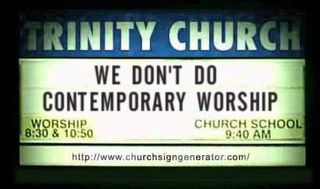
Contemporary Christian music I love, but wouldn't use in worship...

I do enjoy many contemporary Christian artists and songs. However, having already been through the same type of worship experiences that Douglas writes about, I do not want those songs in my formal worship. I think of contemporary Christian music in the same way that I think of the latest song from any other singer (who may or may not be a professing Christian): a song expressing an idea, a poem put to a tune or a story sung beautifully. Example: the recent Grammy-winning song, Daughters, is a beautiful and true song. If John Mayer added verses about Jesus' love for us, would it become worthy of worship? No.

I love many of the songs by Fernando Ortega. His songs are often beautiful prayers, if not just wonderful observations of a Christian's life. I love to play This Good Day in the car and sing along, but I would not choose it for corporate worship:

THIS GOOD DAY

Morning sun
And morning glories
Pouring down the hill,
Through my window
I can feel the ocean breeze.

Noisy sparrows
Fill the oak trees
Swallows can’t stay still,
And in the glad commotion
Lord, you speak to me

If rain clouds come
Or the cold winds blow,
You’re the one who goes before me
And in my heart I know

(chorus)
That this good day
It is a gift from you.
The world is turning in its place
Because you made it to.
I lift my voice
To sing a song of praise
On this good day.

I love Generations, by Sara Groves. The song is inspired by Deuteronomy 11:26-28 and every word of this song rings true to scripture, this song is an anthem for my life, but it doesn't belong in corporate worship.

I can taste the fruit of Eve.
I'm aware of sickness death and disease.
The results of her choices were vast.
Eve was the first but she wasn't the last.
If I were honest with myself,
had I been standing at that tree,
my mouth and my hands would be covered with fruit.
Things I shouldn't know and things I shouldn't see.

Chorus:
Remind me of this with every decision.
Generations will reap what I sow.
I can pass on a curse or a blessing to those I will never know.

She taught us to fear the serpent.
I'm learning to fear myself and all of the things
I am capable of in my search for acceptance, wisdom and wealth.
To say the devil made me do it is a cop-out and a lie.
The devil can't make me do anything
when I'm calling on Jesus Christ.

To my great-great-great-granddaughter, live in peace.
To my great-great-great-grandson, live in peace.
To my great-great-great granddaughter, live in peace.
To my great-great-great-grandson, live in peace, live in peace.
Chorus .
Eve was the first but she wasn't the last.

My family ALWAYS plays The Traveler when we start out on a road trip. The song is a prayer and the music is wonderful, but it's also not for corporate worship:

TRAVELER

Neon lights flickering
Outside the café
Ice on the windshield
Stars in a black sea
On a winter road
Flurries of snow
I'm ready to go

Past farmhouse and pasture
Our voices together
Rise to the drumming
Of big-rigs and trailers
Long hours to daylight
A rumbling bus
Our bed and our board

Heavenly Father
Remember the traveler
Bring us safely home
Heavenly Father
Remember the traveler
Bring us safely home
Safely home

I love contemporary Christian music. I play it at home and in the car. I sing familiar songs at unexpected moments. But I'm also learning liturgical hymns, whether 5 years or 500 year old, with time-tested scriptural lyrics that accurately convey the gospel message. And I'm starting to sing those to myself in unexpected moments.

On being strong in the grace that is Christ Jesus...

It seems like I'm sticking my nose into LCMS business too often, but it seem unavoidable because I visit confessional Lutheran LCMS blogs frequently. They don't seem to mind my comments and I am genuinely interested their issues. Therefore, I will return the favor by asking for input on this thread found at the WELS blog, Imprint. This thread is, to me, the first time I've seen in writing concerns I've had over things I have heard secondhand. Here is an excerpt of one comment that really struck me:

... a note about Contemporary Worship. Anybody with direct experience worshiping with pop-church evangelicals... and particularly with the Charismatics and Pentecostals during the Charismatic Renewal of the 1970’s ... sees very clearly why Contemporary Worship (which is just a euphemism for Charismatic Worship) has no place among Confessional Lutherans. Charismatic Worship is an invention of the Pentecostals that is designed to deceive worshipers into believing that the Holy Spirit is at work in them by means of their worship, in direct proportion to their zeal and fervor, where the Holy Spirit’s work is measured by the type and level of euphoria experienced by the worshipers. All charismatic worship forms and music (including elements such as chord progression, arrangement, lyrics, etc.) are designed from the opening chord to serve these false doctrines – we don’t need these forms and this music serving false doctrine in our congregations as well. Confessional Lutheran congregations that reject the notion that worship is a means of grace, and see the act of worship as a sacrifice in which the worshiper offers to God, not as a sacrament in which he receives from God, should seek to perpetuate this truth with worship forms and music that reflect it, not contradict it in the manner of Contemporary or Charismatic Worship – particularly if it is just to placate an addiction to pop-music.

I don't know Douglas, the person, who posted this comment on Imprint, but his story is welcome here at Be Strong in the Grace. I'm not pointing fingers; the ELS is just as vulnerable as the WELS in discerning false teachings. There is no balancing act between keeping Jesus' teachings and being seeker-friendly. The dam can be broken by just one tiny hole. The water seeps in very, very slowly at first. We fool ourselves into thinking we are so smart these days, but these same issues have faced Christians in all times. Douglas closes his comment with this quote from Charles Krauth back in 1871:

The idea that we need to “maintain balance” on this issue rankles me, given how clear it is to me, and reminds me of a quote by Charles Krauth in 1871, that was used by P.E. Kretzmann in his essay “Fundamental and Non-fundamental Doctrines – and Church Fellowship”. It doesn’t precisely fit the discussion at hand, but is worth remembering regardless, so I close with it, below.

And under the heading, “Course of Error in the Church,” … Krauth [in his The Conservative Reformation and Its Theology] writes:

When error is admitted into the Church, it will be found that the stages in its progress are always three. It begins by asking toleration. Its friends say to the majority: You need not be afraid of us; we are few and weak; let us alone, we shall not disturb the faith of others. The Church has her standards of doctrine; of course we shall never interfere with them; we only ask for ourselves to be spared interference with our private opinions. Indulged in for this time, error goes on to assert equal rights. Truth and error are balancing forces. The Church shall do nothing which looks like deciding between them; that would be partiality. It is bigotry to assert any superior right for the truth. We are to agree to differ, and any favoring of the truth, because it is truth, is partisanship. What the friends of truth and error hold in common is fundamental. Anything on which they differ is ipso facto non-essential. Anybody who makes account of such a thing is a disturber of the peace of the Church. Truth and error are two coordinate powers, and the great secret of church-statesmanship is to preserve the balance between them. From this point error soon goes on to its natural end, which is to assert supremacy. Truth started with tolerating; it comes to be merely tolerated, and that only for a time. Error claims a preference for its judgments on all disputed points. It puts men into positions, not as at first in spite of their departure from the Church’s faith, but in consequence of it. Their repudiation is that they repudiate that faith, and position is given them to teach others to repudiate it, and to make them skillful in combating it. (p. 195 f.).


Preachrblog on A Purpose Driven Life

I'm not a fan of the Purpose-Driven Life phenonmenon and so I post this good collection of resources explaining why Warren's teachings are actually not helpful to the Christian desiring to be closer to God. Read here: Preachrblog

The Burr in the Burgh: Masks of God

This post from Scott Stiegemeyer fits in nicely to the discussion of our Christian responsibilities. Read here: The Burr in the Burgh: Masks of God

Sunday, May 08, 2005

Analyzing Tom and the Generic Evangelical movement...

In my own experience, there are many "evangelicals" - I like to call them Generic Evangelicals or GEers- who make it a point to avoid any man's teaching on scripture - not Luther, not Calvin, etc. They are the ones who will tell you, "Just give me Jesus." They will become upset when you try to discuss doctrine; in fact, they don't know what the word doctrine means, although they assume it means man's teachings. They only accept their own definition of being born-again (a big buzz word to GE's)and it must include that the person CHOSE, amazingly while still in their own sin and contrary to scripture, to accept Jesus to save themselves from their sins and hell. They then believe they are on the path to achieve holiness in this lifetime, permanantly saved and personally charged with witnessing to the rest of the world. (It is at this point that they put on their car a bumper sticker that says, "I'm not perfect; just forgiven.")

Not surprisingly, this particular group often doesn't last long in the GE world. I once heard an estimate of 5 years, before leaving for a more traditional church or leaving Christianity altogether. This is the group that I left and this is the group I have a heart for, yet I feel woefully ill-equipped to debate them. This group does NOT include many deeper thinking evangelicals, who rightly abhore the GE movement (you know who you are, my friends).

I think Tom might be one of these people. Here's my evidence:

"Maybe, if your thought (because of your love for God's Word) was to identify yourself with Christ rather than a denomination you would understand the uproar."

"This nation is in crisis because the church has turned its head away from sin. If Jesus's own will not call sin sin, who will."

"I have assumed you have placed your faith in Christ to save you from your sin. I am sorry for having assumed that. All need to repent from their sin and trust in the Risen Christ as their savior if they want to realize eternal life with Christ. Once a person does that the Holy Spirit comes to reside in him or her and testifies to the truth of God's Word."

"My prayer ... is that the Mighty God of all will speak into the hearts of all I have encountered here-those who are trusting in Christ’s righteousness alone for their salvation, that He will call them to seek fellowship with others who believe the same-to those trusting only partly in Christ’s work, that He will reveal that to them-to those who are excusing sin, in their life, or other’s lives, that he will show them there is no excuse."

By those statements, Tom was "witnessing" to us and really did not listen to what others were saying. He finally got fed up and gave us warning that God will reject us because we don't believe what he does. I imagine he thought he was shaking the dust off his sandals.

This has been my problem with the GE movement. They proclaim that denominations don't matter - "All that matters is Jesus" - but then they attack Christians who point out scripture that doesn't fit with the GE dogma. In fact, they only accept other denominations when a person can point to the day when they prayed the sinner's prayer and asked Jesus to come into their hearts. The person gets more brownie points if they also one day gave the Holy Spirit authority to jump in, too. (as if!) This is my book idea, but a book idea to a 44 year old mother of teenagers is like talking about spending a year traveling in Europe...at least that how it seems to me. (and so the blog...) This topic has been written about extensively by D.G. Hart, but he writes as a Presbyterian. In fact, he writes that it is irritating to him that he is considered an evangelical:

"So why is it, then, that evangelicalism has become so elastic as to include believers whose beliefs and practices are at odds with the low-church, revivalistic form of piety produced and distributed by numerous successful parachurch officials?...If my denomination is not a member of the NAE, if I do not give to Billy Graham, if I do not read Christianity Today for edification, and if I refuse to put an ichthys medallion on my car, why I am considered an evangelical? Do these scholars, parachurch officials and pundits know something I don't? Can they actually see into my heart?"

So my book idea actually is the opposite of Hart's question:

If, as an evangelical, scripture convicts my heart that I became born-again the day I was baptized and that I can be strengthened and receive forgiveness of sins by taking Christ's body and blood in Holy Communion, then why am I suddenly very out of the club?

Not that I care, because even though I knew it went against what I had been taught, I also could clearly see which group was truly following scripture. However, it remains an issue that doesn't go away in today's Christian world. So, should I care? Should a book be written about this? Can you imagine the blasts from the GE community if such a book were written? Maybe there are other souls to focus on, but I still seem to care about those lost in the lies of the GE movement.

Saturday, May 07, 2005

Styria: Thy Will Be Done

Styria of David creates with Legos;
God with Logos
blog writes an interesting post on prayer. He asks:
Sometimes I wish I had been raised Lutheran, or at least Christian. Maybe I would at least know how to pray, and have the discipline to be 'Christian' in all these other things. Good habits. Instead, someday, with my face deeply flushed and my voice quivering or inaudible, I'll probably have to learn them in front of my wife. That's fun to look forward to; the anticipation is already warming me. How will I set a good example for the children I want?

After 40+ years as a Christian, I can't say that can utter a decent prayer any better than David. I have learned to use Luther's prayers in our hymnal. I am trying to memorize the evening prayers with my kids; they are quite sufficient for me!

In the evening, when you go to bed, you are to make the sign of the holy cross and say: "Under the care of God the Father, Son and Holy Spirit. Amen."

Then, kneeling or standing, say the Apostles' Creed and the Lord's Prayer. If you wish you may recite this little prayer as well:

I give thanks to you, my heavenly Father, through Jesus Christ your dear Son, that you have graciously protected me today, and I ask you to forgive me all my sins, where I have done wrong, and graciously to protect me tonight. For into your hands I commend myself: my body, my soul, and all that is mine. Let your holy angel be with me, so that the wicked foe may have no power over me. Amen.

Then you are to go to sleep quickly and cheerfully.

Monday, May 02, 2005

The Burr in the Burgh: Strange Days

Pastor Scott Stiegemeyer writes about ministering to a dying member of his church in The Burr in the Burgh: Strange Days


"Y'know, if I put up a sign in the front yard saying, "The Antidote for Death - Free - Inquire Within," or a full page ad in USA Today that announced,"New Discovery - Fountain of Youth Is Real - Phone 555-xxxx," people would be pounding on my door. The phone would never stop ringing."

Jeffrey C. Atwood on his baptism

Jeffrey C. Atwood, son of Chris Atwood, writes on Here We Stand about his confirmation day. I've seen recent confirmation classes like his and I have great hope for confessional Lutheran Christians for years to come, but they do need our continued prayer. I am so encouraged by young Atwood's words.

Jeffrey writes:

Baptism is very important to me as a child of God. Baptism is one of the two sacraments of the church. Sacraments are sacred acts instituted by God to his followers. Baptism was instituted by Jesus in the Gospels and connects the visible actions of the washing with water with the Word of God. Like other sacraments, Baptism works forgiveness of sins. This is its most important power. Baptism is the washing of a person with life-giving water. Baptism grants us all of the benefits which Jesus won for us on the cross.

Baptism grants several things when I receive it. First of all, Baptism marks me as a Christian. From now on, I will be distinguished by others as a Christian because of my baptsim. Baptism’s other powers are less visible. In Baptism, we share in Jesus’ death and resurrection. We die and are raised to new life with Him. It also is the means of the distribution of Jesus’ grace. This grants the forgiveness of sins. Another result of this grace is that I receive eternal life from Jesus. This is because I am no longer held death’s servitude because of sins. It also releases me from the power of sin and the devil. As a result of baptism, the devil does not have a hold on me. We are also reborn as God’s children. We are assured new, imperishable bodies.

Baptism also affects my daily life. Each day, Baptism calls me to repent. It tells me to drown the old Adam in us daily. The old Adam is our former state brought on by the fall of Adam into sin. It calls a new righteous man to emerge in its place. This man is a new and righteous creation, with none of the characteristics of the old Adam. It is perfect and righteous and good. Baptism also daily forgives our sins. It doesn’t just forgive the sins from the time we were baptized, but every sin thereafter is forgiven. Every day, we can wake up knowing that our sins have been forgiven through Baptism. Baptism also enters us into daily communion with God.

We know Baptism works because it is mentioned in the Bible several times. Jesus himself was baptized by John at the river. Baptism was instituted by God. Jesus himself comands his disciples to baptize all nations. When he gave this command, that included infants. That is why today we baptize infants and not just adults. Baptism works its powers when the water is brought together with the Word. By itself, the water is simply ordinary water. However, with the Word it becomes life-giving water. It is important to remember that Baptism is not a work, but a free gift of God. I only have to accept it. I have done nothing to merit the gifts given by Baptism. It is not by my own faith or strength which I accept it. It is through the Holy Spirit working in me.

In short, Baptism is nothing less than the Holy Spirit working in our lives. It immediately grants forgiveness of sins and eternal life. Daily, it grants me forgiveness of my sins each day. It also tells me to drown the old Adam through daily repentance. It also indicates that a new, righteous man should emerge in its place. It also enters us into daily communion with God. We know baptism works because Jesus himself was baptized, and he commanded his disciples to do the same with all peoples. Finally, we know that it is not through our own works or merit that Baptism accomplishes what it does, but through the gift of God.

Friday, April 22, 2005

Scriptural roles of men and women

R.C. Sproul, Jr. has written against women bloggers in, What are you talking about?

But I explain this confusion not for my own sake, not to avoid embarrassment, but to make a point I believe many in the blog world need to learn. People as backward and ancient as I tend to turn to Titus 2 with some regularity. There we see that older women are called to teach younger women. Many of my internet friends recognize this, and so direct their blogs at other women. Trouble is, Titus 2 not only tells us who is the faculty (older women) and who are the students (younger women) but it tells us the curriculum. Older women are told not just that they should be teaching younger women, but that they should be teaching them to love their husbands and children, to be self-controlled, pure, working at home, kind, and submissive to their own husbands, that the Word of God may not be reviled.

There are, I’m delighted to report, any number of blogs which teach just these things. (Bearing in mind of course the other weaknesses that come with the internet. Serving your sisters in cyberspace isn’t probably what Paul had in mind, especially if you aren’t ministering to those who are, in real life, your neighbors.) But I have seen others, written by women, that set out, or so it seems, to set the world straight about Auburn Avenue theology, the history of the New Testament church, that seek to change this government policy or that, that direct you to this teacher or some other. Now bear in mind that many of these ladies are pushing the very same things I would push. The trouble I’m getting at isn’t that they are pushing against what I think to be biblical wisdom, but that they are pushing at all.

I have grumbled in the past that the internet, for all its strengths, for all its power in diffusing centralized communication, comes with this exact kind of danger. People are teaching who shouldn’t be teaching. And people are learning where they ought not to be learning. A husband who loses his wife to a hook-up with some internet Lothario is probably better off than one who returns from work to find his wife safely at home, but having been seduced into Rome by some charming blogger.

I have to say that reading Mr. Sproul's article brings back memories of being a part of a church that expects only pious behavior out of women who always wear long skirts, long hair and scarves or hats covering their heads. What does scripture teach about women? The ELS tells me this:

The Roles of Men and Women in Church

On the basis of such Scripture passages as Genesis 1-3; I Corinthians 11:3-16; I Corinthians 14:33b-36; Ephesians 5:22-26; Galatians 3:28; I Timothy 2:11-15; I Peter 3:1-7; Romans 16 and Philippians 4:3, we teach:

  1. God created man and woman in his own image, that is, he created them with a true knowledge of Him and with perfect righteousness and holiness. Even though our first parents lost this image in the fall into sin, yet God in his grace promised the Savior and in Him restored this image.
  2. This spiritual equality of man and woman is a blessed reality, as St. Paul writes in Galatians 3:28: "There is neither Jew nor Greek, there is neither slave nor free, there is neither male nor female; for you are all one in Christ Jesus."
  3. Through faith in Christ all Christians are members of the universal priesthood of believers and as such are in full possession of all its rights and privileges and are exhorted to exercise them.
  4. At the creation of man and woman God established an order, or structure, by assigning individual identities and roles to each sex. According to Genesis 2, Eve was created to be a helper to Adam and as such was to be under his headship.
  5. The headship principle is clearly taught in the Old Testament. In Genesis 3:26 the Lord says to the woman: "Your desire will be for your husband, and he will rule over you." The original structure at creation remained in effect after the fall into sin.
  6. The headship principle is clearly set forth also in the New Testament. In I Corinthians 11:3 Paul says, "the head of the woman is man," and in Ephesians 5 the apostle tells wives to submit to their husbands "for the husband is the head of the wife." (Eph. 5:22- 23) The apostle Peter refers to this headship principle when he singles out Sarah as an example in obeying Abraham and calling him Lord. (cf. I Peter 3:1-7)
  7. The headship of man in his role of leadership to which the woman is subordinate is therefore God's arrangement for good order. (Genesis 1:31)
  8. The prime example of the goodness and necessity of the headship principle is found in the relationship between God the Father and God the Son. (cf. I Corinthians 11:3) Biblical Christianity has always taught that the Father and the Son are equally God; there is no difference in their degree of divinity. And yet in I Corinthians 15:28 the Son himself is said to be subject to the Father. It is interesting to note that here the same verb is used for the Son's subjection to the Father as is used for the woman's subjection to the man in Ephesians 5 and I Timothy 2. In I Corinthians 15:28 the purpose of the Son's submitting to the Father is not to put the Son in an inferior position, but to bring about a beautiful plan. The purpose of the wife's submitting to her husband and of the woman's being submissive within the Christian congregation is also to carry out a beautiful plan, viz., the establishment of a marriage that not only lasts but is also a wonderful harmony, and the establishment of an orderly and harmonious fellowship within the congregation.
  9. Our Lord has revealed that He wants the headship principle to be upheld in the church. It is for this reason that the Lord has restricted the pastoral office to men. (cf. I Timothy 2:11-14 and I Corinthians 24:34ff)
  10. The same principle applies to woman suffrage in the church. Scripture forbids the women "to have authority over a man,"( I Timothy 2:12)
  11. However, this principle does not forbid consultation between men and women in the church. Informal meetings or forums may be held, therefore, at which women may have opportunity to seek information and express their views. But the final decisions are to be made by the men. The Lord himself has placed this responsibility upon the men and they are to carry this out in a manner that is sensitive to the feelings and wishes also of the women.
  12. Scripture encourages women to use their talents in areas of church work which do not conflict with the headship principle or the public administration of the means of grace. As members of the priesthood of believers there is much for women to do in church. In Romans, chapter 16, the apostle Paul commends Phoebe to the Christians at Rome as a servant (diakonos) of the church at Cenchreae and sends greetings to women who had been of assistance to him. He mentions Priscilla and her husband Aquilla as "fellow workers in Christ Jesus" (v.3) and a certain Mary "who labored much for us." (v.6) And in his letter to the Phillippians he urges the congregation to "help those women who labored with me in the gospel," (4:2) Nor should we forget the many women who ministered to our Lord during his earthly ministry whose names are recorded in the Gospels. Women may, for example, lend their counsel in open congregational forums; teach parochial school, Sunday school, vacation Bible school; direct choirs; serve on committees in advisory capacities; assist the pastor and elders in calling on the sick, shut-ins and singles; and also assist in works of charity in the congregation and community.
  13. From the above passages it is evident that women used their talents in the Lord's service and they were commended for it. The church today can learn from the early church to do the same, but always within the parameters which God himself has established. In the past there has been perhaps too much emphasis on what women are not to do rather than on what they are to do, thus giving some the impression women's talents are neither needed nor appreciated
  14. While we must continue to uphold the scriptural principles so far as ordination of women and their exercising authority over the man is concerned, it is clear from the passages under study that women's participation in the work of the Gospel is a blessing to the church. God has given the ministry of the Gospel to all believers; it is the office of the pastoral ministry that he has restricted to qualified men.
  15. Finally, Christian men ought to take their leadership responsibilities seriously, and Christian women also have the responsibility of encouraging men to fulfill their obligations and duties of leadership.
  16. When men and women labor together in the Gospel, taking heed to the Word and working within the scriptural limits, then truly God is glorified and the church is edified.

John H. of Confessing Evangelical posted on this article. I appreciate his words of encouragement to women bloggers. I had this comment to his post: "Why should I be surprised that scripture forbidding women spiritual authority over men should be misconstrued by Sproul to mean that women shouldn't proclaim the gospel as a part of their daily lives? I am in the ELS synod, which is often misunderstood as being "against" many things including women. Yet nothing could be further from the truth; my pastors educate and encourage all members to be ready to give account for the hope that is in my heart. There is no scripture prohibiting women from bearing witness to the gospel. I did ask my pastors for guidance before starting Be Strong in the Grace. Each one of them has complimented me, encouraged me and helped me with my blog. Even our churches elders have complimented and encouraged me. As confessional Lutheran pastors, I would take their advice over Mr. Sproul's any and every day of my life. John, I know you didn't post this to depress or discourage women, but it is depressing to think that he wrote this. Sproul's article is a good example of the power of words, even on a blog. " I am glad that I read Sproul's piece; I need to know how to respond to such accusations. It is a part of being strong in the grace that is Christ Jesus to know what scripture says and doesn't say.

Thursday, April 21, 2005

Be strong in this grace: Sacrament of Holy Baptism

Catechism- Sacrament of Holy Baptism

The institution of baptism

What is baptism? Baptism is not just plain water, but it is water used by God's command and connected with God's Word.

Which is that word of God? Christ our Lord says in the last chapter of Matthew, "Go and make disciples of all nations, baptizing them in the name of the Father and the Son and of the Holy Spirit."

The blessing of baptism

What does baptism do for us? Baptism works forgiveness of sin, delivers from death and the devil, and gives eternal salvation to all who believe this, as the words and promises of God declare.

What are these words and promises? Christ our Lord says in the last chapter of Mark, "Whoever believes and is baptized will be saved, but whoever does not believe will be condemned."

The power of baptism

How can water do such great things? It is certainly not the water that does such things, but God’s word which is in and with the water and faith which trusts this Word used with the water. For without God’s word the water is just plain water and not Baptism. But with this Word it is Baptism, that is, a gracious water of life and a washing of rebirth by the Holy Spirit.

Where is this written? Saint Paul says in Titus, chapter 3, “God saved us through the washing of rebirth and renewal by the Holy Spirit, whom he poured out on us generously through Jesus Christ our Savior, so that, having been justified by his grace, we might become heirs having the hope of eternal life. This is a trustworthy saying.”


The meaning of baptism for our daily life

What does baptizing with water mean? Baptism means that the old Adam in us should be drowned by daily contrition and repentance, and that all its evil deeds and desires be put to death. It also means that a new person should daily arise to live before God in righteousness and purity forever.

Where is this written? St. Paul says in Romans, chapter 6, We were…buried with (Christ) through baptism into death in order that, just as Christ was raised from the dead through the glory of the Father, we too may life a new life.”

How can we reach the world for Christ if we can't come together as Christians?

I was driving the other day and happened to stop the radio dial on a program featuring a radio preacher. He was talking about denominational issues, so I decided to listen to what he had to say. He made a very interesting statement: How can we reach the world for Christ if we can't come together as Christians?

The radio preacher said that we should be tolerant of each other's doctrines, hymns, worship styles, etc. He said that he had been judgmental toward other denominations and said that God was convicting him of that lately. He urged his listeners to visit other denominations once a month. I wondered what would happen if he visited my church. If this local pastor had visited my church the very next day, he would have experienced the following:

  • corporate confession of sins;
  • pastor using the office of the keys to pronounce our sins forgiven;
  • an infant baptism, our pastor's first grandchild, with tears of joy streaming down the young parents' faces in gratitude to a loving God who can create a seed of faith in their newborn child and our pastor choking back his own tears of gratitude as he poured the saving water on the child;
  • proclamation by our pastor with a huge smile on his face, "We have approached the throne of grace, now our God approaches us in His Word;
  • sermon reminding us of our own sinful state and the loving God who gave us Jesus Christ as a substitutionary sacrifice so that we may enter heaven.
  • gentle and loving admonition to congregants of the biblical teaching on partaking in holy communion without full agreement that Jesus' body and blood are truly present.

What would that radio pastor think of my church? Would he walk away critical of us for not allowing his to take communion or baptizing a newborn baby into faith? I looked up his church and radio ministry on the internet when I got home. I know of his denomination, was a member for a few years and know that they reject that God creates faith in infants at baptism and reject Christ's real presence at communion. Certainly, we share much in common, namely that faith in Jesus as the savior is the only way to eternal life in heaven with God. I do agree that disagreement over what scriptures teach does hinder reaching the world with the gospel message; I also believe that agreeing to disagree is harmful...to me, to all Christians and to the non-believer. Christians must consider the scriptures together and agree on what they teach. That is true unity.

If only...

If only I were going to this workshop tomorrow!!!

House of Love: The similarities between a pastor and a parent

This is exactly the kind of post for my yet to be created blog, House of Love. So, it will go on this blog for now.

Today I read The Burr in the Burgh: What Is a Pastor? This morning my heart is very heavy with worries for my children. This post really ministers to my sad heart and reminded me of where my hope lies.

Pastor Stiegemeyer writes:

...sometimes pastors lead out in front of the flock. And other times, they get behind and push the sheep like a cowboy. Just because the word "pastor" literally means shepherd doesn't mean that some of us aren't really cowboys at heart.

The shepherd leads in such a way that the sheep hear his voice and want to follow. Why? Because they know he will take them to quiet waters and green grass. The cowboy, on the other hand, has to shout and shove and lash the herd to make it go where he wants it to. I see this really as a distinction between Law and Gospel.

The faithful pastor uses both Law and Gospel. But we motivate Christians to follow Christ not primarily with a whip, not with threats and curses. The sheep might go where they are directed as a result of bullying, but they will hate you for it. The better way - Christ's way - is to lead by offering us His blessing. It's like this. Do you follow Christ because you fear His wrath if you do otherwise? Or do you follow Him out of love, because He calls you gently and offers you good things?


This post got me to thinking about the similarities between pastoring and parenting. I am probably guilty of being a cowboy more than a shepherd and I think the primary reason is fear. I fear that I'm not doing well enough, because if I was then my parenting subjects would be very close to perfect. I imagine that some pastors must struggle with that falsehood, too. If I was a good pastor, then my congregation would be (fill in the blank). Is this the secret to parenting: "The shepherd leads in such a way that the sheep hear his voice and want to follow. Why? Because they know he will take them to quiet waters and green grass. The cowboy, on the other hand, has to shout and shove and lash the herd to make it go where he wants it to."

About a year ago, I wrote an email regarding parenting to one of our pastors and he replied:

Blessings in Him who was the perfect child and through whom we have access to the perfect parent - our heavenly Father - Jesus!

What does the Bible say about parenting? Your first and primary responsibility is wrapped up with the Great Commission of Matthew 28:18-20. Before we give our children anything else, it's bringing them to the Means of Grace, the Gospel in Word and Sacrament, and the working of the Holy Spirit.

The very best thing I ever did for my children was bring them to the waters of Baptism. Honestly, I could give them the best of the whole world, but everything, everything pales in comparison to bringing them to Jesus and Jesus to them. "What does a man
gain if he gains the whole world and forfeits his soul..." Jesus says (Mt 16:26).

The sole of parenting is really attached to the soul. I believe that governs everything. How will this effect the eternal soul? is a good question always to ask. That governs setting definite expectations and consequences, communication - use of Law and Gospel, marital example, Christian example, etc., etc.

In Rev. 14:13 it mentions that we will rest from our labors and our "works" will follow us when we go to heaven. What can we take with us from this earth - PEOPLE, especially the ones the Lord's entrusted to us in our homes.


I printed up his email and actually carry it my purse to read it moments of frustration. Now, I'll print up Pastor Steigemeyer's advice, too. I love how our pastors, Pastor Steigemeyer and Martin Luther, just keep turning us back to scripture. What does scripture say? What does scripture say? That is the one thing I hear the most and is the most comforting advice in the world.

Thursday, April 14, 2005

Brian Braatz on Faith without works

Brian Braatz posts a nice piece on faith without works.

"The Law demands perfection. Absolute obedience in every way from the moment of conception until the time your soul leaves your body. Unmitigated perfection. This is of course impossible due to our inherent sinful nature. It was lost to you before your parents even met, and you had nothing to say about it. You lost before you even started. So they Law's expectation is unachievable, and everyone knows what that means... death." Read on...

Wednesday, April 13, 2005

Preachrblog: Hymn - Road to Emmaus

Preachrblog posts on a hymn I'm not familiar with, but it fits nicely in with my post from a couple days ago.

Tuesday, April 12, 2005

Not Liberal, but Generic...

It has been discussed here and elsewhere that generic American Evangelicalism is having a negative, destructive affect on many denominations, turning many churches into generic, cross-less, positive-thinking social clubs. Bunnie Diehl blog writes about the effect that American Evangelicalism is having on denominations that used to keep more to themselves, see Not Liberal, but Generic.

I just started reading D.G. Hart's Deconstructing Evangelicalism. I found it ironically interesting that Hart proposes that:

"Evangelicalism needs to be relinquished as a religious identify because it does not exist. In fact, it is the wax nose of American Protestantism...it is a face void of any discernible features. The nonexistence of an evangelical identity may prove to be, to borrow a phrase from (Mark) Noll, the real scandal of modern evangelicalism."

So then, if D.G. Hart, who is a Presbyterian (I believe) sees the dangers of the American Evangelical movement, then we, as Lutherans, need also to be ready to defend gospel when fellow Lutherans suggest creating "seeker-friendly" worship, less "offensive" communion practices, etc.

I've only read one chapter of this book and can't wait to keep reading.!

Monday, April 11, 2005


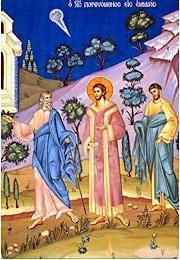
On the road to Emmaus... Posted by Hello

I'm on the road to Emmaus, I suppose...

Back on November 23, 2004, I wrote about what I had learned about God's Word during my change to confessional Lutheran practices. I referenced two good posts on the topic:

More Than Words by Rob of Love and Blunder


The Proclaimed and Present Word by John of Confessing Evangelical

At the time I wrote:

The confessional Lutheran church taught me this: When the Word is invoked, Christ is truly present. We have more than a symbol of Christ, we have Him in truth. Until very recently in my faith life, I never fully understood the power of God. His power has literally silenced me. I am finally safe resting in His arms. I no longer try to help or manipulate God by my actions. The day I stopped "trying" to be a good Christian, He started to work through me. I have seen seven family members come to Christ in less than two years, after twenty years of my pathetic attempts to "be a good witness" to them.Truly excellent posts, Rob and John. Thanks for teaching me. I am very thankful.

Well, I certainly don't take my own words to heart. Lately, I've been playing God as I struggle with issues I cannot control in the lives of other people. I have desparately trying to concoct ways to "fix" the situations which cause me fear and heartache. And so the Lord found me yesterday in church. God's Word really convicted me of doubting His ability to grow and sustain faith in people whom He has already placed the seeds and faith and in whom those seeds have already been well-watered.

Luke 24: 13-33: On the Road to Emmaus

Now that same day two of them were going to a village called Emmaus, about seven miles from Jerusalem. They were talking with each other about everything that had happened. As they talked and discussed these things with each other, Jesus himself came up and walked along with them; but they were kept from recognizing him. He asked them, “What are you discussing together as you walk along?” They stood still, their faces downcast. One of them, named Cleopas, asked him, “Are you only a visitor to Jerusalem and do not know the things that have happened there in these days?” “What things?” he asked. “About Jesus of Nazareth,” they replied. “He was a prophet, powerful in word and deed before God and all the people. The chief priests and our rulers handed him over to be sentenced to death, and they crucified him; but we had hoped that he was the one who was going to redeem Israel. And what is more, it is the third day since all this took place. In addition, some of our women amazed us. They went to the tomb early this morning but didn't find his body. They came and told us that they had seen a vision of angels, who said he was alive. Then some of our companions went to the tomb and found it just as the women had said, but him they did not see.” He said to them, “How foolish you are, and how slow of heart to believe all that the prophets have spoken! Did not the Christ have to suffer these things and then enter his glory?” And beginning with Moses and all the Prophets, he explained to them what was said in all the Scriptures concerning himself.
As they approached the village to which they were going, Jesus acted as if he were going farther. But they urged him strongly, “Stay with us, for it is nearly evening; the day is almost over.” So he went in to stay with them. When he was at the table with them, he took bread, gave thanks, broke it and began to give it to them. Then their eyes were opened and they recognized him, and he disappeared from their sight. They asked each other, “Were not our hearts burning within us while he talked with us on the road and opened the Scriptures to us?” They got up and returned at once to Jerusalem. There they found the Eleven and those with them, assembled together.

Our pastor used this account from the road to Emmaus for our sermon yesterday. He drew out of this scripture that even the disciples didn't recognize their Lord as He walked along that road with them, although they realized it later on...in hindsight. It's that way with us, too. Pastor also reminded us of the hymn, Abide With Me. Jesus promised he would abide with us; he did with the apostles on the road to Emmaus and He will abide with us. We need to take our sadness and fears to Him and remember that He promised to abide with us. I need to take my sadness and fears to HIm and remember that He promised to abide with me.

Wednesday, April 06, 2005

Introducing Preach. Teach. Confess

Thanks to Intolerant Elle for leading me to a new confessional Lutheran blog. It is called Preach. Teach. Confess. Here's their self-description:

Preach. Teach. Confess.
As young Lutheran pastors for the old Lutheran truths, we pray that this site provides a beneficial forum for the discussion of Lutheran doctrine and practice, contact between fellow Wisconsin Synod Lutherans and those interested in confessional Lutheranism throughout the country, and some good clean fun. This is not an "official" site for any group. What is said here only represents the teachings of the Lutheran Church in so far as it accurately presents Scripture and the Lutheran Confessions.

Looks like they also have well-rounded lives and comment on the important issues of the day, like baseball and politics! I think I'll enjoy reading this blog. Welcome, men!

Tuesday, April 05, 2005

Quiz: What denomination are you?

I took this quiz about a year or two ago. I tried to find my scores from that test, but maybe I just took the test but didn't blog about it. The questions are fairly Lutheran-savvy, but not totally. Interesting and short quiz found here. You'd think I'd be 0% Anabaptist...oh well.

1: Lutheran (100%)
2: Presbyterian/Reformed (70%)
3: Roman Catholic (70%)
4: Anglican/Episcopal/Church of England (69%)
5: Eastern Orthodox (69%)
6: Church of Christ/Campbellite (53%)
7: Congregational/United Church of Christ (53%)
8: Baptist (Reformed/Particular/Calvinistic) (50%)
9: Baptist (non-Calvinistic)/Plymouth Brethren/Fundamentalist (44%)
10: Pentecostal/Charismatic/Assemblies of God (39%)
11: Methodist/Wesleyan/Nazarene (30%)
12: Anabaptist (Mennonite/Quaker etc.) (21%)
13: Seventh-Day Adventist (21%)

Hat tip to Charles Lehmann

Monday, April 04, 2005

The ELS and BLTS websites are really rockin' now!

I'm probably slow with this news, but I've just discovered the recently updated and improved websites of the Evangelical Lutheran Synod and Bethany Lutheran Theological Seminary and they are really looking great! Lots of resources: statements of doctrine, downloads, Lutheran Synod Quarterly archives, the ELS Handbook, the ELH Hymnal, ELH Hymnal midi files, links...there's too much to list here. You must check it out yourself!

Friday, April 01, 2005

Mattworks: He definitely grew up in a house of love!

Mattworks tackles weighty issues, extremely well for the ripe old age of 22, in The Misunderstood Christian:

Christians are sure annoying, aren't they? Always going around trying to impress they're beliefs on you and "Bible thumpin'" you over the head. Christians are such hypocrites too, OMG. I can't believe they judge people all the time and they're not any better themselves! What makes them so much better than everyone else anyways? Don't they know that the Bible says that God loves everyone? Jeeze, Christians are so brainwashed, they can't even think for themselves. They need a book to tell them how to live! And what's with all the denominations anyways, they can't even figure it out. Those people just made up the Christian religion to feel better about themselves. The world is crap anyways, everyone knows that. All the church wants is my money. Christians are so close-minded.