Thursday, August 25, 2005

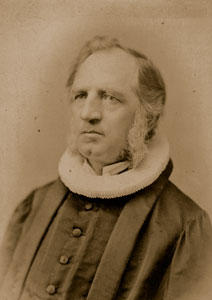
Rev. H.A. Preus' 1893 address to the ELS Convention


The ELS website has a fascinating collection of ELS convention addresses, including 18 speeches given by Reverend Herman Amberg Preus.

In the 1893 address in Chicago, Illinois, Rev. H.A. Preus has a message to us in the future. I am not making any specific statements by highlighting his comments; I just find it fascinating that, indeed, there is nothing new under the sun. Our battles of today in keeping false teachings, often disguised by Satan as well-meaning attempts at unity for the sake of Christ, out of our churches are nothing new. Our forefathers also fought this battle. Our children and great-great grandchildren will also fight the same battles, so we need to teach them well and in love.

If by the grace of God the Norwegian Synod also in the future will remain faithful to its lofty task: to be a faithful witness for delivering souls, then it will never be able to enter into any union of churches with a church body which will not purify itself of such gross errors, even if a person wants to attempt to build the union over a many-sided, deep ditch which was supposed to cover over differences of belief.

...
At this moment an extremely dangerous current is flowing through the various church bodies nearly everywhere in the world. It is a current which even if not always intended by its leaders and their followers, yet, however, by the instigator, Satan, the tempter, aims at nothing less than emancipating from the absolute, divine authority by the rejection of the doctrine of God’s Word concerning the inspiration of Scripture, that is, that all Scripture is inspired by God and is therefore the Word of God. As you know, at the present time not one theological seminary is to be found in “Lutheran” Germany which holds on the old Lutheran doctrine of inspiration. Similarly, unfortunately, it is discussed among leading theologians in the church of our dear fatherland as a theory abandoned long ago by everyone capable of forming an opinion. It is true, a clear testimony on the other side is heard in Germany from one or another old-Luth-eran pastor, just as in Norway there surely are also found many among the older clergy who do not want to be along in this apostasy from the Lutheran Church but who hold fast to its doctrine in this chief point.

This sentence, giving a picture of days long gone, also caught my eye:

And here, we will always remember with thanks to God the faithful help and support which the Lord gave us in the older, much experienced, Missouri Synod.
The entire speech is a great history lesson, as are many of the speeches. If you, like me, are less than knowledgeable about the history of the Norwegian Lutheran Synod, you can match the speeches up with this timeline.

Tuesday, August 23, 2005

"We want them to experience a relationship with God"


An article in the Chicago Tribune (free registration required, but worth it for the articles) caught my eye while on vacation there recently. On the surface, the story about some young newly-ordained Protestant pastors using their God-given gifts to bless other people is heart-warming:

The lights are dim, and the musicians are young and Latino, twenty-something dreamers creating magical jazz fusion sounds on bass, bongos and drums. The college-age crowd rocks to the beat, and the fresh-faced band rocks with them, improvising tunes that fill the small Pilsen cafe.

Few in the audience know that the performers are not just musicians, but newly ordained Protestant pastors, passionate men of God using music to bring their message to the music lovers and would-be artists in this traditionally Catholic enclave of Chicago.
This is a beautiful description of vocation- using our God-given gifts and talents in our daily lives, whether at work or play, freely sharing the joy of the gospel as the situation fits. Scripture tells methat only the Holy Spirit can work faith in the heart of anyone I meet; scripture also tells me to be ready to give an account of the joy I have in my heart.

They don't mention God during their performance, but Eli Orozco, Sam Menesses and Tony Escobar hope to spread the word of Christ to enough cafe patrons to cultivate a few potential congregants by October. That's when Community Christian Church, a Naperville-based "megachurch," hopes to launch its first urban satellite here

CCC leaders, aware of the potential for controversy, downplay the idea of competition. John Ferguson, one of the pastors, said the church is not coming to Pilsen to "impose our evangelicalism" on Catholics. Instead, he casts the young pastors' work as helping people "establish a personal relationship with Jesus."

Now the story of these young men and their work in the community takes a sad twist. They've gone into the community saying that they aren't trying to change the faith of the Catholics, yet they are clearly drawing a line in the sand with their definition of a true Christian. For many evangelicals, it is firmly (and falsely) believed that you will only enter the kingdom of heaven through your own act of establishing a personal relationship with God. That kind of reversal of grace, a misunderstanding of Romans 10, is an excellent example of what drove me to despair after twenty years of evangelicalism. God, in my despair, drew me to a church that showed me a God who cannot be contained. I learned of a God who is jealous for His own and ceaselously seeks them out like water seeks any hole in a cup. I learned of the power of His Word to save us, even as we attempt to deny it; His Word works on our hearts whenever it is proclaimed. I also learned that He works through the Water, as He promised He would, planting a seed of faith in the hearts of those who are baptized.

Noel Castellanos, president of the Latino Leadership Foundation and an evangelical pastor, said he thinks Orozco's technique is original and bound to be effective.

"They're saying, `We're going to come in and integrate into the social fabric of the community, and that's going to provide opportunities to engage with potential members,'" Castellanos said. "I think it's working."

The young pastors say their mission is to reach people who might be alienated from their own church, whatever the denomination, by getting to know them in a casual atmosphere, befriending them and inviting them, eventually, to a group function during the week.

"We're trying to get unreachable people, the ones who are burned out, disgusted and haven't been to church for years," said Escobar, the bongo player.

"We don't go there and preach," Orozco added. "We see them at the cafe, and then we meet in a small group later on in the week. It could be a sporting event, an art exhibit or Bible study. We might say, `Hey, let's go to the movies.' It just depends."


The young pastors techniques are hardly unique; they are doing what any Christian should do and I commend them for that. Luther also encouraged Christians to do the same 500 years ago. In Luther's Large Catechism, he introduced the fourth through tenth commandments in this way:

Thus far we have learned the first three commandments, which relate to God. First that with our whole heart we trust in Him, and fear and love Him throughout all our life. Secondly, that we do not misuse His holy name in the support of falsehood or any bad work, but employ it to the praise of God and the profit and salvation of our neighbor and ourselves. Thirdly, that on holidays and when at rest we diligently treat and urge God's Word, so that all our actions and our entire life be ordered according to it.

Likewise, here is my advice to anyone who wants to share the gospel with people: Start a band and share the joy of the gospel with your community as you sing. Get to know people because you love them with a love that comes from the joy of your own salvation. Find out why they don't attend church. Share with them the good news of our salvation through Jesus. Encourage them to take joy in their salvation and rejoice in the baptism of their youth. If unrepented sins weigh them down, remind them that scripture says we are to confess our sins and we will receive absolution. But please don't tell them that they must experience a personal relationship with Jesus. Work with the faith that God has already planted in their hearts through the word and the water; if none has yet been planted, continue to proclaim the good news and don't save it for later on. God's Word does not come back empty-handed. I also encourage those bright young pastors to find a new organization. From their home church website I find the following:

About a Relationship with God
Our inability to reestablish our relationship with God leaves us dependent on God's mercy. God graciously provided the means to reconcile this relationship through faith in Jesus Christ. Our relationship is re-established when we make a commitment to accept Jesus as God's son and our Savior and Lord. Through faith in Jesus Christ, our sins are forgiven, and we receive the gift of the Holy Spirit and eternal life. Practically speaking, this acceptance is demonstrated through both a private and public commitment. We demonstrate our commitment privately by faith (acting upon our belief that God has the power to save us) and repentance (turning back to God and depending on Him to control our lives). At the same time, we publicly express our commitment by confessing our acceptance of God's salvation and submitting ourselves in Christian baptism.


Here is what SCRIPTURE actually says:

Romans chapter 10 tells us that if we have faith, we can profess with our mouths and believe with our hearts that Jesus is Lord. Scripture also makes it clear that faith is a gift from God that we cannot possibly give or attain for ourselves. Share those passages that tell us that faith is not a decision we make (or a personal relationship we "experiene"), but a miracle worked in us by the Holy Spirit whom God gives to us as a gift of his grace: 1 Co 2:14, Ro 5:5, 1 Co 12:3, Eph 2:8.

Romans 10: 5-13

Moses describes in this way the righteousness that is by the law: “The man who does these things will live by them.” But the righteousness that is by faith says: “Do not say in your heart, ‘Who will ascend into heaven?’” (that is, to bring Christ down) “or ‘Who will descend into the deep?’” (that is, to bring Christ up from the dead). But what does it say? “The word is near you; it is in your mouth and in your heart,”that is, the word of faith we are proclaiming: That if you confess with your mouth, “Jesus is Lord,” and believe in your heart that God raised him from the dead, you will be saved. For it is with your heart that you believe and are justified, and it is with your mouth that you confess and are saved. As the Scripture says, “Anyone who trusts in him will never be put to shame.”For there is no difference between Jew and Gentile–the same Lord is Lord of all and richly blesses all who call on him, for, “Everyone who calls on the name of the Lord will be saved.”

Tuesday, August 16, 2005

Tabletalk will be held outside tonight!


Join Us At The Table!

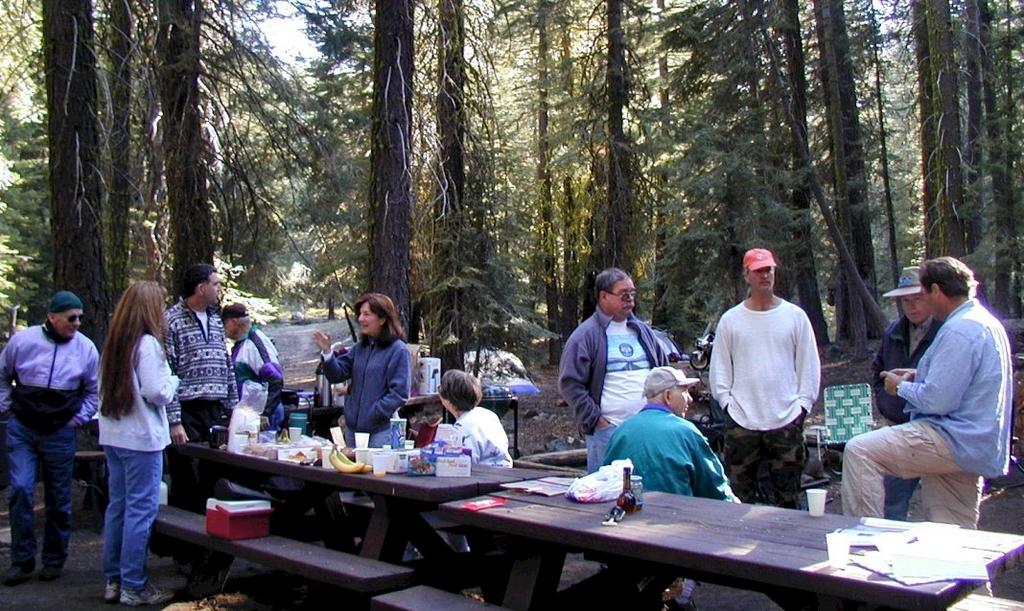
Today is Tuesday which means that it will be our mass gathering of confessional Lutherans in the chat channel I've told you all about, TableTalk. Since it is so nice outside, we will move it outdoors at the picnic tables behind the lodge under the great pines, the setting sun, rising moon and twilight stars. Fine cigars are always welcome, beer in moderation; young and old alike are welcome. It is sure to a good night for mutal consolation of the saints.

While the channel is always open, we're trying to gather specifically on Tuesday nights for great discussion. If you're interested in dropping by (9 p.m. EST 6 p.m. PST), the instructions are here . We used to keep a list of the blogkeepers and blog readers who have already stopped by, but the list grew too long! Hope to see you there!

Monday, August 08, 2005

Beckfest: Touching Really Old Things

One of my favorite Lutheran moms, Mutti Beck, posts on their recent summer trip to Ireland. She writes:

While we were in Ireland, we visited a lot of ancient ruins, like this Baptismal font in Fore Abbey. I would touch the walls and stones of these ancient buildings from the 1100's and 1200's and just basque in awe at the thought "these things are so old".
Read on: Beckfest: Touching Really Old Things

Saturday, August 06, 2005

New Blog: Lutheran Carnival

This is a great idea that was just waiting for two souls to take on the task. Daniel and Elle are up to the task, thankfully. A carnival, from what I understand, is a parade of essays on a certain topic or from a certain point of view. I've never been brave enough to participate in the famous Christian Carnival for fear that my thoughts would be rejected because of my adherence to scripture in the tradition of Martin Luther. This carnival is designed for Lutherans:
Your submission may be on any topic as long as it is written from a confessional Lutheran perspective and should be your best, favorite or otherwise notable post from from the previous week.
I can't wait to participate! Thanks to Daniel and Elle for helping to solidfy the renaissance of Christian writing, albeit through a keyboard. Read more here: Lutheran Carnival

Wednesday, August 03, 2005

Words from Jesus...

Words from Jesus are found here and not here. How sad for this woman and her followers. She has the blessing of the priest that Jesus "told" her was the one chosen to guide her: And she has the Vatican's blessing: .."she met with a Vatican official who reviewed the messages and affirmed her and the messages."

I can only wonder who is talking to Jennifer. I KNOW, however, that Jesus said:

Matthew 6:5-15
5
"And when you pray, do not be like the hypocrites, for they love to pray standing in the synagogues and on the street corners to be seen by men. I tell you the truth, they have received their reward in full. 6But when you pray, go into your room, close the door and pray to your Father, who is unseen. Then your Father, who sees what is done in secret, will reward you. 7And when you pray, do not keep on babbling like pagans, for they think they will be heard because of their many words. 8Do not be like them, for your Father knows what you need before you ask him.

9"This, then, is how you should pray:
" 'Our Father in heaven,
hallowed be your name,
10your kingdom come,
your will be done
on earth as it is in heaven.
11Give us today our daily bread.
12Forgive us our debts,
as we also have forgiven our debtors.
13And lead us not into temptation,
but deliver us from the evil one.[a]' 14For if you forgive men when they sin against you, your heavenly Father will also forgive you. 15But if you do not forgive men their sins, your Father will not forgive your sins.


The Lord's Prayer is a model prayer. It is not only a prayer for us to repeat; it is a lesson in how to pray and what to pray for. It covers all our needs of body and soul, but it is also concerned about the needs of all our fellow Christians and of all the uncounted millions who do not yet know the Lord Jesus as their Savior. It is an appropriate prayer on every occasion that calls for prayer. It puts first things first, but it leaves nothing out.
From the Matthew commentary by G.J. Albrecht and M.J. Albrecht from the People's Bible Series.

Jesus said this, too:

Matthew 7:15-23


A Tree and Its Fruit
15"Watch out for false prophets. They come to you in sheep's clothing, but inwardly they are ferocious wolves. 16By their fruit you will recognize them. Do people pick grapes from thornbushes, or figs from thistles? 17Likewise every good tree bears good fruit, but a bad tree bears bad fruit. 18A good tree cannot bear bad fruit, and a bad tree cannot bear good fruit. 19Every tree that does not bear good fruit is cut down and thrown into the fire. 20Thus, by their fruit you will recognize them.

21"Not everyone who says to me, 'Lord, Lord,' will enter the kingdom of heaven, but only he who does the will of my Father who is in heaven. 22Many will say to me on that day, 'Lord, Lord, did we not prophesy in your name, and in your name drive out demons and perform many miracles?' 23Then I will tell them plainly, 'I never knew you. Away from me, you evildoers!'

False prophets direct people through the wide gate and along the broad road that leads to eternal destruction, so Jesus tells us to watch out for them. This implies that we should be able to recognize them and to keep them from leading us astray. They will not be easy to recognize at first glance, because they look harmless, as though they belong among us. They may even be gentle and perfectly sincere. They may be convinced in their own minds that they are proclaiming God's truth on the basis of the Holy Scriptures. And there will be some who claim that they have received special revelations from the Lord in addition to the truths revealed in scripture.
From the Matthew commentary by G.J. Albrecht and M.J. Albrecht from the People's Bible Series.

The reason that this person appears, to me, to be a false prophet is that she leads people away from God's Word. She says that God is still talking and that he is talking through her. That confuses the faithful and will lead them astray. That's this mom's take on it. What do you think?

Note: this post was compiled from the actual website and from an interview with her on the radio this morning.

Sunday, July 31, 2005

Take the ELS poll on top Lutheran "fears"...

I visited our synod's website and found this funny and insightful quiz: My top two Lutheran fears are...

The top two fears I chose were my pastor receiving a call and missing orblowing a chance to give witness to Jesus Christ.

Friday, July 29, 2005

Preachrblog: Issues, Etc. radio program on Lutheran bloggers

Preachrblog posts on Issues, Etc's recent program on Lutheran bloggers. I recently discovered this program. Coming from the ELS, it is amazing to me to think that a synod would have their own radio station, but the Missouri Synod is that big. I plan to go through the show's archives and find shows of interest to me.

It was fun to hear the voice of Pastor Scott Steigemeyer, author of Burr in the Burgh blog. I suppose that is the first time I've heard the voice of a blogger (except for the voices of Northern Alliance Radio Network bloggers!). I don't know Sandra Ostopowich, author of Madre's Missives blog, but she had some good comments to make also. I was confused and disappointed to hear the show's moderator, Todd Wilken, take a cynical tone toward bloggers. I suppose the bad bloggers among us has colored the view of some people, but I think that blogging is here to stay and that the responsible ones will continue. Whether you blog in a magazine format, a diary format or as an apprentice writer, I encourage you to continue! Be responsible, always accurately research your topic and remember that real people read your comments (maybe even the person you think you are secretly writing about). Read the post here: Preachrblog

Tuesday, July 26, 2005

Ask the Pastor!

I've highlighted posts by Pastor Walter Snyder who keeps Ask The Pastor blog. He's added more and more great posts and this blog is on my list of favorite spots to read. Pastor Snyder does a great job of responding to questions in a clear manner without dumbing down the answer. I am thankful for Ask The Pastor.

Here's a list of his most recent and intriguing posts:

Thursday, July 14, 2005

Wretched of the Earth: Aquaphobia

A pre-seminary student and Confessional Lutheran blogger, Ryan at Wretched of the Earth, aptly expresses his doubts of being a "good enough" pastor and also is able to encourage us all:

Voicing my reservations to God about this path he has me on, I'm reminded of a simple fact: it's not about me. And it's not about you. I've always felt like I had to put on a show for people 'cause we're all so concerned about impressions, and to be a religious person you have to keep up the grandest show of all. But I can't do it. None of us can do it, and it simply isn't worth the effort anymore. God has loved us in spite of ourselves, and made us sufficient in the sacrificial work of Christ. We are but earthen vessels, busted out clay pots whose weaknesses can only point to the strength of a gracious God.Read on: Wretched of the Earth: Aquaphobia

Ask the Pastor: What Is a Confessional Lutheran?

Since I sometimes refer to Confessional Lutheranism, I thought I'd post this explanation written by Pastor Walter Snyder: Ask the Pastor: What Is a Confessional Lutheran?

We’re familiar with “conservatism.” In Christianity, it means those unwilling or unlikely to make hasty change, who are connected to their past, and who interpret the Bible assuming that it is God’s revealed, true Word. We officially reject those who call the Bible a human invention, or a mixture of the divine and the human.

The word “confessional” is not so commonly used. Normally, we think of a confession as an admission of guilt. “Confess” has a root meaning of “acknowledge together.” In matters of error, we state that we have, indeed, done what’s wrong — we “fess up.” But confession also has positive application: It can be used to declare faith.
Read on...

Tuesday, July 05, 2005

Sceleratissimus Lutheranus: Talkin’ ‘Bout My Generation

Wildboar at Sceleratissimus Lutheranus writes:

I was in church recently and noticed that one of our elderly members, a woman named Marie, was in a wheelchair. Not unusual for some of the senior citizens in attendance, but I’d never seen her need one before. I didn’t get a chance to talk to Marie that day (her daughter wheeled her out the side door while I was still in the receiving line) but I received word the next morning that she had been hospitalized.

So I drove over to St. Joseph’s to see how Marie was doing. Thankfully, it was nothing serious, but it was causing her some serious discomfort. In the course of our conversation, she told me that the pain had started the day before, in the morning, before church! I asked “why didn’t you go to the hospital right away?” and she said “Oh, I wouldn’t miss church. I know how badly I need it.”I was astounded. Marie’s generation really seems to get what church is all about.
Read on:Sceleratissimus Lutheranus: Talkin’ ‘Bout My Generation

Monday, July 04, 2005

Tired of hearing about sin?


Someone very dear to me recently asked why our pastors preach so often on the topic of sin. She's got one foot still in the door of our church, but her other foot is in the door of a modern, "evangelical" ELCA "lutheran" church known for its praise services and focus on joy and love. She said that the pastor in her new church is just as good as our pastors, but he doesn't focus on sin so much. She told me she is tired of hearing about sin; she wants to focus on joy and love. Funny thing is that the more time she spends at that church, the less joyful and loving she has become. I say "funny" sadly; I know that irony of trying to achieve love and joy too well. I have walked down that very road and have tried to warn her of the dangers such a church will bring to her faith. My loving warning received accusations of lack of love and judgmentalism. I know that I spoken those things to other Christians in the past. My human heart is so unfaithful; I am so thankful that God has a sure plan to bring me into His holiness someday. My own plans for perfection certainly didn't work!

The more focus a Christian attempts to put a focus on joy and love as a discipline - as the actions and attributes of the good Christian life - the more those things slip right out of your hands. It took me too many years to learn that the only way to become more loving and more joyful is to be totally, completely and daily confronted by my own sinful nature and utter helplessness to become the person I wish I were. It is only at that point that the Holy Spirit can whisper to my soul of where my help comes from. The apostle Paul knew this. He wrote:

What a wretched man I am! Who will rescue me from this body of death? Thanks be to God - through Jesus Christ our Lord!

And so my dear friend, if Paul himself knew that confession and absolution of sin must come before we can shout out for joy upon hearing the good news of our salvation, then how is it that your church is telling you otherwise?

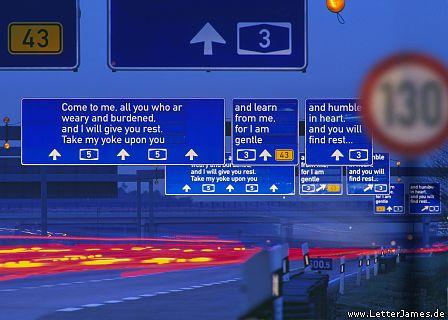
Come to me, all you who are weary and burdened, and I will give you rest. Take my yoke upon you and learn from me, for I am gentle and humble in heart, and you will find rest for your souls. For my yoke is easy and my burden is light.


Jesus reminds us of where we can find rest from our sins and the gentleness and humility that we seek to own. Yesterday in church, my pastor reminded me that the ability to become loving, gentle and humble is a result of hearing the the law pronounced to me so that I understand that I am sinful; and hearing the gospel - the good news of my redeemer- and clinging to my king in desparate thankfulness. Jesus then shows me how to become that loving person I wish I were by taking His yoke upon me and learning from Him.


Even the Old Testament convicts of of our sin and points us to the Savior who will save us from our sins. This is why we can rejoice. Our king comes to us bearing our salvation!
The Coming of Zion's King
9 Rejoice greatly, O Daughter of Zion!
Shout, Daughter of Jerusalem!
See, your king comes to you,
righteous and having salvation,
gentle and riding on a donkey,
on a colt, the foal of a donkey.

10 I will take away the chariots from Ephraim
and the war-horses from Jerusalem,
and the battle bow will be broken.
He will proclaim peace to the nations.
His rule will extend from sea to sea
and from the River to the ends of the earth.

11 As for you, because of the blood of my covenant with you,
I will free your prisoners from the waterless pit.

12 Return to your fortress, O prisoners of hope;
even now I announce that I will restore twice as much to you.


The scripture for church yesterday is among my favorites. When Paul writes of his own sinful nature, he makes it clear that even the most "accomplished" Christian can not save himself and will not achieve holiness on this earth. But does this message discourage him or us? No! It is the source of our joy! Scripture is clear. We cannot know or experience real joy and love apart from the knowledge that God comes to us with the salvation that we are never able to achieve by ourselves. To tire of hearing about sin is to deny that you have a sinful nature and need a savior. A church that doesn't remind you that you are, indeed, sinful has no way to proclaim the good news that you have a savior. A joy-and-peace-only church is a church that doesn't need Jesus and cannot strengthen Christians. For the rest of us sinners, we need to hear about sin and we need Jesus.

Friday, July 01, 2005

Ask the Pastor: Premarital Sex, Living Together, Ceremonies, and Marriage

This is just too good to leave on Pastor Synder's blog. I'll post it here, too! We humans are very sexual and, in certain moments and situations, we can come up with the darndest and creative excuses! This post is funny, sad and helpful all in one.

Q: What Scriptures say to refrain from sex — not adultery or fornication, as one has to be married to commit these sins — between those who love each other and intend to marry? I can’t find anything against sex between two who love each other and are monogamous.

Q: Does having sex before the ceremony make it wrong? Do you become married in a spiritual sense when you have sex for the first time? Is the real seal on the marriage the first sexual experience, and not the ceremony itself?

Q: Is it a sin to have sexual relations with someone if we’re both not married? My mother and I are having a heated discussion about this. I am 51 years old; my husband passed away 2 years ago. I don’t intend to marry again. I want to be faithful to the Lord but to have complete abstinence seems a little old-fashioned to me.

Q: Could you tell me about sex before marriage? I’ve been racking my brains for ages with this issue; I know it's wrong but I want to be with my partner like that and I want to be a Christian. We aren't planning to get married for a long time, and I don’t want to wait that long to be intimate with him again. Can I still be a Christian?

Q: I have fallen in love with a woman I want to marry. She loves me as well. Previously, we had spent the night with each other in the same bed several times. After deciding that this may be a practice frowned upon by God, we were contemplating either living under the same roof without sexual relations and without sleeping in the same bed (in other words, as roommates) until the marriage.

Q: I asked my love to marry me and she accepted. Our parents agree. The problem: I cannot be with my wife for two years since she lives overseas. We met while she was in America for school. Before she returned home I proposed. At this point we became one, not through intercourse but through love. I’ll see her only once again before being able to wed her legally. But in heart and soul we are already in wed lock. My question is, if a man and a woman commit to marriage in all aspects of mind, body, heart, and soul, is intercourse a sin at this point?


For the answers, read here: Ask the Pastor: Premarital Sex, Living Together, Ceremonies, and Marriage


I'm also posting the answers here, just in case.

A: Adultery is marital infidelity. Fornication is general sexual sin. including consorting with prostitutes, homosexuality, or moving from sex partner to sex partner, with or without marriage.

A general implication is correct: Ceremony doesn’t make a marriage. Commitment establishes the relationship. Yet Paul reminds us in 1 Corinthians 6:16, “He who is joined to a prostitute becomes one body with her. For, as it is written, ‘The two will become one flesh.’” Consummation seals the commitment. Thus, both a public declaration and a private action are part of marriage.

Sex defines and determines with whom you are “one flesh.” The commitment of your sex organ is final, no matter who your partner. Thus, you are, in God’s eyes, married when you have sex with another. One questioner specifically mentions monogamy: Monogamy means “one marriage” or “one marriage partner.” The Bible establishes no particular religious or civil rite and many governments recognize “common law” marriages, wherein living together, having sex, or merely representing themselves as husband and wife legally bind a man and a woman.

When a man and woman engage in sex without publicly representing themselves as married, they lie about their relationship. This happens among young people who may not be ready for the legal commitments or who want to maintain parental support while indulging their sexual desires. It also includes older people who live together without a public declaration or ceremony or a state license. They may do this so as to not lose pensions or possessions.

Paul wrote, “‘All things are lawful for me,’ but not all things are helpful. ‘All things are lawful for me,’ but I will not be enslaved by anything. (1 Cor 6:12)” Married is married and single is single. There is no trial period, no “test drive.” There is no benefit, rather loss, in dallying with another outside a lifetime commitment. Be married or be single — but be truthful. Without the public confession of unity and commitment to remain united, it is easier for one or both partners to enter the relationship casually — then to throw it away just as casually.

It isn’t easy to be one flesh with one person: Commitment and focus are difficult to maintain even when bound by vows, witnesses, and laws as well by sex. Secret or private relationships are even harder to sustain, since you lack the benefit of the support of family and society. For the young man wondering about beginning the sexual relationship before the vows, God said, “A man shall leave his father and his mother and hold fast to his wife, and they shall become one flesh (Genesis 2:24)” Until ready to live together, man and woman should remain apart.

To the couple wondering about living together without sharing a bed and without sex, I ask first of all if you think that you can resist the temptations of proximity. Then consider your public testimony: What will the world assume about your shared living? What witness will it give about the Christian life? “Abstain from every form [appearance] of evil,” Paul advised (1 Thessalonians 5:22). Even if an action isn’t wicked, can it be interpreted as such by an outside observer?

One questioner knows that “it’s wrong” to have premarital sex, then wonders if she can do so and still be a Christian. Certainly, all Christians remain sinners. However, sinning with knowledge and intent is different from succumbing to temptation due to the weakness of flesh. In Matthew 4:7, Jesus referenced Deuteronomy 6:6, saying, “It is written, ‘You shall not put the Lord your God to the test.’” Wilfully doing wrong dares God to withhold judgment.

Finally, sex only within the marriage is very “old-fashioned”: God fashioned it in the “good old days” of Creation, introducing it when He introduced Eve to Adam. His plan for those wanting sex remains simple: Be and stay married to one person. Depending upon laws, customs, and the like, the shape of the wedding may vary. However you promise yourselves to each other, consider what is legal in society and what is right by God’s Word. Does a secret relationship that you’ll “someday” reveal to others truly “honor your father and your mother”? Does wanting the state to not declare your relationship a marriage mean that, deep down, you don’t consider it a marriage, either?

“Flee from sexual immorality ...” said Paul, for “the sexually immoral person sins against his own body ... [which is] a temple of the Holy Spirit within you.... You are not your own, for you were bought with a price. So glorify God in your body. (1 Cor 6:18-20)” Glorify God openly, honestly, absolutely. Compare who you are with whom God desires you to be. Marriage — especially Christian marriage — testifies to the world about Christ’s relationship with his Church (see Ephesians 5:15-32).

Declare your intent to each other and to the world, make your promises, then live according to them. Christ did not take a secret bride when He claimed the Church as His own. The Church does not secretly worship Christ. Nor is Christ honored by men and women taking secret wives and husbands. His commitment was absolute, even through crucifixion and death. That same death forgives our sexual sins and restores us to live in integrity from this day forth, until death parts us.

Scripture quoted from The Holy Bible, English Standard Version™, © 2001 by Crossway Bibles.

To Ask the Pastor, send email to askthepastor@xrysostom.com.

Walter Snyder is the pastor of Holy Cross Lutheran Church, Emma, Missouri and coauthor of the book What Do Lutherans Believe.

Tablethoughts for 7/1

In regard to John's comment about Tabletalk times being just a bit late for the folks in the UK, I thought I'd post on the idea of opening the pub a little earlier on Tuesdays. I'm often home by 4pm which would be 9pm in the UK (I think). Maybe that time would work for others. I'll post this and see what the innkeepers say. It seems to me that people show up at the table a wide range of times. I know for me that the current time is very difficult - lots of family duties at that time. I often stop by at 8pm, chat for a bit, leave and then come after 10pm. There's still lots of folks there. People like Theology Geek and others have to get up early, so they leave by 10pm ET.

The dynamics of the Tabletalk Inn is interesting. Most people know WAY more than me about doctrine and theology, which is a good thing. Age is another thing; I've run into a whopping TWO people who are older than me. There are only occasionaly synodical differences. The other dynamic for me is that my own kids give me looks, as they patiently (not!) wait their turn on the family computer. They look at me as if to say, "Why are you in a CHAT room, mother? That's for our age group." Of course, they don't know I was in the AOL chatrooms when they were actually ASLEEP by 8pm way back in the old days of the mid to late 90's - scrapbooking, parenting, faith, etc. It's OK...I'll just let them think I'm weird. What's the point of trying to defend myself? I'll get my revenge! I think a sports car, new lap top and new clothes RIGHT when they are poor college graduates will do just fine. Me and my friend, Suzi, will taunt our grown kids and bribe them to come for weekly dinners with offers of laundry, groceries, etc.

The Burr in the Burgh: reports from Trego, WI

Pastor Scott Stiegemeyer reports from the conference I wanted to be at: The Burr in the Burgh: Moralistic Therapeutic Deism

Wednesday, June 29, 2005

Theomony : An inquiring mind wants to know...

I really enjoyed this thread by Monergon on Theomony blog. Mon writes:

Okay, let's say I'm a new Lutheran (I am) and let's say I still have a lot of Reformed pals (I have) and occasionally we have conversations that vary from low-key to rather intense over areas of theological disagreement (we most definitely do).

In light of this "scenario" what would be *your* answers to the following related questions:

1. When taking into consideration the bondage of the will, how is man able to believe the Gospel and put his faith in Christ?

2. Can a man reject the call of the Gospel and if so, how?

3. At what point does the Holy Spirit indwell a person?


Read on for an interesting thread of comments: Theomony

Tuesday, June 28, 2005

Who wrote this? Answered

I have found these two statements very interesting and helpful to my faith. To be honest, one statement I believe is in error. The term "inner witness" means the same thing as your feelings. I am not the first to compare these two statements. I know of at least two authors who use these statements to illustrate opposite approaches to the role of our feelings in faith matters. Who wrote each?

A. "Friends, this evening I have felt the internal witness of the Spirit. On his deathbed my father told me this must happen (""The inward witness, son, the inward witness, that is the proof, the strongest proof of Christianity."") And by God's grace it has happened inside me this very evening." John Wesley

B. "We must not judge by what we feel or by what we see before us. The Word must be followed, and we must firmly hold that these truths are to be believed, not experienced; for to believe is not to experience. Not indeed that what we believe is never to be experienced, but that faith is to precede experience. And the Word must be believed even when we feel and experience what differs entirely from the Word. Martin Luther


Saturday, June 25, 2005

The Burr in the Burgh: Is Death a Natural Part of Life?

Pastor Scott Stiegemeyer posts an excellent essay on God and death. The idea that death is not part of God's plan and that death isn't something to rejoice about is a foreign one to me. My years in non-denominational churches were filled with messages that death is part of God's plan and that we should rejoice and be happy that a departed one is with the Lord. To be taught, in the confessional Lutheran church, that God hates death and that it was never part of his original plan was a surprise to me. Of course, we can rejoice that a loved one has gone to be with the Lord, but we can also rightly hate death.

Pastor Steigemeyer writes:

When God created Adam and Eve in the Garden, it was not His purpose for them to die. Death is a result of our sinfulness (sin came into the world through one man, and death through sin, and so death spread to all men because all sinned - Romans 5). And that's why we hate it. Because it is un-natural. And I'd suggest that God hates death even more than we do. Read on...The Burr in the Burgh: Is Death a Natural Part of Life?

Thursday, June 23, 2005

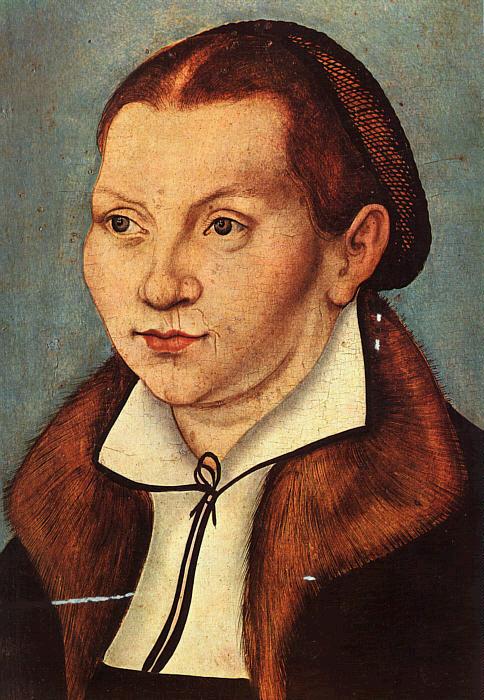
Katherine von Bora Luther


Bethany Lutheran Theological Seminary's website has links to the Lutheran Synod Quarterly . I was looking through it this morning for a little inspiration and something to take my mind off my troubles. This article caught my eye: The First Lady of the Reformation by Gaylin Schmeling. It is very short, so I've posted it here.

Katherine von Bora is the best known woman of the Reformation because she was Luther's wife. While Katherine has been eclipsed in history by the great fame of her husband, she was far from a wallflower. She was a rock of support at her husband's side throughout their married life.
Katherine was born in January of 1499, and at the age of ten she was placed in the nunnery at Nimschen near Grimma when her father remarried.

In the 1520s the writings of Luther began to infiltrate the nunnery. The message of salvation through faith alone in Christ brought comfort and peace to the sisters' hearts. A number of them turned to Luther for advice and he counseled escape, which was shortly accomplished. On April 7, 1523, Katherine and the other sisters reached Wittenberg. Luther felt responsible for finding suitable mates for the former nuns and managed for the most part, but this was not the case in Katherine's situation. This may be due to the fact that she had her eye on Luther. In any event Luther and Katie were married in June of 1525. Their relationship probably was not the most romantic at the start, yet years later Luther would declare, "I would not exchange Katie for France or Venice, because God has given her to me, and other women have worse faults."

With this marriage the Black Cloister of Wittenberg became the first Lutheran parsonage. With marriage came also an entirely different lifestyle for Luther. Katherine brought order out of chaos at the Black Cloister. Not only did she provide a clean house and a made bed, which were an unknown luxury for the unmarried Luther, but she also brought about financial responsibility. She kept Luther from giving away everything they had and she put the household on a budget. Katherine helped support the household by managing a farm and a brewery. It was not long before Martin and Katherine had still more responsibility. Within eight years they became the parents of six children. Three sons and three daughters were born to this union. They also raised a number of orphaned relatives.

Katherine was a faithful wife to Luther. In times of sickness she was his compassionate nurse. In Lutherís dark periods burdened down by the struggles of life, Katie was able to comfort him with that same long hidden Gospel treasure that God through Luther had restored to the world. Katie was indeed Luther's faithful rib. Katherine saw the death of her beloved husband in 1546 and outlived him by six years. In the summer of 1552 the plague broke out in Wittenberg. By fall Katie decided they had to leave. On the way the horses became frightened and bolted. Katie jumped from the wagon and was seriously injured. For months she lay suffering and finally died in the Lord on December 20, 1552.

One of the greatest legacies the church has received from the marriage of Martin and Katherine Luther is the Lutheran parsonage. The Luther home became the example for future Lutheran parsonages and Lutheran homes in general. The Luther house was given to hospitality. It was filled with children, students, and relatives. There was always a place for those in need. It was a place of culture and music and of joy and happiness.

This heritage continued even in the Lutheran Church in America. The early Lutheran parsonages were shelters for the needy, inns for travelers, and centers of culture. Frontier parsonages such as the home of Elisabeth and Ulrik Koren were a great blessing to the Lutheran Church. May the Lutheran home and parsonage always be a place of hospitality. This is the legacy of Katie Luther, the first lady of the Reformation.

Tuesday, June 21, 2005

Book tag response

Bunnie Diehl has tagged me! Good thing I already had this post written because my friend, Suzi of Swansmith had already tagged me. So, I untag myself twice with one post. I’ve combined the tags. I've bolded the answers to Bunnie's tag.

Number of books I own:

Let me think… Each room has a minimum of 25 to 50 books, plus another 200 hundred in various places around the house. I’m guessing about 1000. This would demonstrate that I am a book nut. Like my friend Suzi, I have a hard time parting with anything with a written word on it. So that makes me part book nut and part would-be pack rat! I say “would-be” because, thankfully, a married a very non pack-rat person. I would also guess, very safely, that I have given away an equal number of books to the thrift store in my lifetime. I also frequent the church library and love to check out really old doctrine and church history books.

Anxiously awaiting in the mail:

Concordia: The Lutheran Confessions-A Reader's Edition of the Book of Concord

Currently reading (I tend to read several books at a time!)

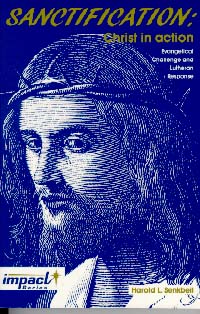
Sanctification by Harold L. Senkbeil

The Lord Will Answer: A Daily Prayer Catechism

Where in the world is God? By Harold L. Senkbeil

Paul: Ambassador of Peace by Jon D. Buchholz

The Reformation Era: A short history of the Reformation by N.S. Tjernagel

Remembering Tim Horton by Craig MacInnis

Grace for Grace – the first 90 years of the Norwegian Synod (1853-1943 and 1918 – 1943) by S.C.Ylvisaker, Chr. Anderson and G.O.Lillegard.

Last book I read:

Deconstructing Evangelicalism by D.G. Hartthis book confirmed my suspicion that I had been a very shallow evangelical and is an important book to me, especially because it WASN'T written from a lutheran perspective.

Books that have meant a lot to me:

God’s Holy Word – the Bible

Evangelical Lutheran Hymnary

Luther’s Small Catechism

A good dictionary – I have several and we can’t play scrabble without one

The Defense Never Rests by Craig Parton – made me realize my experience in American Christianity was not unique and gave me one of those wonderful, “Hey, I’m not alone on the planet” feelings – this book didn’t change the way I see the world, but it confirmed my change as not unique. This book is important because it gave me confidence that I wasn’t going crazy.

What’s Going on Among the Lutherans? By Patsy A. Leppien and J. Kincaid Smith this book is also important in helping me understand the history of the Christian church in layman's terms.

The People’s Bible Series by Northwestern Publishing House – invaluable bible commentaries

Mamornitz: A History of a Ukrainian Pioneer Community in Saskatechewan, 1900 to 2000 by Jennie Zayachowski - this book is important in helping me understand why my ancestors moved halfway around the world and what they faced. I owe them my freedom.

Directory of Essential Oils by Wanda Sellar – invaluable aid for understanding essential oils.

Smart Medicine for a Healthier Child – treated many a simple childhood illness

Prescription for Nutritional Healing by Balch and Balch

The Educated Child by William J. Bennett – empowered me to be my children’s first teacher

Peekaboo! by Matthew Price and Jean Claverie – my daughter’s first book

Sleep Sound in Jesus (book and CD) – I memorized these songs and sang them every night to my son for at least three years.

The Science Game: an introduction to research in the behavioral science by Neil Agnew and Sandra Pyle – helped me understand statistics and studies, especially how findings can be manufactured and manipulated to suit agendas

The Lord of the Rings by J.R.R. Tolkien

The Chronicles of Narnia by C.S. Lewis

A Wrinkle in Time (and following books) by Madeleine L’Engle

Minnesota: A History of the State by Theodore C. Blegen – helped me realize how cool Minnesota history is


Prized books:

The Acorn – my grandfather’s Coe College (Iowa) yearbooks from 1930, 1931 and 1932

My complete collection of Mary Engelbreit Home Companion magazines

My great-grandmother Viets’ family bible

Embarrassing Book:

The Disciplines of a Beautiful Woman by Anne Ortlund - never did become the perfect woman she was.


Now, who to tag? These are my picks:

This is hard because I can think of so many people whose libraries I would love a glimpse into:

Devona Brazier

Terrie Rosas

Margery Punnett

Thanks to Suzi at Swansmith for tagging me the first time and Bunnie Diehl for tagging me again!

Monday, June 20, 2005

2005 ELS Convention

Please remember in prayer the pastors and delegates to the 2005 Convention of the Evangelical Lutheran Synod meeting in Mankato, Minnesota today through Thursday. These men need our continued prayer as they consider, learn, discuss and vote on matters of our synod. Their aim is to always use scripture as the sole guide for their conduct. God bless them as they meet.

Convention Guide

Live audio webcast: Cut and paste this link into Real Player: http://blc.edu:8000/listen.pls

Sunday, June 19, 2005

How to win souls for Christ!

What is evangelism? The dictionary gives the definition of an evangel:

[Middle English evaungel, from Late Latin vangelium, from Greek euangelion, good news, from euangelos, bringing good news : eu-, eu- + angelos, messenger.]

In reference to recent posts by Territorial Bloggings, Here We Stand and Bunnie Diehl, I would like to explain my thoughts on evangelism. Before sharing my learned thoughts on witnessing Christ to others, let me explain that I spent over twenty years attending only "Bible" churches and furiously taking notes, buying and reading books and numerous publications on how to witness to others, watching many videos, listening to many famous speakers, taking weekend workshops and spending my days counting my worth by how many souls I had led to the Lord. To my knowledge, I led no one. About two years ago, I became an Evangelical Lutheran. I threw out all my books on how to be a better Christian and how to be a good witness for Christ (seriously - go look for them at Goodwill). I began to reeducate myself and discovered a well-hidden secret:

I am a sinner. You are, too. Together we are hopeless and will keep sinning for the rest of our lives. We are bound for hell because we can't enter heaven unless we are perfect. However, God still loves me and you and desires us to spend eternity with Him in heaven. In an incredible and unfathomable act of love and grace, He gave us His son, Jesus Christ, as an atoning sacrifice for our sins. We have been saved! Rejoice! We can now enter heaven! Believe and be baptized! Share this good news with others!

I didn't learn any of the above from any of the further above-mentioned witness training aids. I learned this secret from the Bible and from a pastor who preaches from it. Because of his accurate proclamation of the good news of our redemption, I was able to pass that good news on to my children, husband, my grandfather, my parents, my parents-in-law, my sister-in-law, my neices and nephews, my brothers and my sister.

What is the difference between my well-trained, but hopelessly futile efforts before and my complete lack of effort with moderate success now? I removed myself from the act of evangelism. I am no witness for Christ other than to simply to give an accurate account for the hope that I have in my heart despite my total worthlessness apart from Christ. I wouldn't dream of driving around with a bumper sticker that says defiantly, "I'm not perfect. Just forgiven." I can't even claim to love Jesus as much as I ought to, as Chris Williams recently and eloquently wrote. My faithless heart forgets Christ on a daily basis. I can't even listen to one sermon without daydreaming for a short while. Only in accepting my perpetual state of sin can I cling to Christ and, with gratitude, shout out the good news to others. That is evangelism.

What we have earned and deserve is death. "The wages paid by sin is death." (Romans 6:23)

For Christ also suffered once for sins, the just for the unjust, that He might bring us to God... (1 Peter 3:18)


But sanctify the Lord God in your hearts, and always be ready to give a defense to everyone who asks you a reason for the hope that is in you, with meekness and fear... (1 Peter 3:15)


This post was inspired by the many reader comments to a post by Michael Spencer, It's Not Easy Talking About Jesus, on Boars Head Tavern.

To learn more about who Jesus is, check out Learn About Jesus.

Wednesday, June 15, 2005

incarnatus est: Intolerant Christianity ? You Betcha !

Paul Alms, on incarnatus est writes:

On the level of belief systems and truth claims, Christianity should not apologize for being intolerant or exclusive. Christianity is intolerant. Intolerant not in the sense of jailing or killing enemies but in terms of its creed. Yes, Christianity is and always has been intolerant of the claim that other gods exist or that other religions who worship other gods are somehow “true”. Biblical Christianity has always insisted that the God of the Bible is the creator God. He is the one who made heaven and earth and so is by definition the only true God. All other things that exist are dependent on him as Creator; all others are creatures.


read on: incarnatus est: Intolerant Christianity ? You Betcha !

hat tip to Glen at Territorial Bloggings!

Tuesday, June 14, 2005

random thoughts and writings: new confessional Lutheran blogger

Yet again, I have stumbled across another well-educated teenaged Lutheran blogger. Andrew S. writes Random Thoughts and Writings. This post sure impressed me: random thoughts and writings: my college experience at CUNE I am so thankful for Lutheran schools, especially when my kids come home with some gem or when I read a post like Andrew's.

Be sure to check out his blog and welcome him!

Wednesday, June 08, 2005

Introducing Wretched of the Earth

I just discovered a new confessional Lutheran blog from a new confessional Lutheran, RyanWretched of the Earth

He describes his blog: "Seen here are the growing pains of emerging from the vacuity of 'evangelicalism' and rediscovering the grace of God in confessional Lutheranism. But it isn't nearly as profound as that sounds. My alternate description for this page is 'adventures in sanctification'. "

He has plans to travel to Thailand soon:

I'm going to Bangkok in approximately three months with Lutheran World Mission, and I need to raise $10,000. That isn't the news. The news is the fact that this hit me like a ton of bricks today, and I got the dry heaves and passed out at the library. Not quite, but I did start to get a little worried. LCMS (Lutheran Church-Missouri Synod) sent me this book called FriendRaising that is supposed to tell me how to raise support. I guess the premise is that you had better get some friends before you ask anyone for money. It's probably a better plan than my current one of waiting for a benefactor to show up, like in Great Expectations.

Tablethoughts...


Tabletalks

I love the new Tabletalks and am glad for the opportunity to have live, realtime conversations with other Lutherans. Live chatting is quite different from posting thoughts to a blog. The nature of blogging, although often done quickly, gives the writer a chance to consider his or her words before posting and deleting any regretted or reconsidered thoughts. Not so with live chats. Once you say something, your words are floating forever in cyberspace.

I did not sleep well last night. It might have been due to thunderstorms, but I suspect it is due to regret over careless things I said at the table. Let me go on record as saying this about myself. I read ALOT, I study ALOT, I ask ALOT of questions of people. I'm not sure what good actually comes of that; I often think that I'm the jack of all trades, expert of nothing. I have NO business making any statements about synods, including my own. I have a great desire for church fellowship amongst Lutherans who can confess Christ's teachings together, but we sinners live in an imperfect world and it is probably safe to say that there will never be a day that Christ's invisible church mirrors any visible church, synod or denomination.

And so I offer my apology to anyone who I have offended. My own opinions and comments are based solely on my own experiences and conversations. I live in my own little world and I can only give others the weather report from my world. Many of you know so much more than I do and I love listening to you. Thanks for being patient with my arrogance, stupidity and careless words.

I have no ministry; I would never dare to say such a thing. I only write and speak my own thoughts for mostly selfish reasons. Writing helps me make sense of my brief time here on earth. I know that my words have helped people before, but I am positive I have also hurt people with my words. My only hope is that I am able to point others to the cross of Jesus Christ. It is the place I found hope for living and hope for eternity with God.

I look forward to more talks around the table, but I hope to remember to pray first.

Tuesday, June 07, 2005

What Do Lutherans Believe?

After twenty years of searching through the generic "evangelical" world for a true and authentic worship experience and stopping at many churches along the way, I have found authentic worship in the practices of the confessional Lutheranism. Many generic "evangelicals" display a knee-jerk negative reaction to the word "Lutheran". The statement, "I used to be Lutheran 'til I got saved.", is a very common one in the generic "evangelical" movement. I can't argue that a person making such a statement might not have had saving faith during the time he called himself a Lutheran, but I would argue whether he was truly a Lutheran. What does it mean to be Lutheran?

On numerous and un-erasable occasions, when asked what church I attended (a common proof of salvation amongst generic "evangelicals"), I would reply, "Oh, I'm a Christian, but God has called us to attend a Lutheran church right now." Yep. That came out of my mouth many times. To merely say that we attended a Lutheran church was too embarrassing - I had to add a disclaimer in order to identify myself as an authentic "evangelical". It pleased me that the ELCA Lutheran church I attended - the same one I grew up in and returned to when I had grown weary of the antics of the non-denominational world - was rapidly tossing out Lutheran biblical teachings in favor of the watered-down theology of the non-denominational churches I had just come from. At first this pleased me, but then I started to ask myself "What does it mean to be Lutheran?".

These practices caused me to question:
  • Either baptism saves or it doesn't. Which is it? If the Lutheran church traditionally baptized infants because they believe scripture says that it saves, then why are wenow praising parents who let their children "decide" when to be baptized? This became most apparent to me when I was praised publicly at the front of the church by one of the pastors for doing just that. I was finally allowing the baptism of my children, at their ages 7 and 9, after years of objections from my husband, parents, in-laws and an older ALC pastor. I had disregarded and dismissed their exhortations that the children should be baptized, but only the older pastor came close to putting it into understandable words. He told me that parents should bring children to the baptismal font. I agreed to have them baptized just in case I was wrong. The Holy Spirit had started to convict me of my unbelief in God's desire to save my children, but I wasn't fully convicted of my sin of unbelief until scripture was presented to me by a dear confessional Lutheran pastor. (I have since explained my sin and repentance to my family and children. I am also making sure that my kids are well-educated in what scripture teaches about baptism, as well as family roles in marriage, church and society.) I recently asked my husband why he allowed me to prevent our children from receiving God's grace through baptism and he replied that he just trusted me as the more spiritual in our marriage. I don't allow him to do that anymore; I have backed off and wait for him to take the lead without me hovering over his shoulder.
  • Either the bible warns about improper distribution of holy communuion or doesn't. Which is it? If the Lutheran church traditional believed that there was a scriptural warning not to take Holy Communion without saving faith, why did our church hand it out to anyone who walked up to the railing?
  • Either it is forbidden for women to be pastors or it isn't. Which is it? If scripture teaches that women should not have spiritual authority over men, why had we started to ordain women?
  • Either same-sex sexual relationships are right or wrong. Which is it? If the Bible says that certain relationships are not God's plan for men and women, then why are we "studying" it?
In the ELCA, I had heard of the Missouri Synod and the WELS, but not the ELS (which ironically had a large congregation less than a mile from my church). As our disenchantment grew, we left our ELCA church for a large local LCMS church for 2 years and found two of the four practices listed above; the main reason we left that church was because they communed anyone who came forward. It bothered me that the church would believe one thing about communion and then disregard it a few years later. I knew that was wrong to commune unbelievers, but I didn't understand why. We returned to our ELCA church.

The influence of non-denominational churches on our ELCA church continued, but I didn't know where else to turn. My husband was tired of me asking to switch churches every few years. Other Lutheran synods were never discussed at my church, although conservative non-denominational churches were often mentioned at great examples of churches. The thoughts of popular pastor/writers, like Osteen and Schuler were preached from the pulpit. It was rare to hear a sermon based solely on scripture in my ELCA church. In my continuing quest to answer my questions, I found the WELS website. I spend six months studying every question in Q & A section. It was there that I learned what Lutherans believe and I learned that my church really couldn't call itself Lutheran anymore. I contacted our local ELS church and started meeting with the pastors. Six months later we joined the church.

A new and favorite blogger in the confessional Lutheran blogosphere, Pastor Walter Snyder of Ask the Pastor, answers the question, "What do Lutherans believe?". I would like to add one thing to his answer: the Lutherans he speaks of have very little to do with many ELCA churches you might know. The ELCA synod was born of synods that reject the infallability of scripture, among other key doctrines (doctrine = what Jesus taught). The Lutherans he speaks of most often belong to one of three confessional Lutheran synods: LCMS, WELS and ELS.

Excerpts from What Do Lutherans Believe:

Look closely at the Lutherans and you’ll see resemblances to several other churches. We believe above all else that Jesus Christ is our only Savior from sin, and that we are saved by grace alone, through faith in Christ Jesus. Human works, no matter how good, are seen as the result of salvation, not its cause.

The Lutheran Church is a Biblical church. We hold that the Bible is the only source of Christian teaching. It decides what and how we believe, teach, and confess. In this, you'll see a strong resemblance to other “Bible-believing” churches.

Lutheranism is a preaching church. We proclaim the Word faithfully. We apply the full force of God’s Law to condemn sin and crush the sinner’s confidence. Even more, we pour out full measure of the healing balm of the Gospel: Sin is forgiven, God and man are reconciled in Christ, and the Lord grants fulfilling life on earth and eternal life in His presence to all who believe.

We believe in baptismal regeneration, trusting that Christ’s words with water give forgiveness of sins, new life, and salvation. We baptize infants, since we know from the words of Scripture that they are born in sin and need of Christ’s forgiveness and the new life He gives in Baptism.

Regarding the Lord’s Supper, we believe that we do not receive only bread and wine to remember Christ’s sacrifice, but that miraculously we receive the very body and blood of Christ. Through eating and drinking this Supper, God forgives sins, strengthens faith, and joins us ever more closely with our Savior. The Sacrament brings us into closer communion with the Father, who is one with Christ. The Supper also creates closer communion with brothers and sisters in the Faith—the Body of Christ, His Church. Since we believe in the unifying effect of the Supper and take seriously the commands and warnings in 1 Corinthians 10 and 11, we spend time carefully teaching those who desire to join us at Christ’s altar, that they might discern the body of Christ, know the Christian Faith, and join us in one confession.

Read on: Ask the Pastor: What Do Lutherans Believe?

Another good resource, What the Bible and Lutherans Teach, by Harold A. Essmann, as found on the WELS.net site. He writes:

Nearly 500 years ago, the Christian church was corrupted by many false teachings. A man named Martin Luther led people back to the teachings of the Bible. His work, and that of his friends, is called the Reformation. Through Luther God restored the church to purity of doctrine and a new life of faith in Christ. The doctrines of the Lutheran Church are not new. They are the teachings of the Bible. Thus the Lutheran Church is not a new church. It is not a sect or cult. It is a church whose teaching is based on the words written by the prophets of the Old Testament and the apostles of the New Testament. The Bible tells us about Jesus Christ. The teachings of the Lutheran Church are those of the original, ancient church of the apostles and early Christians.

Monday, June 06, 2005

Signs of the Reformation's Success?

From Christianity Today: Signs of the Reformation's Success? Reformation scholar Timothy George is interviewed on Pope John Paul II's historical significance and the " 'momentous' era of Catholic-evangelical dialogue." I haven't always understood my pastor's comparision of the many strong similarities between American Evangelicals and Roman Catholics, although articles like this one illustrate his point. Here is a brief excerpt:


Other than Billy Graham, have there been other major evangelical figures who tried to bridge the historic divide with Catholicism?

Chuck Colson has to be put into that category. At another level I would say Francis Schaeffer, though he was a strait-laced Presbyterian. He recognized the importance of an alliance with Catholics on the issue of sanctity of life.

To some extent Carl Henry also fits. He was a member of the editorial board of First Things, for example, which is not strictly a Catholic magazine but has a lot of Catholic influence.

So are we living in historic times then? All these names are contemporary.

When you think back, whom would you think of? In some ways I would say D. L. Moody. Moody is the forerunner. Moody was the first person, in his 1893 Chicago campaign—called campaigns back then because the Civil War had campaigns. He was a chaplain in the Civil War. Billy Graham, coming out of World War II, had crusades.

But in the 1893 campaign in Chicago, Moody was the first evangelical preacher that I know of who invited Roman Catholic prelates, priests, and bishops to share his platform. And they did. This was well before Billy Graham would actually begin to do it in the '50s.

Moody also took up money and helped build a Roman Catholic church in his hometown of Northfield, Massachusetts. So he was very friendly to Catholics. But in some ways Moody was not able to make the kind of sweeping changes that Billy Graham was able to make, because he was limited by the polarized context of his era. Catholicism was so entrenched in his day. We're talking about Vatican I Catholicism. We're talking about Pius IX and those who succeeded him. The doctrine of papal infallibility had just been announced. There was not a good ecumenical spirit flowing back and forth, which in some ways makes Moody all the more interesting in that he stood out against that divide.

We're in the flow and flux of it all. It's really hard to evaluate where we are or how historians will look at our times. But there is a sea change that has happened, particularly among evangelicals and Catholics. I think the Evangelicals and Catholics Together movement is evidence of that. Clearly something momentous is afoot. Evangelicals are not Roman Catholics. But we are Catholics in that we affirm the historic orthodox faith. And we want to call the Roman Catholic Church, as we call ourselves, to a further reformation on the basis of the Word of God. That's what we ought to be about.

Mark Noll and Carolyn Nystrom have just written a book called Is The Reformation Over? In my endorsement I said, "The Reformation is over only in the sense that to some extent it has succeeded." Which is to say that Roman Catholicism has taken on many, but not all, of the main emphases that come out of Luther. There's a clear movement in that direction, and I think evangelicals can celebrate that and see our commonalities.

Evangelical Lutheran: Hess on Psalm 25 (for an 8th grade graduation)


I found a wonderful sermon by Hess, a contributor to Evangelical Lutheran, written for an 8th grade graduation. I'm posting this in preparation for my own son's graduation next spring. It is based on Psalm 25 and is titled “Let me not be put to shame”. It has a good message for the many students who will go on to public high school. Those going on to Lutheran high school will also be blessed by this sermon.

Psalm 25

Of David.
1[a] To you, O LORD, I lift up my soul;

2 in you I trust, O my God.
Do not let me be put to shame,
nor let my enemies triumph over me.

3 No one whose hope is in you
will ever be put to shame,
but they will be put to shame
who are treacherous without excuse.

4 Show me your ways, O LORD,
teach me your paths;

5 guide me in your truth and teach me,
for you are God my Savior,
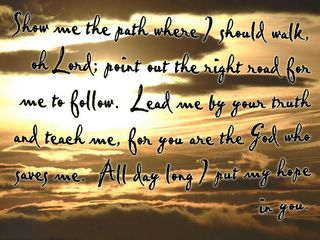
and my hope is in you all day long.

6 Remember, O LORD, your great mercy and love,
for they are from of old.

7 Remember not the sins of my youth
and my rebellious ways;
according to your love remember me,
for you are good, O LORD.

8 Good and upright is the LORD;
therefore he instructs sinners in his ways.

9 He guides the humble in what is right
and teaches them his way.

10 All the ways of the LORD are loving and faithful
for those who keep the demands of his covenant.

11 For the sake of your name, O LORD,
forgive my iniquity, though it is great.

12 Who, then, is the man that fears the LORD ?
He will instruct him in the way chosen for him.

13 He will spend his days in prosperity,
and his descendants will inherit the land.

14 The LORD confides in those who fear him;
he makes his covenant known to them.

15 My eyes are ever on the LORD,
for only he will release my feet from the snare.

16 Turn to me and be gracious to me,
for I am lonely and afflicted.

17 The troubles of my heart have multiplied;
free me from my anguish.

18 Look upon my affliction and my distress
and take away all my sins.

19 See how my enemies have increased
and how fiercely they hate me!

20 Guard my life and rescue me;
let me not be put to shame,
for I take refuge in you.

21 May integrity and uprightness protect me,
because my hope is in you.

22 Redeem Israel, O God,
from all their troubles!

Footnotes:

  1. Psalm 25:1 This psalm is an acrostic poem, the verses of which begin with the successive letters of the Hebrew alphabet.


In the list of big days in your life, 8th grade graduation may not make the top ten list. I thought about my 8th grade graduation, and I could barely remember it, much less what the speaker said at it. But you know, it’s not the big days that shape our destiny. It’s on non-special Sundays, through humble sermons, that God has chosen to give people faith in Christ and eternal life. It’s in very simple thing that God gives us his richest treasures. Simple water combined with God’s Name, which washes away our sins and makes us holy if we believe His promise, simple bread and wine where Jesus gives us His Body and Blood which takes away our sin.
You’ve been hearing about these things for many years. Now the years where you’ll have to sit in religion classes at school, and in school chapel, are over. You won’t be hearing so much about God in school, but God will still be there, just as He is here now, knowing everything about you—the talents and gifts he gave you, the good works He’s done in you, and your sins. Since God is here, I wonder what God thinks about your 8th grade graduation, which probably many of you don’t think much about. God thinks you are important enough to keep track of every hair on your head, so I think that He is probably very interested in the fact that you are graduating tonight. And I know that God, who caused you to be born and keeps you alive and is familiar with all of your ways, wants to speak to you on this day as much as on any other, although most days we don’t listen very closely to God.
What does God want to say to you on this big day among many big days in your life? See, what God says to us is far more important than what anyone else says about us, whether they compliment us or talk bad about us. God’s Words are not just friendly advice for how you should live. Instead, God’s words decide what our destinies are going to be. God’s Words created heaven and earth. They sustain the world, so that the sun still rises and sets, so that we still have food to eat and air to breathe. God’s words condemn us and forgive us, kill us and heal us.
The funny thing is that God has spoken to you many, many times in your life, though you may not have recognized it as God’s voice, nor believed what the voice of God said. He spoke His Name over you when you were baptized, and He named you with His Name. He spoke to you this year when you learned the ten commandments, and told you that you were sinners, and that those who sin earn death and hell. And God has spoken to you again and again throughout these years and declared to you that your sins were forgiven because Christ suffered for them on the cross. Every time pastor or one of your teachers told you that your sins were forgiven, that was God speaking. Did you realize it at the time? Did you listen? Did you believe God?
In the Psalm you picked today, King David uttered a very important prayer about his life. This is what he said, “To you, O Lord, I lift up my soul; in you I trust, O my God. Do not let me be put to shame, nor let my enemies triumph over me.” God today wants you to know that it is His will that you never be ashamed in your life. He had St. Paul write many years after King David, “Whoever trusts in Him”—Jesus—“will never be put to shame.”
You are talented kids. Some of you are smart as a whip. Some of you are great athletes. Some of you are musicians, some are artists, some of you are all of the above, and some of you have talents that have not been revealed yet. Have you given much thought to what you want your lives to be? Four more years and then you’ll be grown, and no one will be able to tell you what to do with yourselves. What are you going to do, to be?


Read more: Evangelical Lutheran: Meditatio--Psalm 25

Photo from Chris Ross Gallery.

Sunday, June 05, 2005

Harold Senkbeil does indeed rock, Bob.


I've been reading Senkbeil's book, Sanctification, this weekend. It's incredible. I had been reading D.G. Hart's Deconstructing Evangelicalism and found it helpful in understanding what the current American Evangelical movement really is. But now reading Senkbeil's book, which I know comes from a confessional Lutheran perspective and was written about 15 years before Hart's book, I finally understand exactly what the movement is. I can finally answer my own question, "What is an Evangelical?" The answer is very simple. I will post on it soon.

Wednesday, June 01, 2005

My library is growing...

I splurged and ordered several books today:

two leather-bound indexed Concordia Study Bibles for my two Lutheran school students at a very low price

Two books by Harold Senkbeil - Where in the World is God and Sanctification

A book on the life of Paul and his journeys

The Lord Will Answer

Concordia: The Lutheran Confessions - A Reader's Edition of the Book of Concord